
Inside London - The London Rundown
Georgian Era London: Law & Disorder
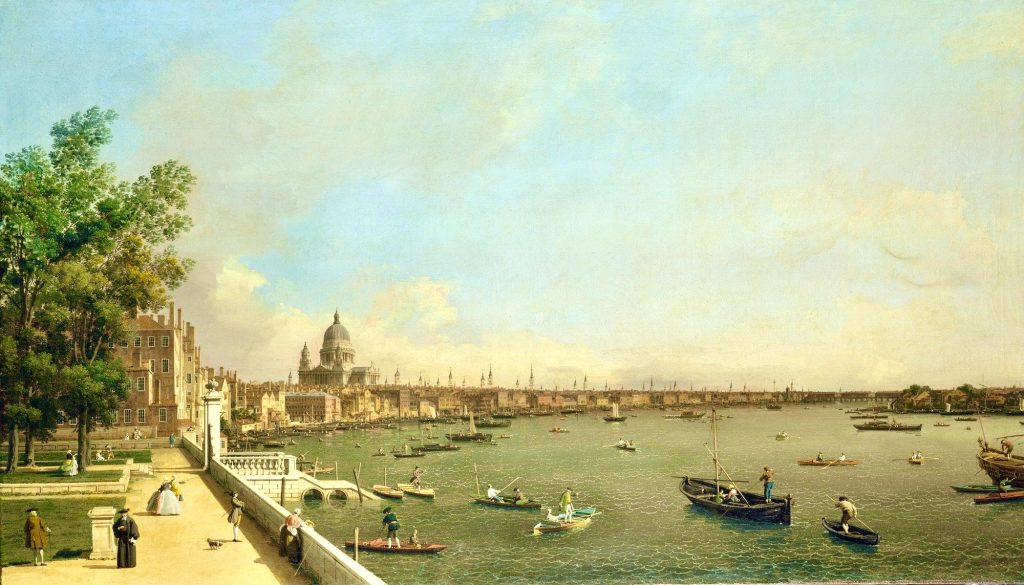
London’s Georgian era lasted from the early Eighteenth Century to around the middle of the Nineteenth Century. The period, thankfully, saw an end to the political instability and pandemics of the previous century, and as a result of that the city grew massively. The population increasing from around 600,000 to over 2 million people during the period, with London also growing geographically, as both the West End and the East End ,as well as the South Bank, continued to develop.
Nevertheless, even as the city grew much wealthier through its growing international trade, it also grew more licentious and dangerous. A thriving red light district developed around Covent Garden, even as the world’s first police force was created in the same neighborhood. Death by hanging was a common sentence throughout the period, which could attract huge crowds, while more lucky criminals were sentenced to penal transportation to British colonies in America, and then Australia.
Welcome to Georgian London!
Early Georgian Era in London
The Georgian period officially began with the accession to the throne of George I, in 1713. He was descended from James I and was invited by Parliament to become King at his Dukedom of Hanover, in modern Germany, since the deceased monarch, Queen Anne, died without an heir (not one of her seventeen children had survived childhood). The terms of the Acts of Settlement that elevated George to the throne created the modern constitutional monarchy that the UK was becoming.
The end of the War of the Spanish Succession in 1714 had the effect, temporarily at least, of weakening Britain’s traditional enemies, the French and the Spanish. At the same time Britain itself had been united with the Acts of Union of 1707 and gained the important Mediterranean port of Gibraltar. This meant that the British were now able to overtake their rivals, the Dutch Republic, which had been the dominant commercial power in Europe over the previous several decades.
In the period after the British Civil War, and throughout Georgian era, an Agricultural Revolution was taking place in the countryside of the U.K. This development involved the introduction of much better crop-rotation schemes and the growing use (pun intended) of new equipment, such as iron ploughs and seed drills, which hugely improved the productivity of farming land. During this period agricultural productivity per labourer increased by a factor of 2.5. This meant that the periodic famines of the Middle Ages became a thing of the past (at least for the time being), and cities like London were able to grow and pull many more people into them.
A big reason for this development was the gradual switch to a constitutional monarchy. Previously, essentially, all land belonged to the monarch and the knights and barons held their estates at his or her pleasure and discretion. Now, secure in their possessions, the landed class became much more interested in making money from their property. At first this meant improving the agricultural productivity of their land, but in time it would extend to investing and developing industrial enterprises.
In 1702 London’s first daily newspaper, the Daily Courant, began publication on Fleet Street, near St Paul’s Cathedral. Through mergers and name changes it continued operating until 1797. The London Times was founded in 1785, and the Observer in 1791, both of which are still in circulation today.
Fleet Street had been central to the early printing industry, since Wynkyn de Worde moved Britain’s first printing press there in the early 1500’s. It would continue to be a centre of the publishing industry for many more centuries.
New Neighbours and Neighbourhoods
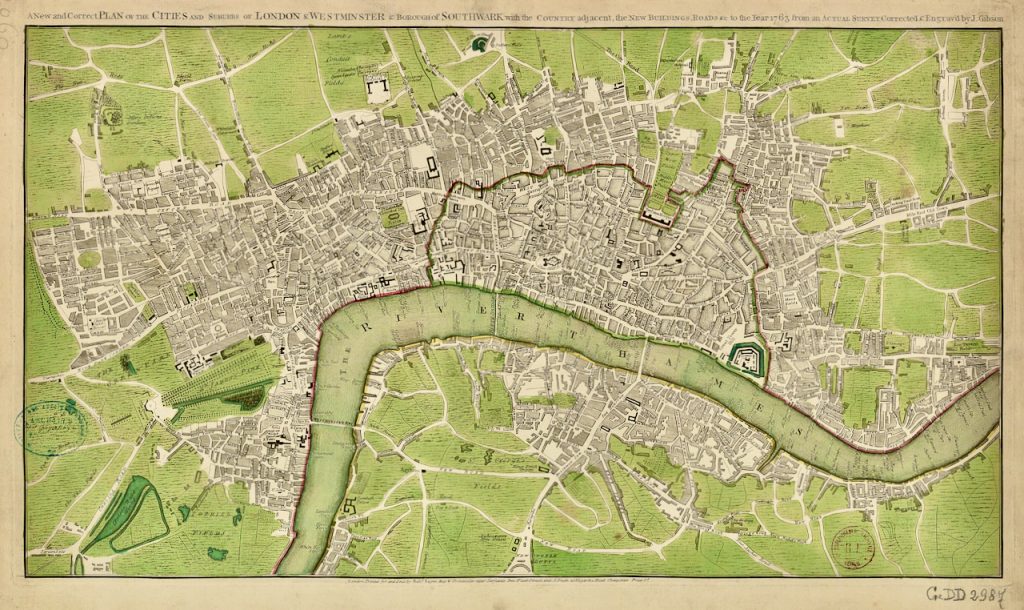
As London grew it also became more diverse. Tens of thousands of Huguenots, French Protestants, had fled to the U.K. in the later Seventeenth Century, forming large communities in Spitalfields, Southwark and St Pancras. Their mastery of silk-weaving made London the centre of the European textile industry.
London’s population of people of African and Indian descent increased hugely over the 18th Century too. In 1768, the abolitionist Granville Sharp estimated that there were around 20,000 Black people living in London, which was a large proportion of the population at the time, most of them working in domestic service.
From its position throughout the Middle Ages, protected by its ancient walls, London spread further into the forests and fields surrounding it. During the 1620’s and 30’s the West End had been built up, joining at last the ancient City of London with the City of Westminster. Nevertheless, throughout the Georgian Era London continued to hungrily gobble up dozens of small farming villages and communities around it. Mayfair, Marylebone and Bloomsbury all began to take shape during this period, and Southwark, on the south-side of the River Thames, also expanded.
Politics and Panics
The Georgian era began with one of the biggest speculative bubbles that the City of London has ever seen, known as the South Sea Bubble, after the company that was at the centre of it.
The South Sea Company was founded in 1711, as a joint-stock company, with the main objective of dealing in UK Government debt. The Bank of England had been founded 16 years earlier, but at that time it was a private institution. With the Great Northern War and the War of the Spanish Succession in full swing, the government was in need of borrowing a lot of money and was unhappy about the monopoly enjoyed by the Bank of England.
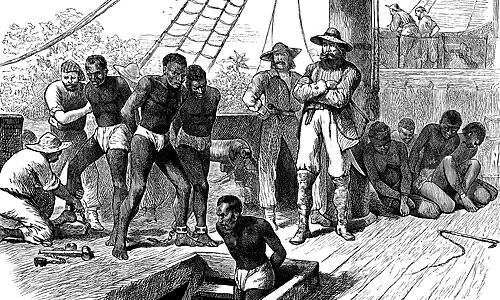
As a way of making the new company more profitable, it was given a monopoly on the African Slave Trade in the South Seas, meaning the islands south of the Equator in the Pacific, and South America. An Asiento de Negros, lasting 30 years, was granted to the company to supply the colonies of Spain there with up to 4,800 enslaved Africans per year.
Undoubtedly it seemed like a great deal at the time, but in reality it didn’t work out so well. In 1714 2,680 slaves were carried, and in the period 1716–1717, 13,000 more, but the ghastly trade continued to be unprofitable, in spite of their best efforts. In total it has been estimated that the company transported a little over 34,000 slaves.
However, in spite of its unprofitability the company found other innovative means to increase its share price. Many members of the Government and even the Royal Family engaged in speculation, since there were no rules regarding insider trading at that point. Shares in the company were “sold” to politicians at the market price, but rather than paying for the shares, these “buyers” simply held the shares with the option of selling them back to the company at any time, receiving the increase in market price as a payout. The company would even lend buyers the money to purchase shares, if necessary.
This meant that all those holders of the stock had a vested interest in the share price continuing to rise, in spite of all commercial logic and simple common sense (sound familiar?).
Over the course of 1720 the price of South Sea Company stock went up from just over £100 to almost £1,000 per share. Its success caused a national frenzy. Polymath Sir Isaac Newton was asked about the extraordinary herd behavior and was forced to admit:
I can calculate the movement of the stars, but not the madness of men.
However, by September 1720 other booms were busting around Europe, such as the “Mississippi Bubble” in France. The South Sea Company’s share price fell back to £150 per share, bankrupting thousands of individual investors, including many in government (the Duke of Chandos lost £700,000, probably equivalent to £100,000,000 now). It was an enormous scandal.
Out of it though one man arose, Sir Robert Walpole, becoming the dominant political figure in the U.K. for the next 20 years, and its very first de facto prime minister (the term had never been used until then). Walpole reformed the South Sea Company, firing 33 of its directors and distributing most of their wealth to ruined investors, and impeached several members of the government.
John Aislabie, the Chancellor of the Exchequer, was found to have accepted a payment of £20,000 to promote the stock. He was found guilty by the House of Commons of the “most notorious, dangerous and infamous corruption” and imprisoned in the Tower of London for five months.
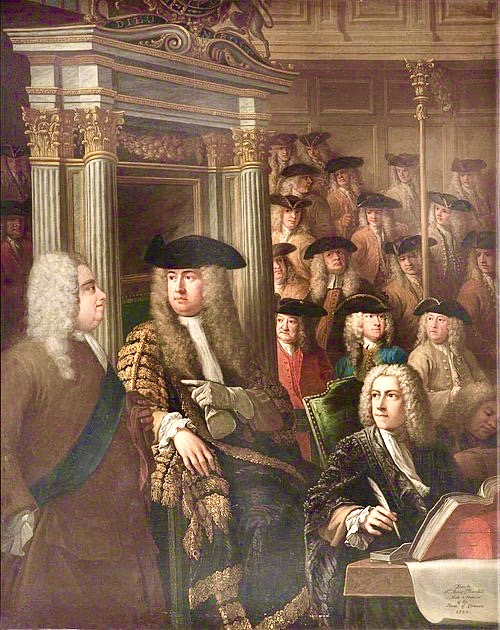
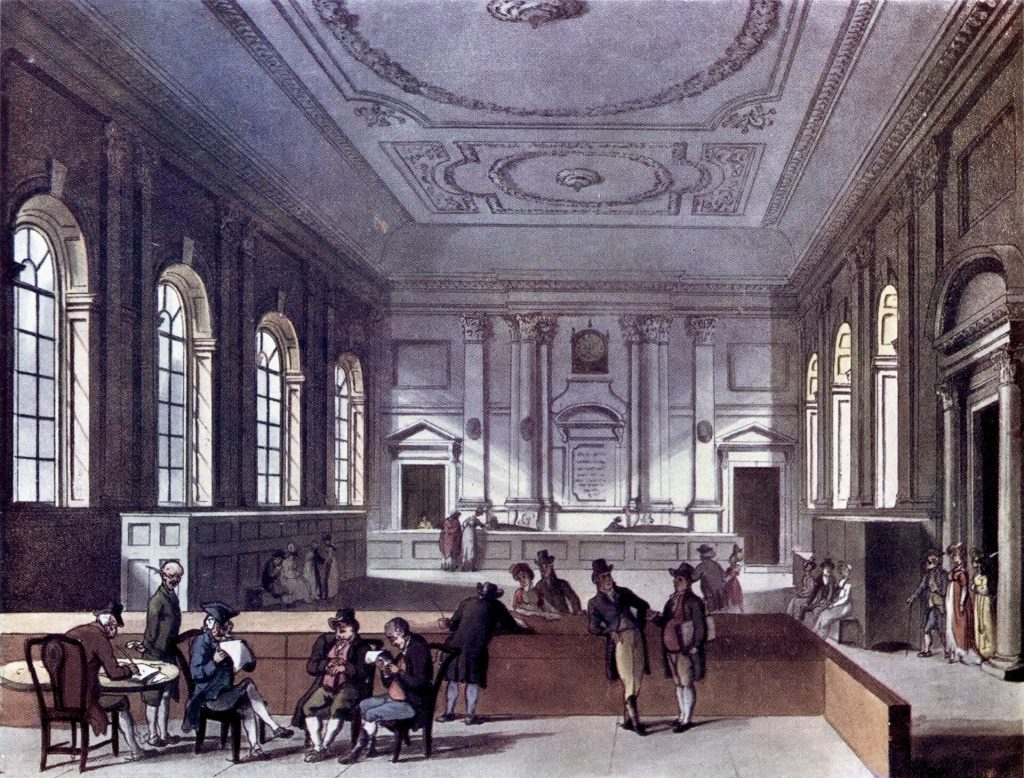
Ultimately the South Sea Company was restructured and continued to operate for more than a century after the Bubble, eventually being wound up in 1853, but the affair confirmed the Bank of England as primary lender to the U.K. Government.
Walpole would remain prime minister until 1742, to this day the longest premiership in British political history (a recent PM lasted just 50 days in office, so it’s a record very unlikely to ever be beaten). However, Parliament did not operate in exactly the same way back then as it does today: the main reason Walpole was prime minister for so long was because he had the support of the king, not his party.
The term prime minister did not exist at the time, and funnily enough to this day is found in very few acts or statutes. The power of the position comes from the holder also being First Lord of the Treasury, giving the Prime Minister the right to write finance bills. The power of the purse is always the source of true power.
10 Downing Street Becomes Prime Minister’s Residence
A grateful George II would gift Number 10 Downing Street to Walpole, as an official residence, in 1732 (he had hidden from the public the Royal Family’s losses from the South Sea Bubble) Walpole accepted it as the official residence of the First Lord of the Treasury, taking up residence there on 22 September, 1735. It’s been the official residence of British prime ministers ever since.
After Walpole moved out at the end of his premiership in 1742 the house was mostly shared between Prime Ministers and Chancellors of the Exchequer (the U.K. Finance Minister) until William Pitt the Younger, who became prime minister and took up residence in 1783. The reasons for that are that most prime ministers during the period had their own, much larger and nicer, houses in London and preferred to stay there. Also the condition of the building was notoriously bad (no less a figure than Winston Churchill described Number 10 as “shaky”). Now the Chancellor always resides at Number 11 Downing Street.
Crime and Punishment in Georgian Era London
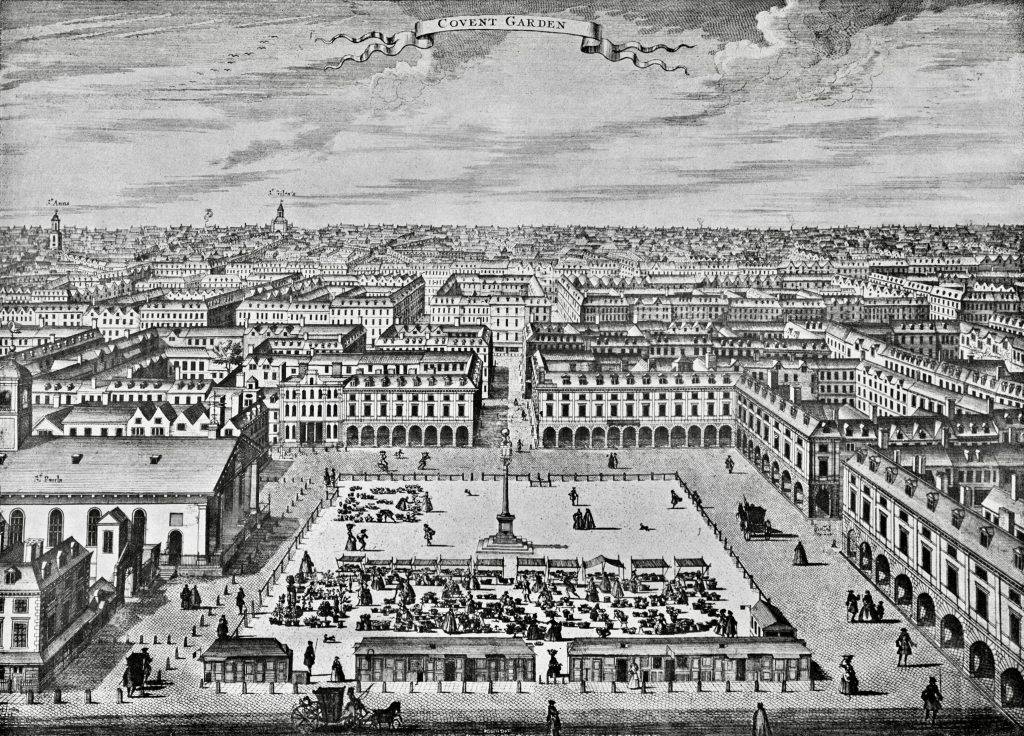
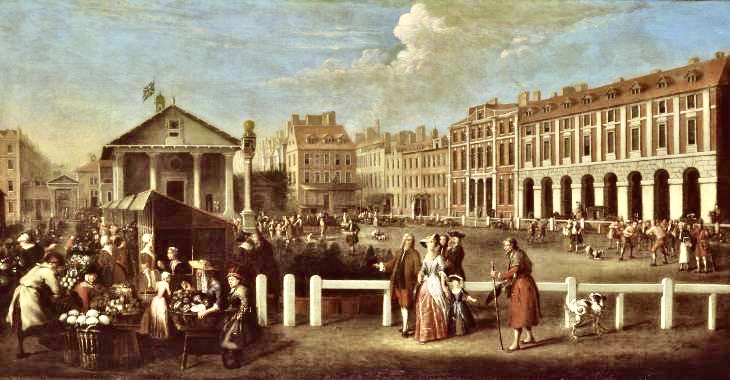
Covent Garden had been laid out by Inigo Jones, Britain’s first true architect, in the 1620’s and 30’s, the name deriving from the area’s past as a large walled garden of Westminster Abbey and Convent. Jones’s elegant development had initially proven popular with the wealthy, but after a market opened in the piazza in 1654 that changed, and during the reign of Charles II the neighborhood became notorious for its coffee houses, bars and brothels. By the 1700’s it was London’s most well-known red-light district as many of the buildings surrounding the piazza became parlor houses.
At the time prostitution was technically illegal, as well as being against Church teaching, but there was no police force to impose the law on unwilling people. If there was no legal complaint, there was no crime being broken. So therefore something that is often kept out of sight today, could be accepted and quite open in Eighteenth Century London.
A TALE OF TWO MADAMS
Two madams, essentially a female owner of a house of ill-repute, of the early Georgian period became particularly famous, Betty Careless and Jane ‘Mother’ Douglas. Judge and writer Henry Fielding wrote of seeing Careless at a play one night in the 1720’s:
It was impossible to conceive a greater Appearance of Modesty, Innocence and Simplicity.
However, two days before he had seen her in a rather different state!
In bed with a Rake, at a bagnio (brothel), smoking Tobacco, drinking Punch, talking obscenity and swearing and cursing with all the Impudence and Impiety of the lowest and most abandoned Trull of a Soldier.
The career of most madams is relatively short (allegedly) and by 1735 she was retiring from the business to run a coffee shop (near the Old Bailey, of all places). In 1739 it was announced that she had died, Fielding himself wrote her a heartfelt epitaph, so it seems that her charms were not entirely lost on the judge.
Careless’s bawd house was taken over by Douglas, who turned it into the finest such establishment in all of London. According to one report her clientele included “Princes, Peers and men of the Highest Rank”. John Gay, author of The Beggars Opera, described her as “that inimitable Courtesan”.
COVENT GARDEN CONDOMS
Prophylactics were becoming available during this time, and Douglas was able to offer her clients the very finest sheaths, provided by Jacob’s on the Strand, no less. They were made from fine leather, or lamb or goat guts, soaked for several hours before use to rehydrate them, then tied with a ribbon (usually pink) when fitted. They came in several sizes, unlike today’s condoms, and could even be made to measure (mercifully there are no descriptions of the fitting process).
In spite of this Careless’ bordello was becoming a little less fashionable by 1746, but she continued in business to 1759, when she sold the business to a relative, Amelia Douglas. At that point she retired due to ill-health, dying a couple of years later.
GUIDE-BOOK TO COVENT GARDEN HOUSES OF ILL-REPUTE
In the 1750’s a guide book of London’s sex trade began circulation, called Harris’s List of Covent Garden Ladies, which detailed the names, locations and descriptions of hundreds of sex workers in the neighborhood. Astonishingly, it’s estimated that up to a fifth of Londoners suffered from syphilis during this period (which was the main reason that condoms were used, not to prevent pregnancy).
Gay brothels were also extant, usually known as molly houses. One of the most famous molly houses was Mother Clap’s in nearby Holborn, which was raided in 1726, resulting in forty arrests and three hangings. Mother Clap herself was sentenced to two years in prison.
THE THIEF-TAKERS
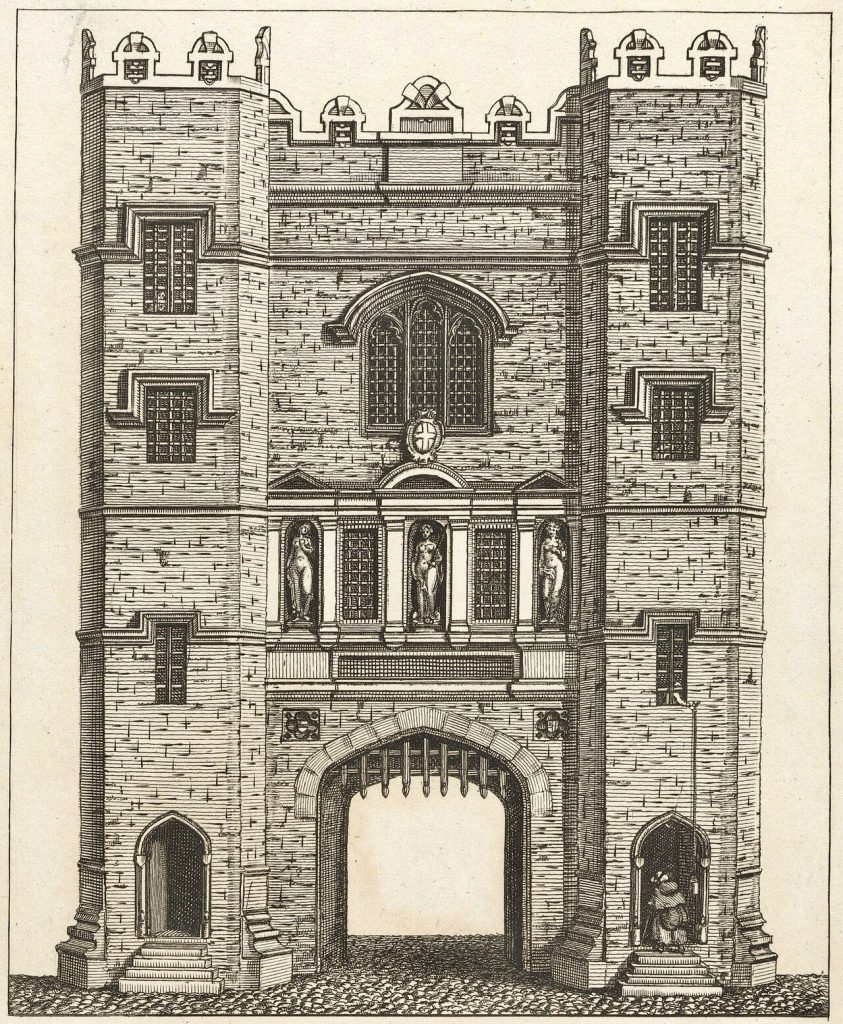
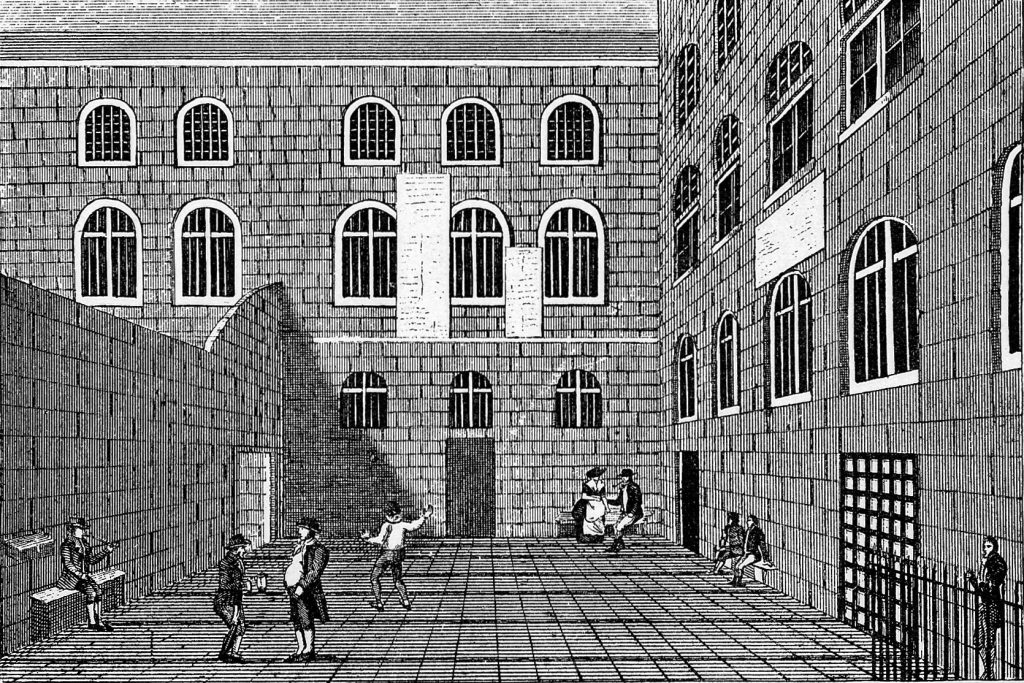
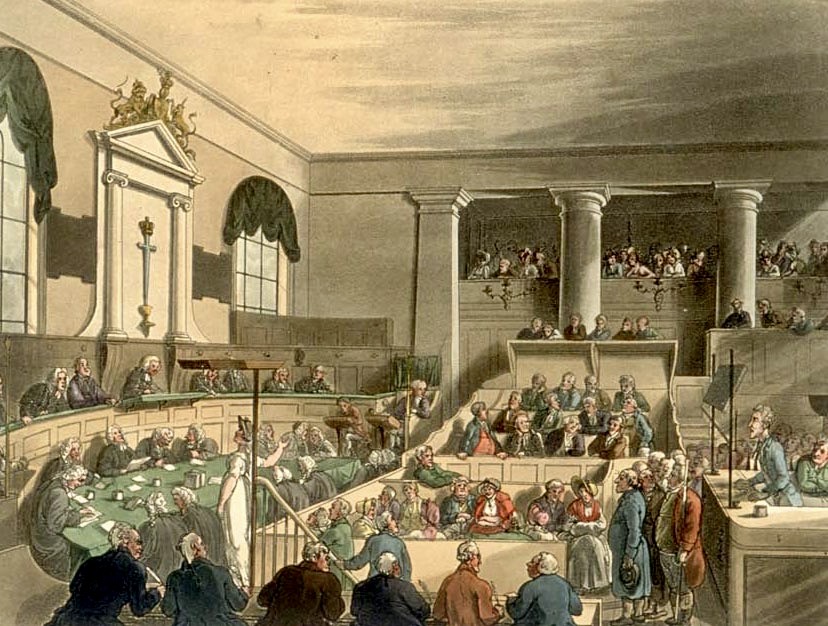
Since 1188 the ancient entrance in London’s walls at Newgate had been established as a gaol for felons and debtors. With financing from the will of Lord Mayor Dick Whittington the prison was expanded in the 1420’s and by the 1550’s the court at the Old Bailey next door began to be mentioned in historical records. Its name comes from the street on which it sits that followed the line of the old London Wall (bailey being the olde English word for an enclosed courtyard behind a fortified wall).
As previously mentioned at the beginning of the Georgian period in London there was no such thing as a police force. Law enforcement such as it existed was mainly a private matter. Capture, prosecution and provision of evidence for the conviction of serious offenders at trial were at the expense of the victim. Tracking down and apprehending criminals was not the duty of any public organisation.
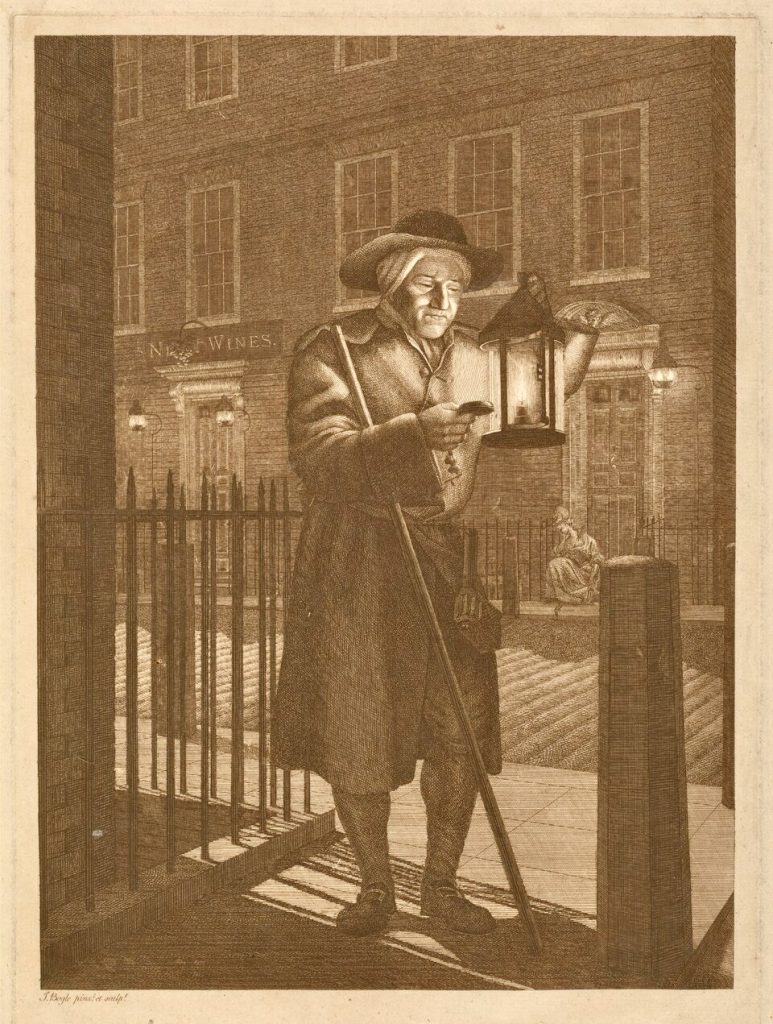
Having said that there were three three public professions involved to some extent with law enforcement: night watchmen, constables and justices of the peace. Night watchmen provided night-time surveillance for petty crimes, making the rounds at night as a deterrent, and hosted those felons on hold to be brought before a justice of the peace the next day. Constables arrested people who had been charged with a crime, after they were already apprehended.
However, an increase in crime after the 1690’s had led to the creation of an unofficial position: thief-taker. By the 1710’s crime was seen as a major problem in London (nothing is new), the increase probably the result of the end of the War of the Spanish Succession, which led to a lot of returning ex-soldiers being unable to support themselves, and later the impoverishment of so many people by the South Sea Bubble. The emergence of daily newspapers, reporting extensively on crime, meant a growing awareness of the issue at the same time.
CHARLES HITCHEN
In 1712 Charles Hitchen bought the office of under Provost Marshal from the City of London for £700, and became one of the most famous thief-takers of the era. As he said himself:
What do you think I bought my place for, but to make the most of it?
And he certainly did! Using his position to essentially organize crime in London, with an estimated 2,000 criminals under his control. There were armies of pick-pocketing kids that would deliver the proceeds of their endeavors to Hitchen, who would then fence the items. With the development of paper money by the Goldsmith Bankers over the previous few decades, it was a lucrative trade. He also invented the concept of what would later become known as a protection racket, charging merchants, taverns and other businesses to ensure that their property wasn’t “accidentally” damaged.
He would even run ads in the Daily Courant for stolen objects that he’d “recovered” during his “investigations”, charging exorbitant amounts to return items to their owners, from whom his criminal accomplices had earlier stolen them.
Within a few years he’d taken on an eager young lieutenant, named Jonathan Wild, and his exploits would ultimately make him even more famous than his erstwhile boss.
JONATHAN WILD
Wild’s early life is a mystery, but by 1710, while he was in his mid 20’s, he was sentenced to imprisonment in a debtor’s gaol near Newgate, within the walls of London. It’s often said that prison is a university for crime, and so it was for Wild. Within a year he had befriended the guards and earned “the liberty of the gate”, meaning that he was allowed out at night to aid in the arrest of thieves.
While on his nightly excursions he met a prostitute and file (pickpocket) in Covent Garden called Mary Milliner. They fell in love, it was beautiful. According to author and journalist Daniel Defoe:
She brought him into her own gang, whether of thieves or whores, or of both, is not much material.
Either way, by 1712 he was out of gaol and living with Milliner as husband and wife (although both were already married). He soon branched out into fencing, pimping and stealing with Milliner as his willing accomplice. Together they operated a scheme called the “buttock and twang”: Milliner (the buttock) would entice a lusty man into a dark alley and Wild (the twang) would then whack the unfortunate guy with a cudgel and rob him. Not surprisingly the semi-conscious men, with their trousers about their ankles, rarely gave chase.
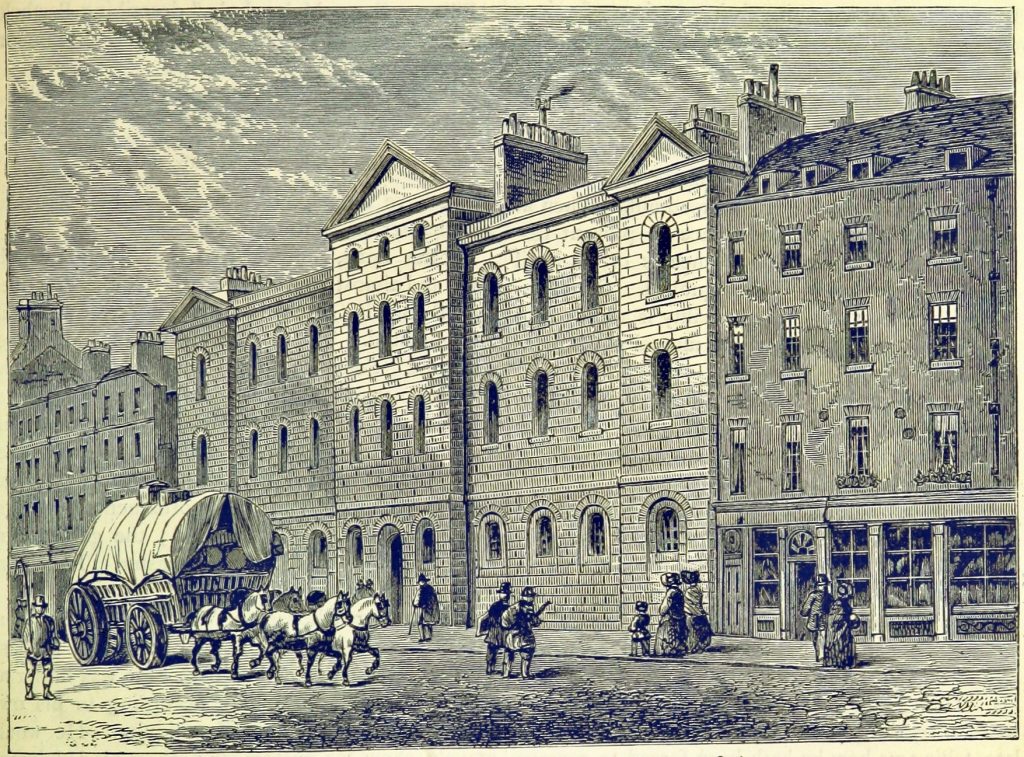
The proceeds from this scheme were so good that Wild was able to buy a pub, the Kings Head Inn, and move from Covent Garden to Cripplegate. Milliner ran a brothel in the rooms above the pub, while Wild would entertain the criminal fraternity downstairs (and rob Milliners clients whenever he could). Around this time he came to the attention of Hitchen, who approached Wild and asked him to join his gang.
RIVAL THIEF-TAKERS
Unfortunately for Hitchen he’d been accused of corruption and he had to step down as under Provost Marshal pending an investigation. He engaged Wild to deputize for him in his absence from office. This was unfortunate as Wild was clearly more ambitious, unscrupulous and dangerous than Hitchen anticipated, and he used his time as under Provost Marshal to take over Hitchen’s rackets.
Around this time Wild and Milliner fell out over the distribution of the proceeds of their crimes. On top of that it seems that he wanted to reinvent himself as a gentleman, with a sword no less. Perhaps Milliner no longer fitted into this picture, but it seems that she wasn’t so happy to be discarded, so Wild sliced off her ear with his sword, thereby permanently marking her as a prostitute. Perhaps it’s not surprising that his associates lived in fear of him.
However, in 1714, Hitchen was able to get his public office back from Wild. By then though, Hitchen knew that he had a very dangerous rival within London’s criminal underworld.
Wild opened an office for the “return of stolen goods” at the Blue Boar tavern, near the Old Bailey. Even though he no longer held an official position he continued to call himself Hitchen’s deputy. He was even better at running the rackets than his old boss, waiting until a crime had been reported in the press, then reaching out to the victims and offering to return the stolen goods which he’d been able to “recover”. If he found material that could be used for blackmail he’d do that too.
Hitchen must have been outraged at Wild stealing his best rackets. And eventually he struck back in 1718 with pamphlet entitled A True Discovery of the Conduct of Receivers and Thief-Takers in and about the City of London, in which he accused Wild of being a criminal himself. Shock horror!.
However, Wild quickly struck back with An Answer to a Late Insolent Libel, in which he accused Hitchen of being a homosexual and habitué of the molly houses. Even though Hitchen attempted to hit back with another pamphlet, the charge of being a homosexual essentially ended Hitchen’s career as an under Provost Marshal, meaning a triumphant return to office for Wild.
THIEF-TAKER GENERAL OF GREAT BRITAIN
Having eliminated Hitchen as a rival, Wild was now free to give in to his worst excesses which, even for the time, were pretty bad. First on the list was anointing himself Thief-Taker General of Great Britain (which was an invented office).
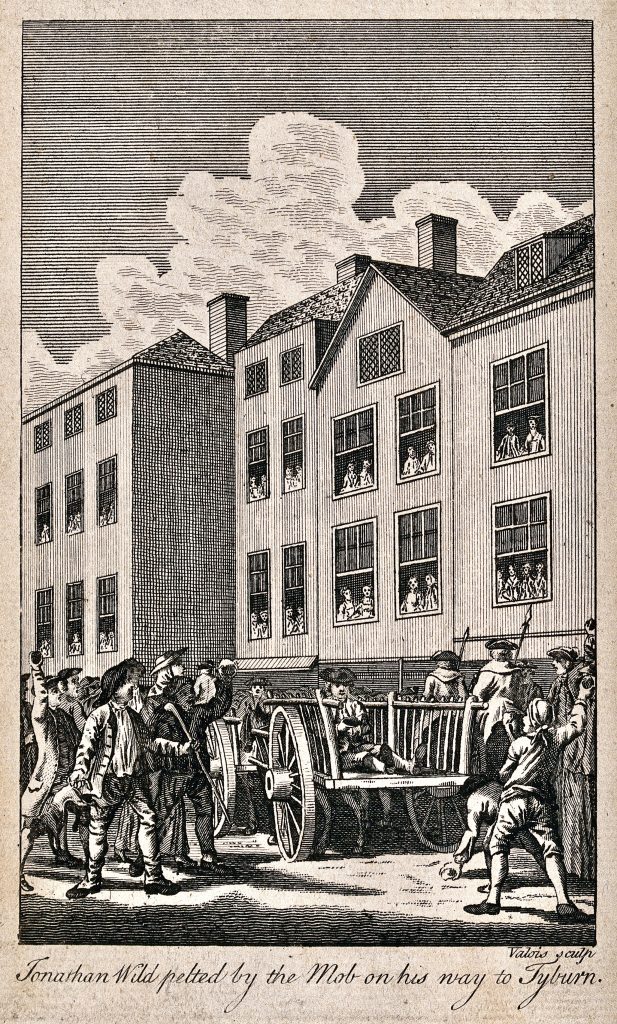
Other excesses were worse, many criminals who refused to work for him (showing admirable honor in the circumstances), or who he thought had double-crossed him in some way, were brought before a judge and, based on his testimony, sentenced to hanging. He personally attended over sixty of these executions, and probably sent over a hundred people to their deaths on the scaffold at Tyburn (today’s Marble Arch).
Nevertheless, although London seemed to have a bad crime problem, it also had a great crime solution, or so it seemed, and in 1720 the UK government consulted him on crime prevention. He probably couldn’t believe his luck! Unsurprisingly, he recommended that the reward for evidence against criminals be raised. Based on his advice the reward increased from £40 to £140 within months, giving Wild a welcome bounty.
By 1724 he’d become a hero of the press as the London newspapers breathlessly recounted tales of how Wild had captured no less than twenty-one members of the feared Carrick Gang, netting him a reward of £800 (probably more than £250,000 today).
JACK THE LAD
Perhaps he flew to high, because he made the usual mistake, giving in to hubris. Over the previous couple of years a housebreaker called Jack Sheppard had become famous as a type of Robin Hood style gentlemen thief, known as Jack the Lad, Honest Jack or Gentleman Jack. He had been an accomplice of Wild’s, but he’d gone his own way, which gave Wild strong motivation to eliminate him, as he had so many others.
One of Wild’s men, James “Hell-and-Fury” Sykes, managed to find and arrest Shepherd, but within three hours he’d escaped. So Wild had him rearrested and reimprisoned. This time his wife, Elizabeth “Edgworth Bess” Lyon, came to visit him and, was locked up with him. They later escaped together.
A couple of weeks later Shepherd was apprehended again, and this time proceeded to trial at the Old Bailey. Once more Wild gave evidence and, naturally, Shepherd was found guilty and sentenced to death. However, wouldn’t you know it, the night before the sentence was due to be carried out, he escaped again! When he was finally found and rearrested, the authorities put him in the deepest, darkest, dungeon at Newgate Prison, shackled and chained to the floor.
Meanwhile, another associate of Shepherd, Joseph “Blueskin” Blake (they do have great names) was also arrested. At his trial he was also sentenced to death, whereupon he pleaded with Wild, who was in the courtroom of course, to commute the sentence to transportation to the American colonies. Wild refused and Blake jumped out of the dock and attacked him with a hidden knife, managing to wound him severely before being pulled off.
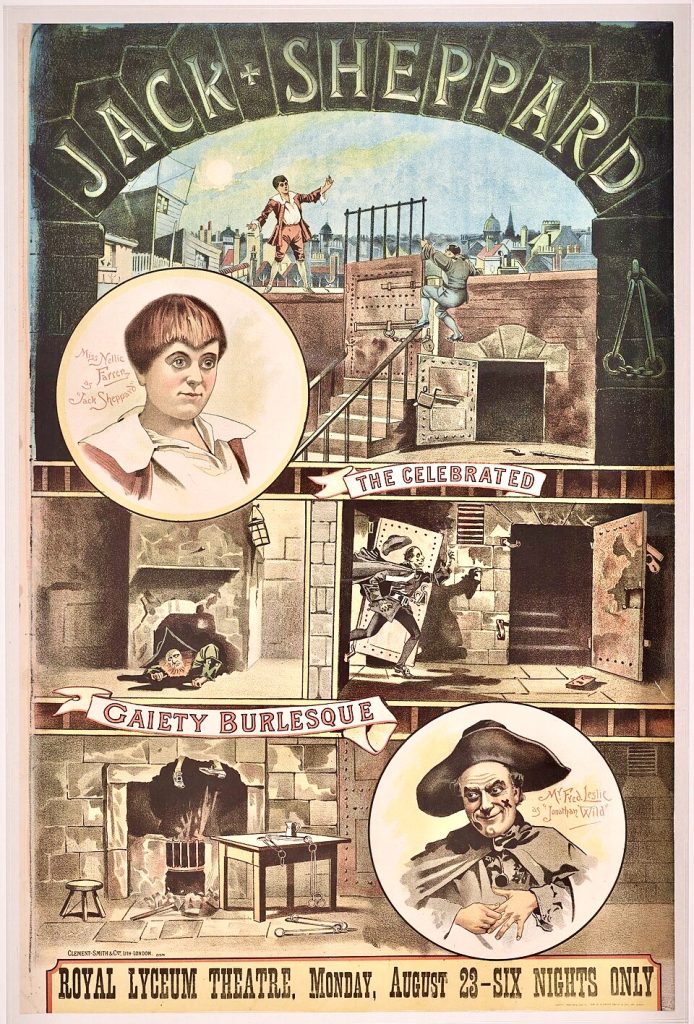
With all the commotion though Shepherd made yet another escape, breaking chains, padlocks and six iron-barred doors. When he was recaptured two weeks later he was chained in the central courtyard of Newgate, where he could be observed at all times, with three hundred pounds of iron weights holding him down. People were almost ascribing him supernatural powers, and the public were allowed into the gaol in huge numbers (for a fee) just to see him.
Unfortunately for him there would be no more escapes though and on 16 November Shepherd was taken to be hung at Tyburn, five days after Blake. Crowds estimated at around 100,000 people lined the route from Newgate to the gallows. but this time there was almost a celebratory air to the event, which was very different to the normal atmosphere.
After a quick stop for a pint of sherry at an inn on Oxford Street, he arrived at the scaffold, where his luck finally ran out. Shepherd’s slight frame had aided him in many of his escapes, but now it worked against him as he was slowly asphyxiated over a fifteen minute period. The huge crowd also prevented the execution of a plan (pun intended) devised by his accomplices to create a diversion, cut down his body as quick as possible, spirit him away, and try to revive him.
DOWNFALL OF WILD
This was actually the beginning of the end for Wild too. His popularity took a permanent hit due to the whole saga around Shepherd. Public sentiment was turning against the crime and corruption that had been revealed by the South Sea Bubble. Wild was stupid enough to get involved in a prison break of some of his gang from Newgate. When witnesses reported his presence, it was taken as proof of his criminal activities.
In February 1725 Wild was arrested and put on trial himself. One by one his gang members turned against him and gave evidence. Accordingly, he ws sentenced to death by hanging at Tyburn, like so many others. Wild himself seemed to completely go to pieces. Pleading insanity and going on hunger strike.
On the morning of his execution in May he took an overdose of laudanum (a tincture of opium to relieve pain), in order to commit suicide. It didn’t work, although he managed to lose consciousness for most of his hanging. There was an enormous crowd to witness the end of the thief-taker, with tickets being sold for ring-side seats. Defoe reported that the execution had almost a celebratory atmosphere.
Wherever he came, there was nothing but hollowing and huzzas, as if it had been upon a triumph.
In a macabre touch the hang-man was a friend of Wild’s and had been a guest at his wedding just a few years earlier (to his third wife).
Wild’s infamy has continued after his death though. The character of Peachum in The Beggars Opera is modeled on him (Macheath is based on Shepherd), and Sherlock Holmes’ famous adversary Professor Moriarty is described as a successor to Wild by Sir Arthur Conan Doyle. Wild’s skeleton is on public display to this day at the Royal College’s Hunterian Museum, in Lincoln’s Inn Fields.
HITCHEN’S END
Hitchen probably saw an opportunity here to take back over his old rackets, but he was out of luck too.
His homosexual proclivities were well-known, as shown by his nicknames of Madam, or Your Ladyship. A frequent visitor to London’s molly houses and the infamous “Sodomites’ Walk” of Moorfields, Hitchen was eventually arrested for the crime of sodomy which the 18th Century judicial system viewed as assault, and punished with a fine, imprisonment, the pillory or hanging. This was more than a little ironic as Hitchen himself had often blackmailed other users of London’s molly houses.
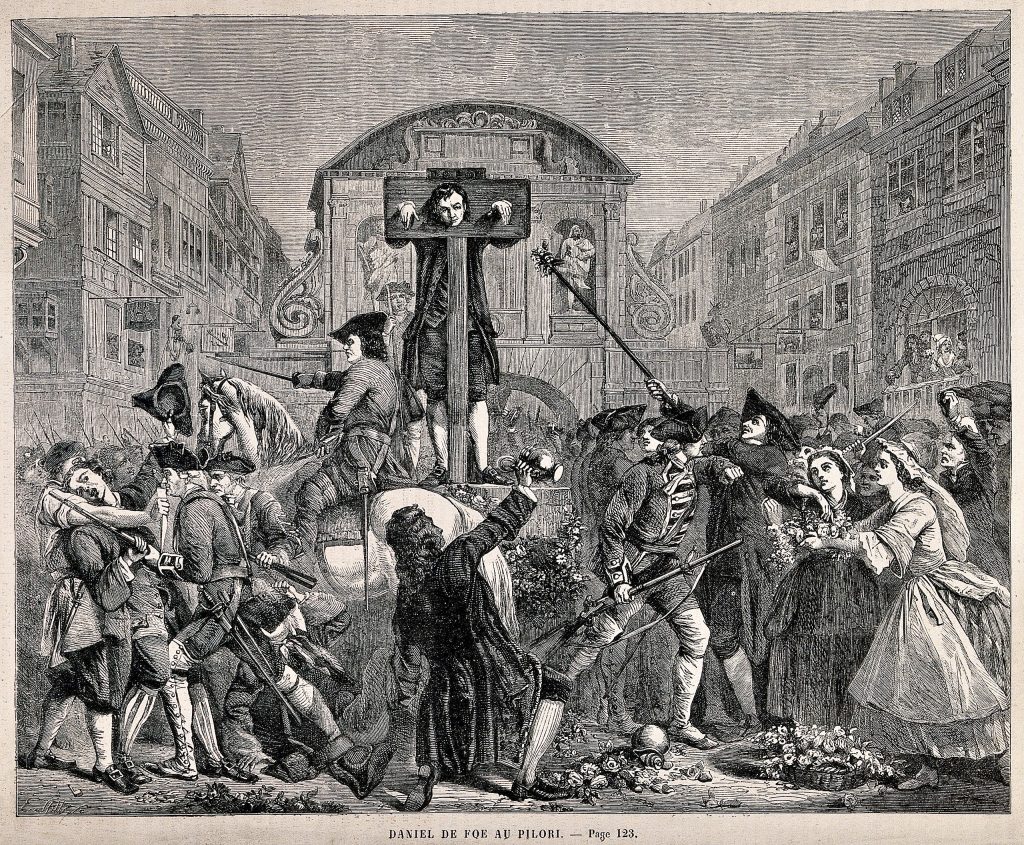
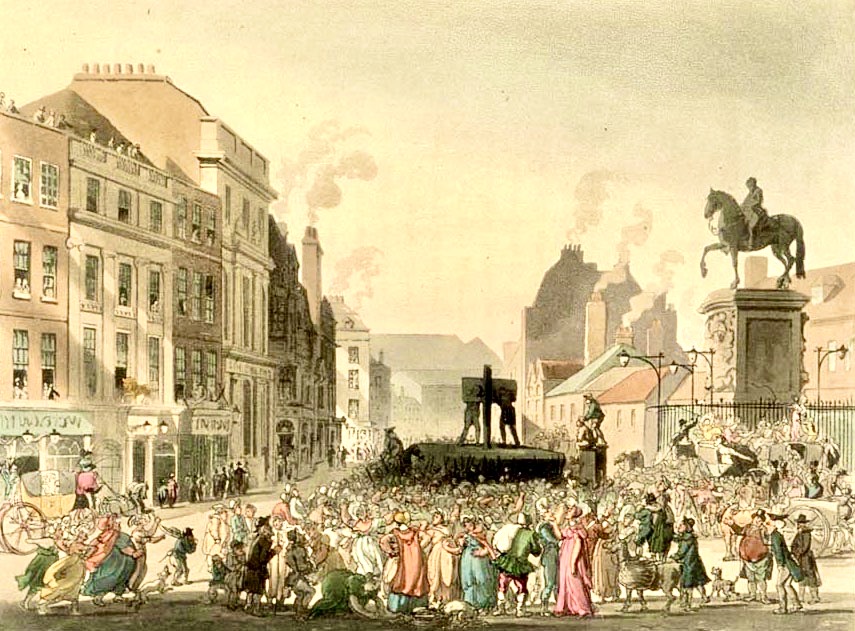
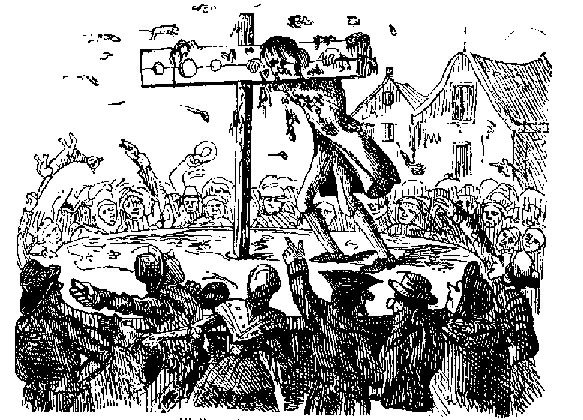
In 1727 Hitchen was found guilty of assault and “sodomitical practices”, being sentenced at the Old Bailey to imprisonment for six months and standing for an hour at the pillory on the Strand, at the end of Catherine Street. There a crowd, composed mostly of prostitutes from nearby Covent Garden, broke the line of Hitchen’s remaining allies and beat him so viciously that the torrent of filth and stones tore off his clothes, forcing the marshal to remove Hitchen from the stocks before the hour was up.
He died in December of that year, probably as a result of injuries sustained in the pillory, and the era of the thief-takers was over.
FIRST POLICE FORCE
To every action there is an equal and opposite reaction. As the licentiousness and criminality of Covent Garden grew, and with the Thief-takers being discredited, the authorities searched for another solution. By 1748 it was reported that every fourth building in the neighborhood was an unlicensed gin shop, and parlor houses were at about the same percentage.
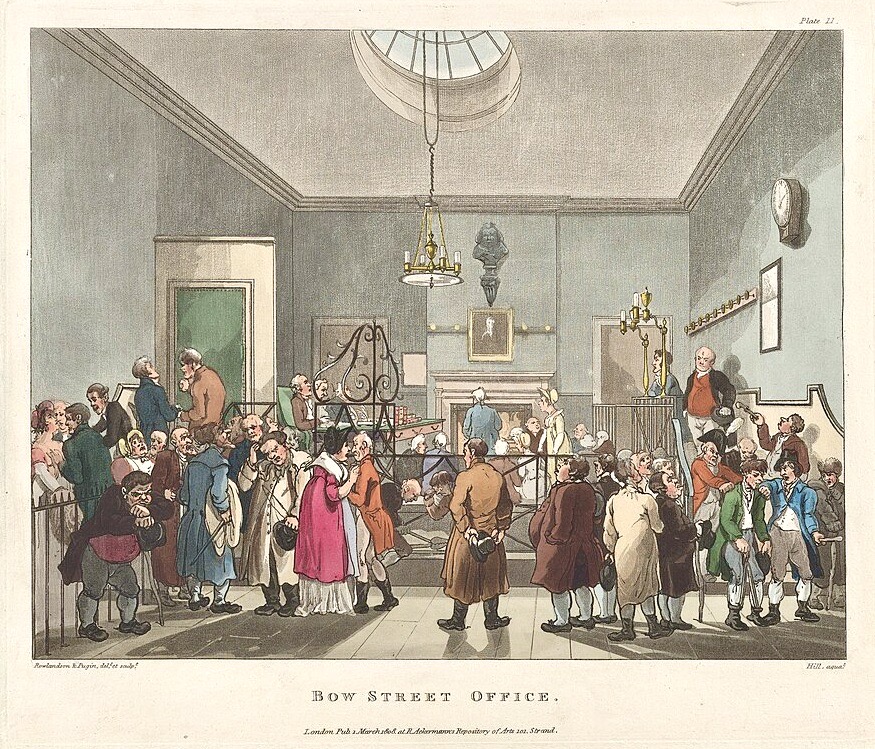
Henry Fielding became a magistrate for the City of Westminster in 1740, and he established a court at his own house at 4 Bow Street in 1749. With crime seen as being out of control, Fielding hired eight constables, who became known as “Mr Fielding’s People”. They subsequently developed a reputation for tenacity and probity in their pursuit of criminals, becoming known as the Bow Street Runners, London’s first (unofficial) police force.
BOW STREET RUNNERS
In reality the Bow Street Runners operation was not so different from that of Wild and Hitchen, in the sense that they were only quasi-official and how efficient they were, and how uncorrupt, depended on the character of the magistrate: in this case Fielding.
Luckily, in addition to being a brilliant writer Fielding was incorruptible, and a very adept administrator too. One of the biggest issues he had was in ensuring his men were well-paid enough that they didn’t need to supplement their salaries with bribes. This was achieved, in 1753, when Fielding persuaded the government to provide him with an allowance of £200 a year to fund the operation (soon that tripled).
The following year Fielding died, but his work was continued by his brother, John Fielding, who came to be known as the Blind Beak of Bow Street (he was blind and beak was a nick-name for a judge). John ran the Bow Street Runners until he died, in 1780, by which time the model was being studied to create a more official police force.
One of his innovations was the creation of an office to collect and record information on offences and offenders, thereby creating the first criminal database in the UK. John Fielding wanted this to form the basis of a national database of information on crime.
THE BLOODY CODE
Perhaps ironically, although the application of the law was very haphazard, the penalties for breaking the law could be incredibly harsh. In 1689, the year after the Glorious Revolution, there were fifty offenses that were punishable by death, by the 1770’s that number had quadrupled. Partly that was because of the seeming explosion in crime over the 18th Century. Having said that, it got so bad at one point that, famously, King George II himself was pick-pocketed in Kensington Gardens, losing his watch and wallet (although other sources attribute this royal robbery to George III).
Grand larceny, one crime that drew the death penalty, was defined as the theft of goods worth no more than 12 pence, about £50 today. Penal transportation, with a term of indentured servitude in the American colonies, became a common punishment after 1717 too. Once the U.K. officially recognized U.S. independence in 1783 the government began transportation to Australia, which continued well into the 19th Century.
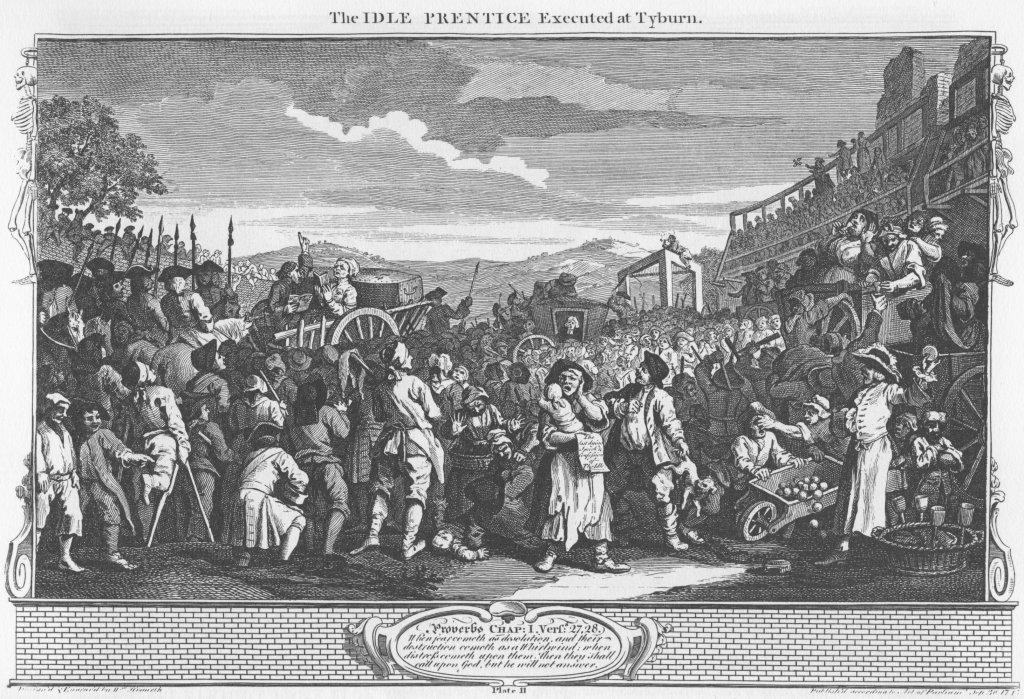
As already mentioned London’s main execution ground for most of the Eighteenth Century was at the junction of two Roman roads, now known as Edgeware Road and Oxford Street, at Tyburn. The first execution there was in 1196, and traditionally prisoners were led in a procession from Newgate Prison, near St Paul’s Cathedral, to ‘the Tyburn Tree’. Usually condemned men were offered a final stiff drink at an inn on Oxford Street, to fortify themselves for the ordeal, which is where the term ‘one for the road’ is believed to come. The last hanging there was in 1782, after which executions were moved to Newgate Prison.
In 1800 the Thames River Police were created to protect the Port of London from cargo theft (which was rife at the time). Later, in 1829, Home Secretary Robert Peel created the Metropolitan Police (commonly known today as the Met, or Scotland Yard). The reason for the name Scotland Yard is because the new police force’s first headquarters were in Whitehall and backed onto a street called Great Scotland Yard (the Met has since moved to new premises on the Embankment, which were named New Scotland Yard).
Police officers became known as “bobbies” or “peelers”, after Robert Peel. Peelers is no longer in use as a name for them, but street-patrolling police in London are still referred to as bobbies to this day.
In 1839 the Thames River Police and the Bow Street Runners were both finally merged with the Met, The City of London retained responsibility for policing within its own boundaries.
Tower of London
It was during the Georgian era that the Tower of London dropped out of use as a prison. It had only been used fitfully as a palace, usually if the king or queen were feeling like they needed some protection from a rebellious population, but even that motivation ended during the period (the last time that the monarchy really felt threatened in that way was in 1745, with the Second Jacobite Rising).
There was an American kept prisoner at the Tower during the War of Independence, the only one to have been imprisoned there. Henry Laurens is a US Founding Father, no less, He’d been captured by the Royal Navy off Newfoundland on returning to the US having negotiated a treaty with the Dutch. He was held at the Tower for a year, before being exchanged for the captured General Cornwallis in 1781. London was in fact seen as being sympathetic to the American Revolutionaries, much as it had been on the side of Parliament during the Civil War in the previous century, at least during the early part of the War of Independence.
Nevertheless the Tower continued in use as a military base, as the location of the Royal Mint (which needed protection), and as a zoo. Commonly known then as the Royal Menagerie there had been exotic animals kept at the Tower since the reign of King John, but during the 18th Century it was opened to the public and became a big attraction. There was an inventory made in 1800 which listed a tiger, leopards, a hyena and a large baboon, in addition to various species of monkeys, wolves, and “other animals”. It wasn’t until 1831 that the animals were moved to the newly opened London Zoo.
The Crown Jewels had been an attraction since 1669, when they were opened for viewing by a paying public (the collection having been held at the Tower since at least the middle of the 13th Century, under King Henry III). Only two years later there was an attempted heist of the royal baubles by the very appropriately named Colonel Thomas Blood which, although audacious and very cleverly planned, ultimately failed. They’ve been safe there ever since.
The Tower of London complex had been open to viewing by the public since at least Elizabethan times. So they’ve had a long time to get good at running an attraction.
Georgian Pleasure Palaces
At the dawn of the Georgian Era in London the main royal palaces in London were the St James’s and Kensington Palaces, as well as Hampton Court a few miles upriver. However, George III never liked Hampton Court, since he was humiliated there one time by his grandfather George II, and he also didn’t much like Kensington Palace, which he felt was a little run-down, so both of those palaces declined in usage as the period went on.
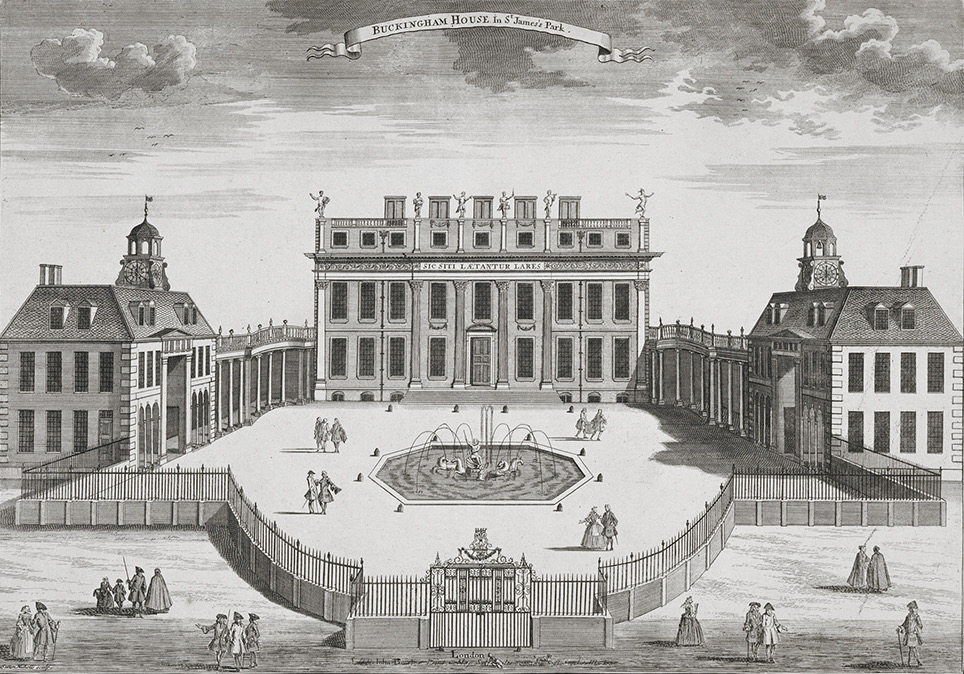
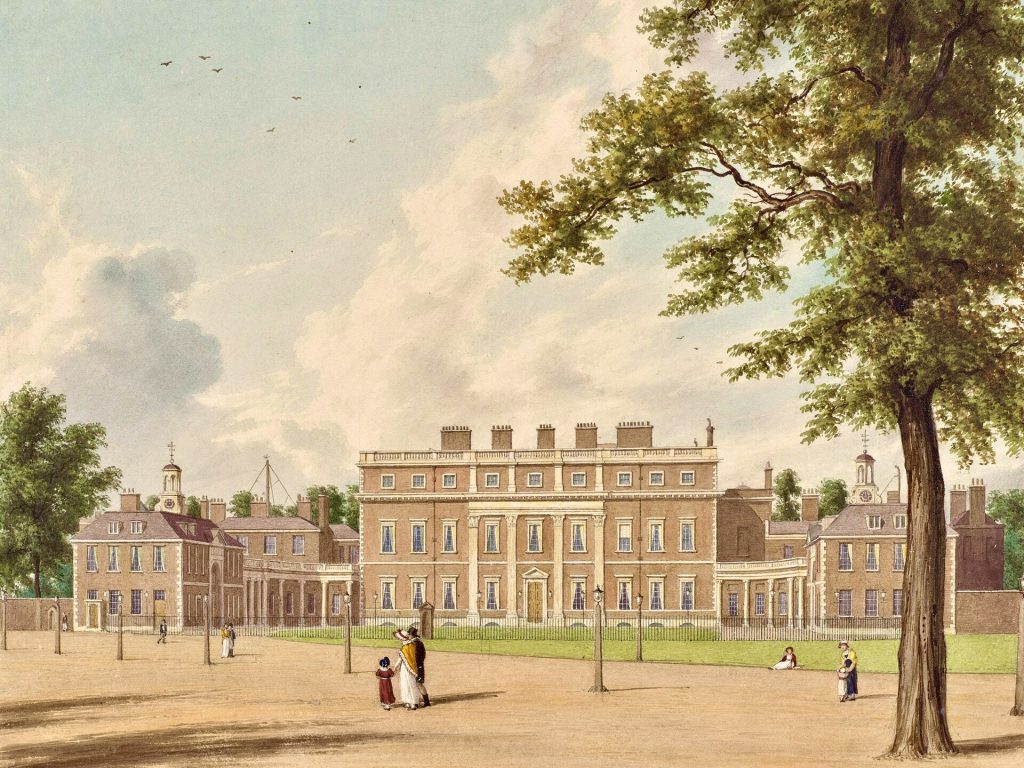
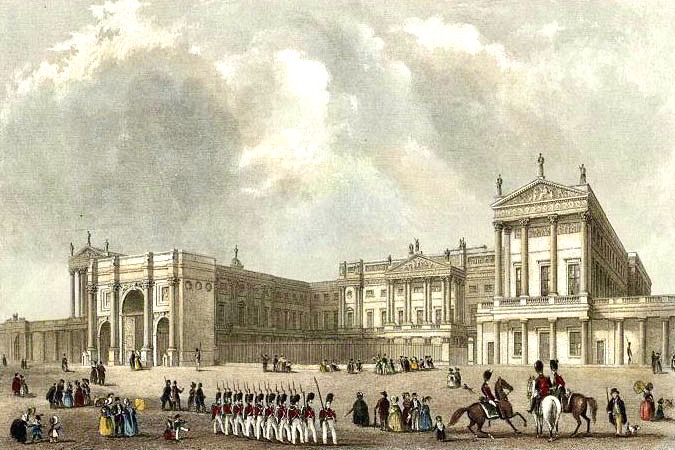
In addition to building a new palace at Kew, George III also bought a large property across the road from St James’ Place, called Buckingham House, for £21,000 in 1761. Initially it was intended to be a smaller palace for more minor members of the royal family. It began to be referred to as Buckingham Palace in 1791 and underwent a series of renovations in the following decades, but it would not become the principal residence for the monarchy until Queen Victoria ascended the throne, in 1837.
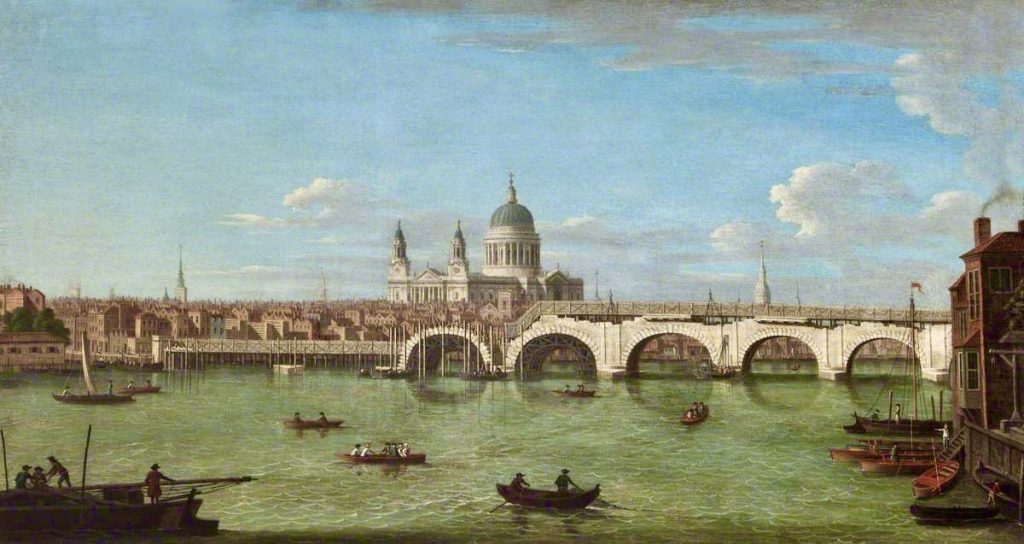
Part of the reason for the need for a new palace is that the old Somerset House, on the Strand, was being redeveloped into a government building in the 1770’s (it’s now open to the public). The artist Canaletto painted the view of London from the river terrace twice when he visited London (see top photo).
Commerce and Colonialism
It was during the 18th Century that the East India Company became the dominant power in India, and this had a huge impact on London, as goods, and money, from the subcontinent poured into the city. The Mughal Empire was the richest in the world in 1700 and the East India Company had operated there for a century by then. but they were totally subservient to the Emperor. However, the death of the Mughal Emperor Aurangzeb in 1707 meant that the company was able to become much more powerful over the 18th Century, as India split into different states and kingdoms, which could be more easily picked off by the company.
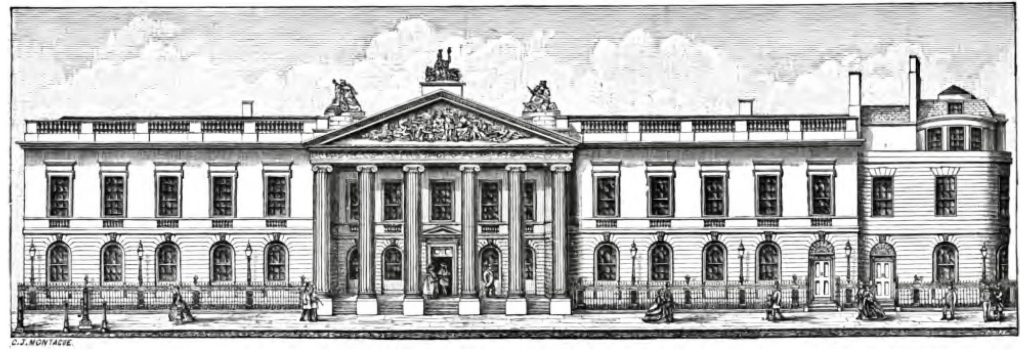
As the East India Company began to control huge swathes of the subcontinent its income massively swelled due to its ability to tax its Indian subjects, loot much of their treasure and force them to buy British products. The historian William Dalrymple called it “the single largest transfer of wealth until the Nazis”. By the end of the 18th Century the company was unveiling an enormous new headquarters building on Leadenhall Street (the site is now occupied by Lloyds of London). It’s no exaggeration to say that the East India Company is the most powerful company there has ever been (and probably will be).
At the same time at Britain was expanding its control of India, it was also expanding its colonies in North America. With the formation of the colony of Georgia in 1732, the Thirteen Colonies were well established by the middle of the century. Immigration from the U.K. to the colonies was huge and the resulting trade was also massively significant. By 1750 it’s estimated that the population of the Thirteen Colonies was 1.5 million people, and by 1770 they were responsible for around 40% of the entire GDP of the British Empire.
Of course attempts by the British to tax the North American colonies were much less successful than similar attempts in India, leading to first revolt, and then independence, which was recognized in the Treaty of Paris, in 1783. Although losing the Thirteen Colonies was a body blow to the British Empire, it did not stop its expansion, with new lands being added over the following decades in Asia, Australia and Africa. This meant that the Port of London remained the most important and busiest in the world.
One of the big differences between the British Empire and many others, such as the Spanish, is that it was based primarily on trade and was quite haphazard in its expansion, often being led by private and commercial interests, as opposed to being directed by a government or monarch intent on imperial glory (although that was also a factor).
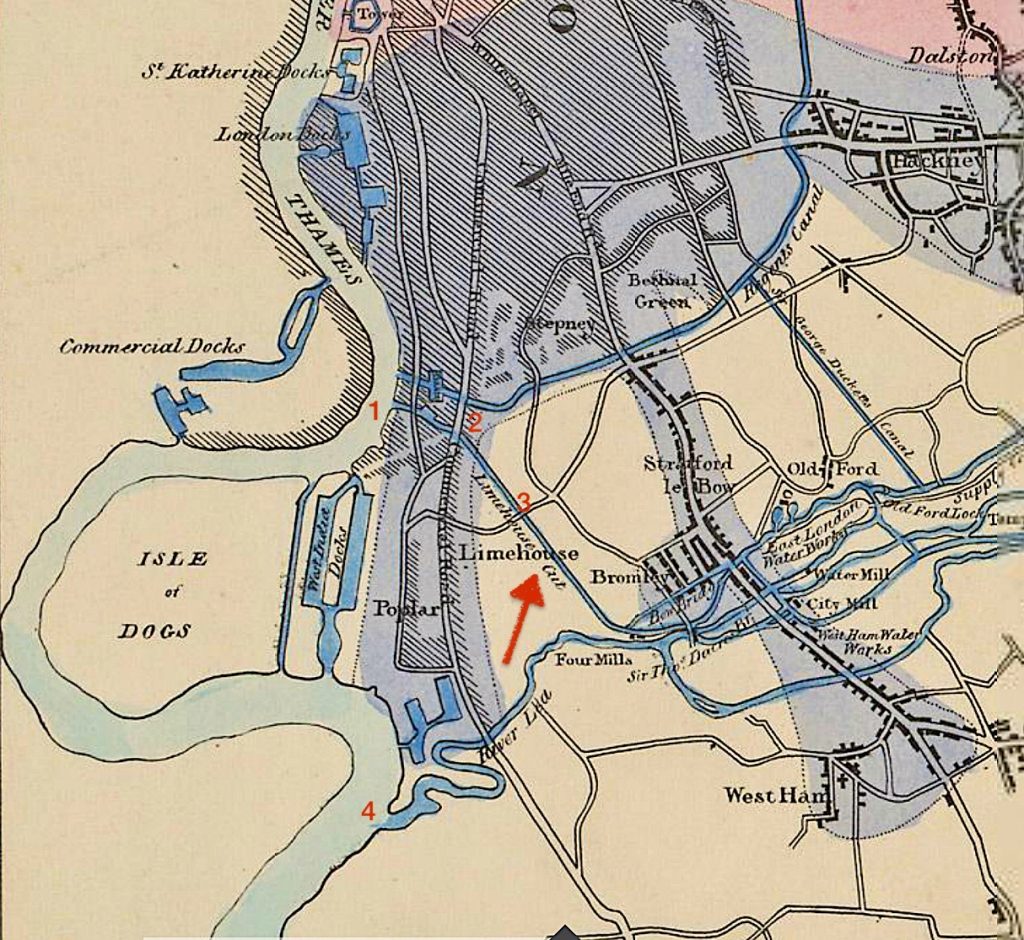
Over the second half of the 18th Century shipping using the Port of London more than doubled, meaning that in the 1800’s new docks were built east of the old Pool of London at Billingsgate, becoming the West India Docks and East India Docks. A canal called the Limehouse Cut had been excavated in the 1770’s so barges using the River Lea could avoid the need to round the Isle of Dogs to reach the port.
Many companies that we still know today were founded in London in the Georgian Era. In 1706 Thomas Twining opened a tea shop at 216 Strand, in London. It’s considered the first tea shop in the U.K. and it’s still operating there today. The Twinings company logo, created in 1787 is the world oldest in continuous use. Jackson’s of Piccadilly (now owned by Twinings) opened around the same time. With the independence of Haiti in 1804 creating a collapse in commercial coffee production, the British would switch their preferred drink to tea in the 1810’s and 1820’s.
Other companies that were founded during the period and are still operating were auctioneers Sotheby’s (1744), Christie’s (1766) and Bonhams (1793), In 1772 Joseph Priestly basically invented the carbonization process to make fizzy water, publishing the work Directions for Impregnating Water with Fixed Air. He didn’t exploit the commercial opportunities of his invention, but a Swiss businessmen called Johan Schweppe did, founding Schweppes Company in 1783. A few years later he moved to London, in 1792, to develop the business further, and with that he effectively invented the modern soft drink industry.
Over the course of the Georgian period in London the Bank of England gradually took shape on Threadneedle Street (at the site of the first governor’s house), where it still sits. The Bank of England had been established in 1694, primarily as a way to raise funds to rebuild the Royal Navy after Britain lost the Nine Years War with France (in a similar debate to today).
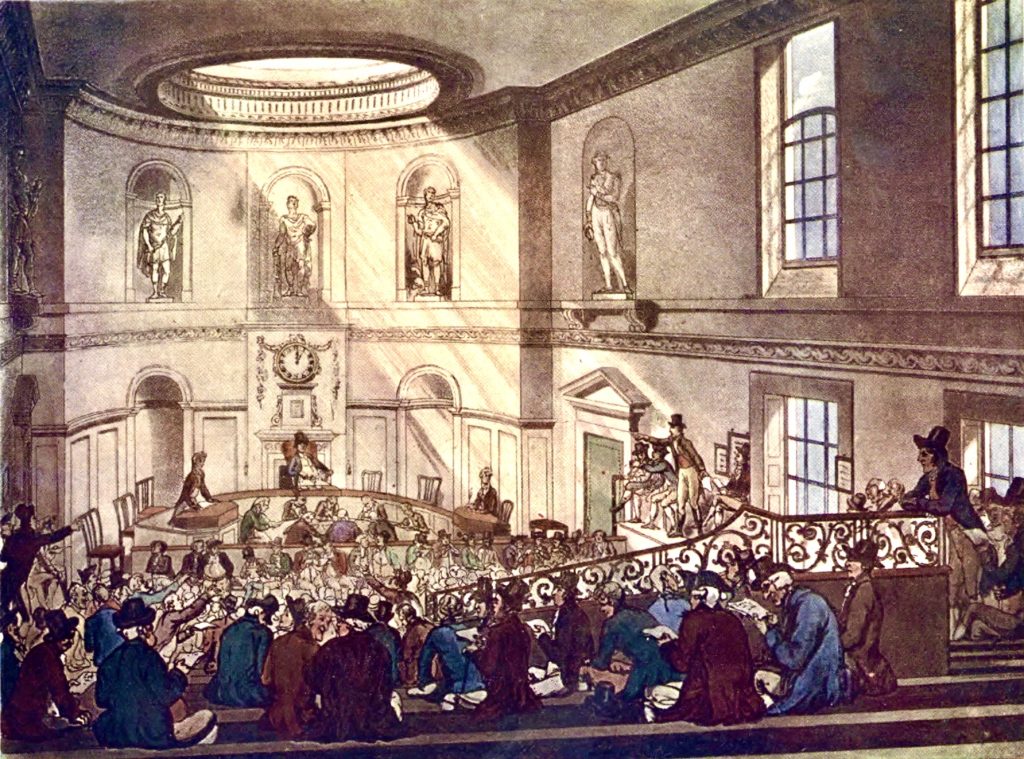
Until 1946, when it was nationalised, the Bank of England was a joint-stock company and, interestingly, George Washington remained a shareholder throughout the War of Independence, since his shares were increasing in value so much during the period. By the end of the century the bank had gobbled up numerous plots of land around it, including a church, and a huge new complex was being built to a design by Sir John Soane. In the late 18th and early 19th century the Rotunda at the Bank of England was used as a trading floor for stockbrokers.
Bridges
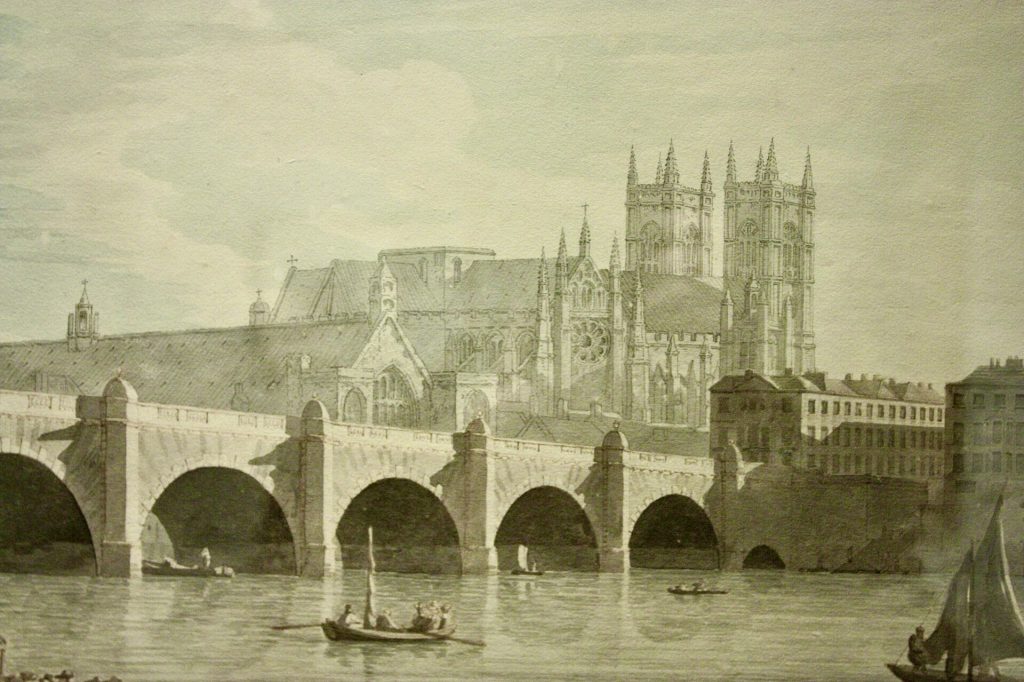
Up until 1750 London Bridge had reigned supreme, as the only bridge over the Thames within the city. Not only that, but the nearest bridge was at Kingston, 12-16 miles away (depending on which bank you stood on). However, Westminster Bridge opened in that year, even though the ferrymen had, not surprisingly, opposed it.
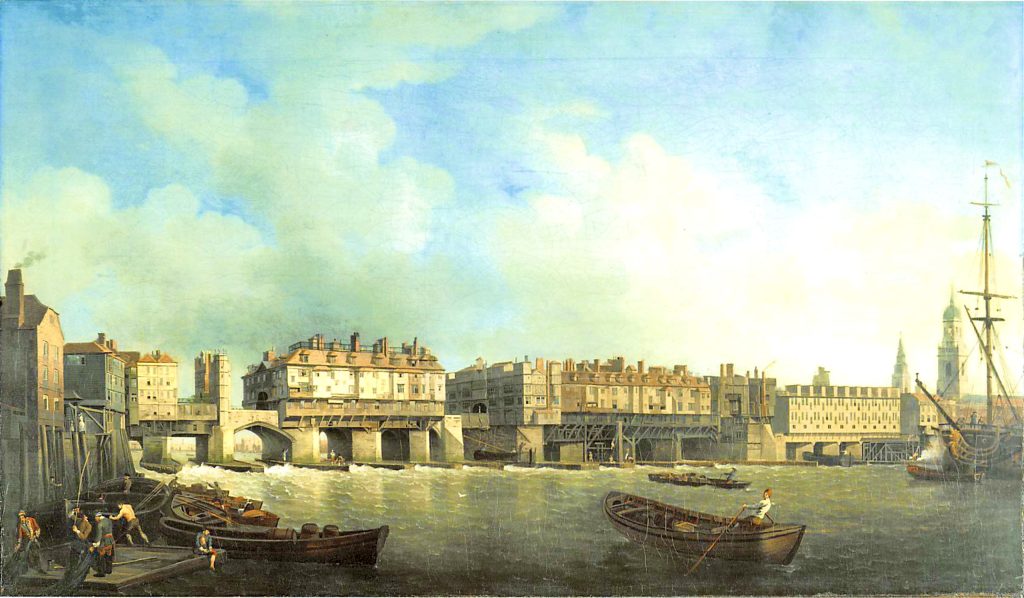
The City of London responded in the early 1760’s by removing the buildings on top of London Bridge and widening it (the last houses to be built on the bridge were only added in 1745). Then, in 1769, another bridge was added at Blackfriars, and in the 19th Century numerous other bridges were constructed.
Culture
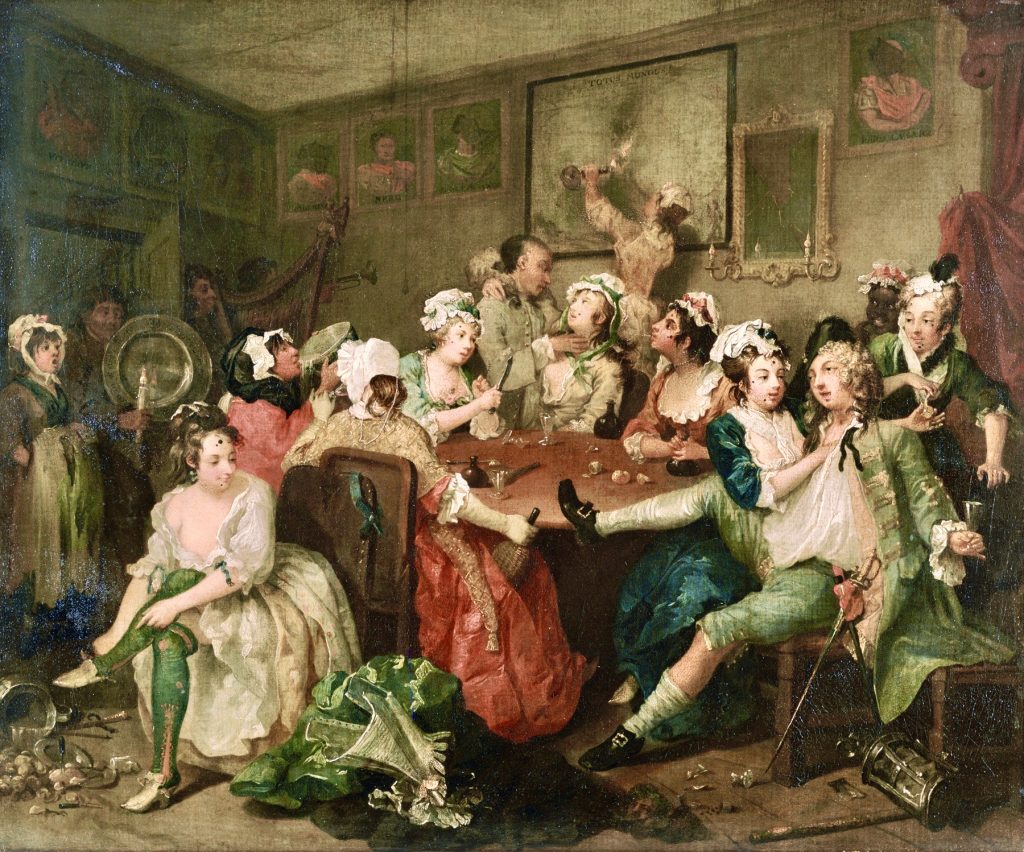
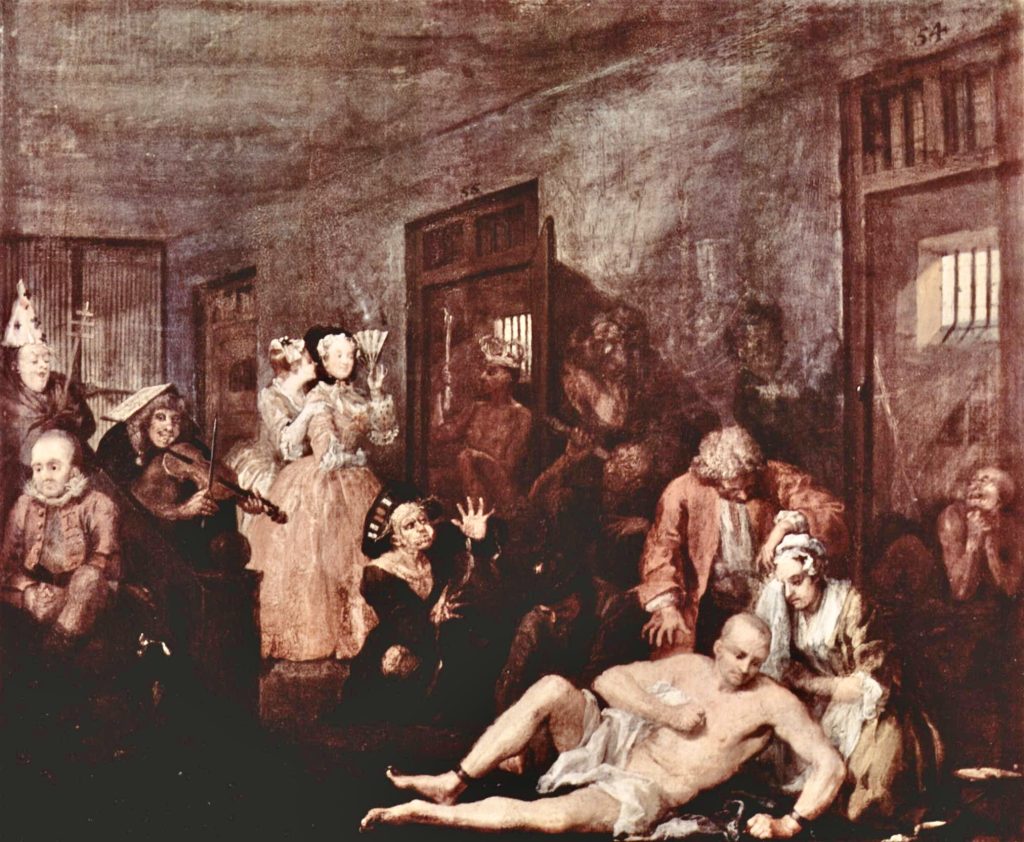
As much as historians revere Pepys as an invaluable source of information about how things were in the 17th Century, the artist Hogarth was a similar figure for the 18th Century. William Hogarth was an exceptionally talented artist, satirist and writer, whose paintings of the period really open a window onto the world back then. Perhaps today he would be a filmmaker, because in many ways that’s almost what he achieved with his paintings, particularly his satirical series’ A Harlot’s Progress, A Rake’s Progress and Marriage A-la-Mode.
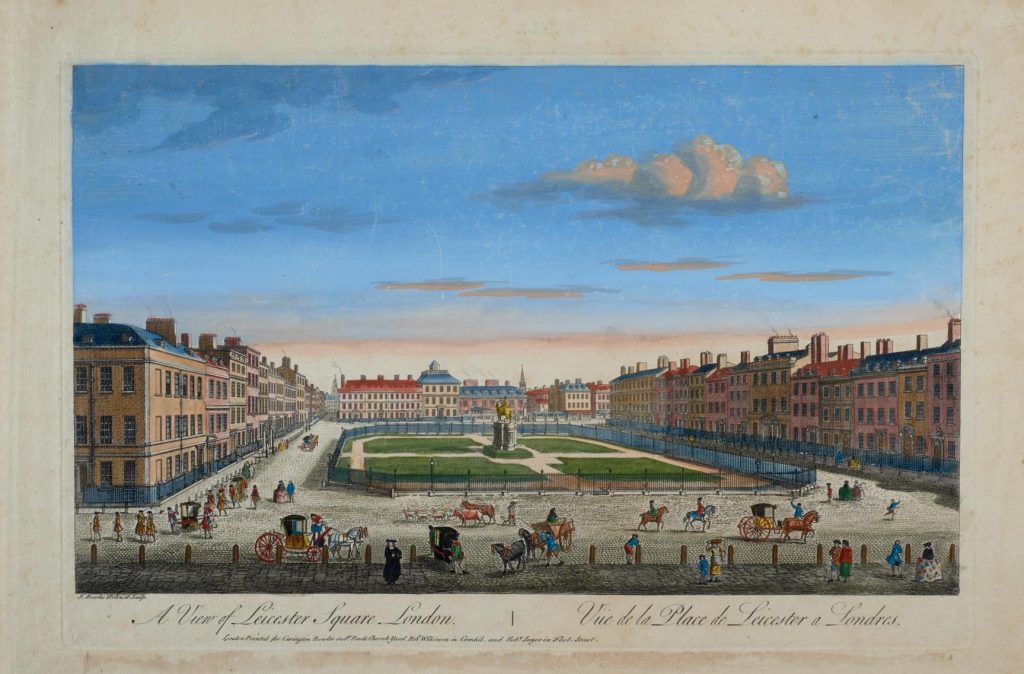
As I’ve detailed here, London had very much moved away from the puritanical ethos of the Civil War and its aftermath throughout the Georgian era. There was a licentiousness, an easy acceptance of some of the worst excesses of human nature, and Hogarth captured that mood perfectly. For most of his adult life he lived in Leicester Square (on the southeast corner), although he also had a house and studio at Chiswick, in West London.
The growth of the arts in London during this period is exemplified by the formation of the Royal Society of Arts, in 1754. Its first meeting was at a coffee house on Henrietta Street in Covent Garden. Benjamin Franklin was a member while living in London before the Revolution, and he met Thomas Paine, another Founding Father, there (Franklin’s house was only round the corner from their premises).
The Royal Academy of Arts was founded a few years later, in 1768. It’s been at Burlington House on Piccadilly (in what had been an aristocrat’s palace), since 1868. The Royal Society, which was founded in 1660, became increasingly important during the 18th Century, especially under its then president Sir Isaac Newton (1703-1727).
In fact, it’s Anglo-Irish Academy member Hans Sloane who’s officially credited as the primary mover behind the founding of the British Museum. Created in 1753, it opened to the public in 1759 in what had been another aristocrat’s palace, on the site of the present-day museum. The institution expanded massively in the 1800’s, becoming what was regarded as the largest building site in Europe at the time, needing more space for its ever growing collection. It’s expanded several times since.
The Birth of Modern Commercial Theatre in the West End
From its beginnings in the Elizabethan period, London’s commercial theatre industry went from strength to strength during the Georgian era. The West End became the location of most of the big theatres of the period, many of which survive to this day. The Queen’s Theatre opened in 1705 (the present day His Majesty’s Theatre, which occupies the site, is from 1897). Opposite the Queen’s Theatre the Theatre Royal Haymarket opened in 1720. Haymarket, as its name suggests, had been a fodder street-market since Elizabethan times, when the nearest village was Charing. In 1692 the street was paved, and in 1830 the market was moved to St Pancras.
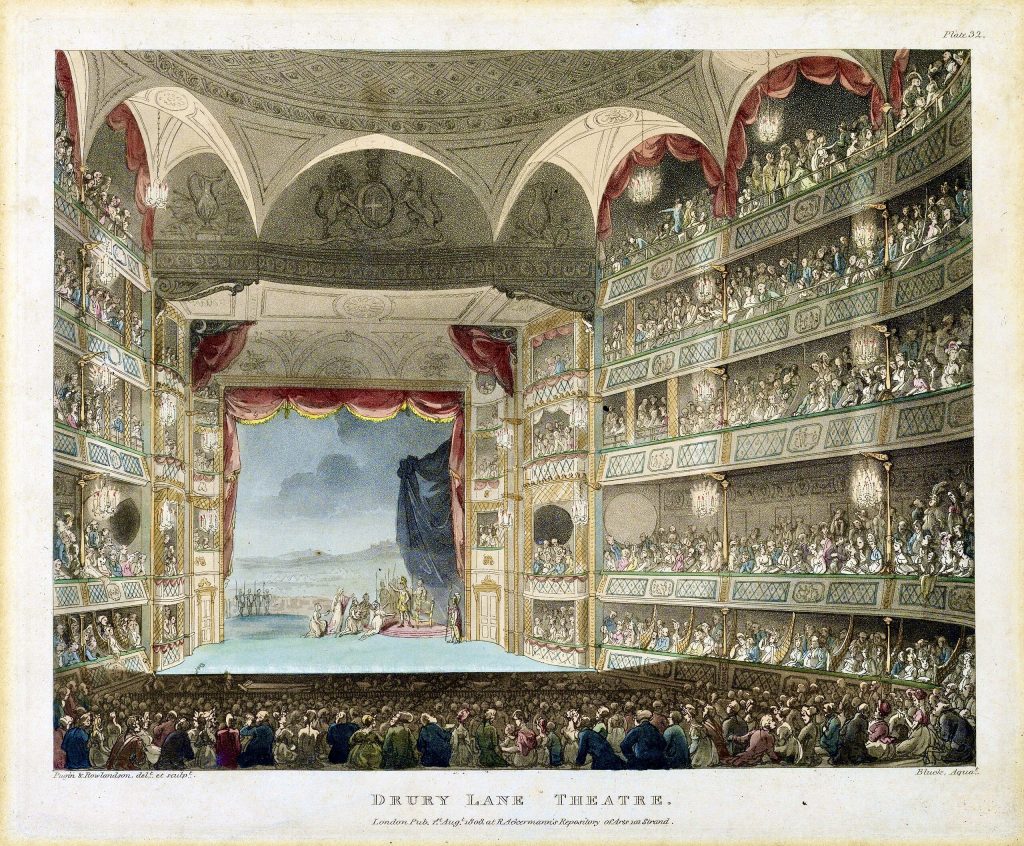
Nearby Covent Garden had also became the locus for many commercial theaters, the Theatre Royal Drury Lane opened in 1663 (it’s been rebuilt several times since, the last occasion was in 1812), This makes it the oldest theatre site in London still in use. The nearby Covent Garden Theatre opened in 1732. The theatre on the site now is from 1858 and is the home of the Royal Opera. The Royal Opera House’s four tiers, with the main auditorium seating well-over 2,000 people, makes it the third largest theatre in London,
The money to construct the Covent Garden Theatre came from the phenomenal success of John Gay’s The Beggar’s Opera. In addition to being a satire of Walpole and the South Sea Bubble, or Jonathan Wild and Jack Shepherd, it was also the progenitor of modern musical theatre. Gay used melodies and tunes that were familiar to the audience, instead of using Italian opera style arias. This was a huge element it its immense popularity.
That highlights another important trend in theatre during the era: the very large amounts of money that were now available. Shakespeare had become wealthy, but he was something of an outlier in the theatrical fraternity prior to the Georgian era (not surprisingly, he was a genius). Now large sums could be made by actors, writers and theatrical impresarios.
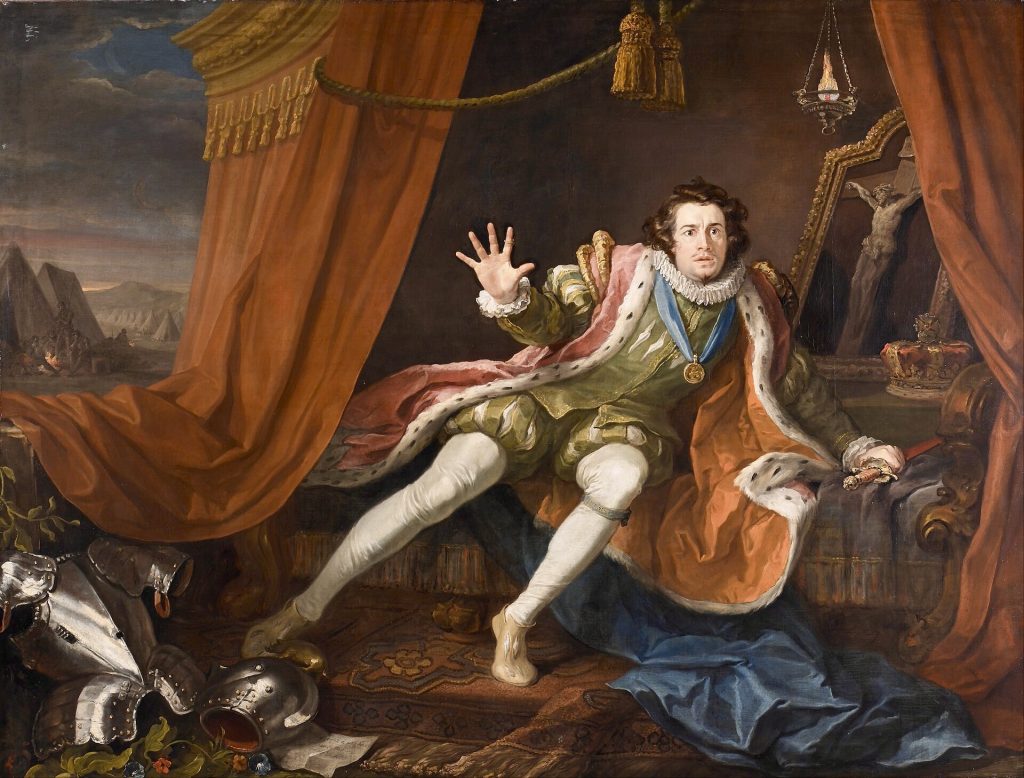
One actor to reach new heights at this time was David Garrick. His management of the Theatre Royal Drury Lane, from 1747-1776, was an unparalleled success and brought him huge wealth. Interestingly he was lauded for his naturalistic, realistic style, which was a break from the more bombastic and theatrical style favored by most actors before him. When Garrick died, in 1779, he was buried at Poet’s Corner, in Westminster Abbey, the first actor to be so honored. The Garrick Theatre on Charing Cross Road was named for the actor upon its opening, in 1889.
Another reason for the increasing popularity of theatre in London was, ironically, because it became less popular with the Royal Family. None of the Georges were keen theatergoers, and theatrical companies were no longer able to rely on royal patronage, so they began producing plays less for the monarch and his aristocratic friends, and more for “regular people”. That was why Gay wrote The Beggars Opera in the way that he did. It was written for an audience of Londoners.
Yet another important and long-lasting change in the period was the passing of the Licensing Act of 1737. This gave the government (through the Lord Chamberlain) the ability to censor plays, due to the need to gain a license for any theatrical performance. Part of the reason for this was Walpole’s dislike of being lampooned (as he saw it), by The Beggars Opera. This made the production of new works difficult and constrained what playwrights could write about. However, works created before 1737 were immune from needing a license, and this gave a huge boost to the production of plays by Shakespeare. It’s really due to the Licensing Act that Shakespeare rose to his present dominant position as the U.K.’s greatest poet and playwright. Increasingly actors, like Garrick, had to make their reputations by taking on the great man’s classics.
The Licensing Act continued in operation, with censorship levels waxing and waning, until 1968.
St Paul’s Church, which faces Covent Garden, became known as the Actor’s Church during the Georgian era because of how many theatres there were in the area. It still has those special connections to the theatrical profession, and there have been street-performers putting on shows in front of it since Samuel Pepys reported in his diary of an “Italian puppet play” under the church’s portico in 1662, which was the first recorded Punch and Judy performance in the U.K. (now its considered quintessentially English).
Other Georgian Era Entertainments
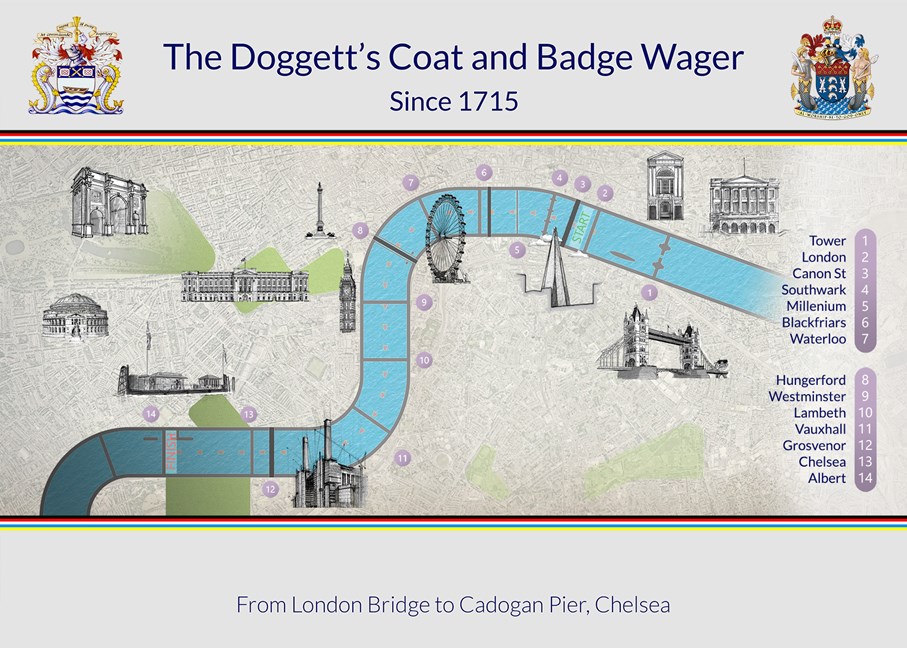
In 1715 the oldest rowing race in the world was first run in London, the Doggett’s Coat and Badge Wager. It was a competition between watermen, or ferrymen, who had completed their apprenticeship within the previous year. The race was created by Thomas Doggett, joint manager of the Drury Lane Theatre, and has a four mile race-course that goes up the River Thames from London Bridge to Cadogan Pier, Chelsea, passing under a total of eleven bridges (at one point the race was run between two pubs that were called The Swan at either end). The race is now run every September (the exact date varies year by year), and is still very prestigious.
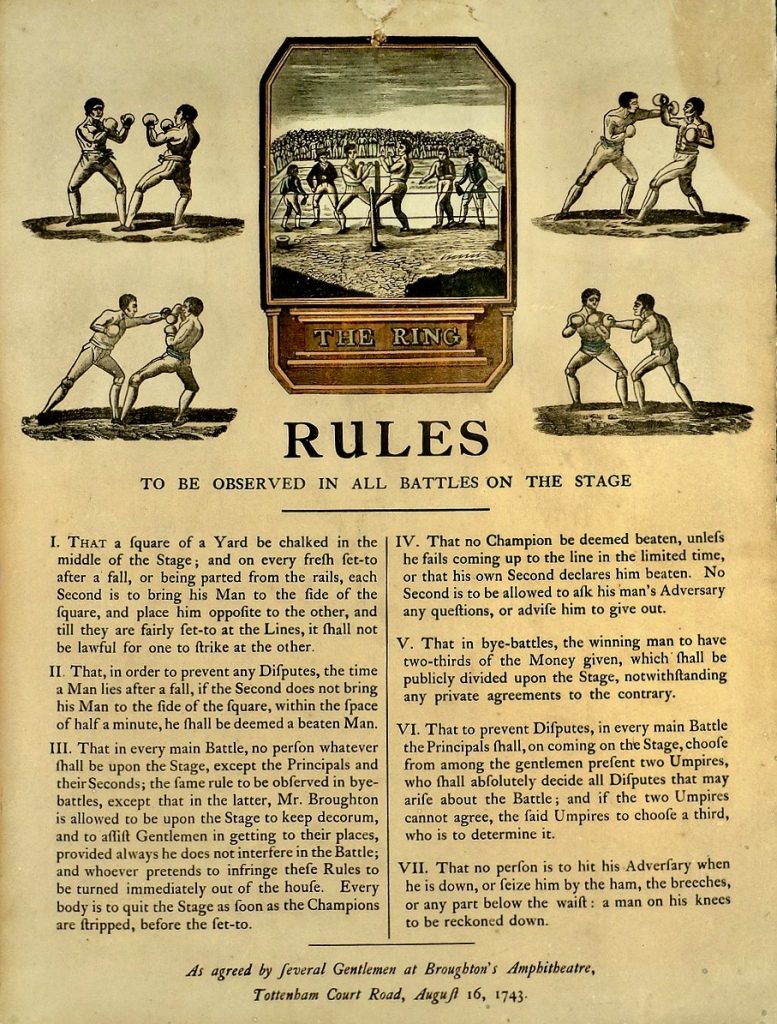
In 1730 the race was won by a big, burly waterman called Jack Broughton, who was also becoming known as a prize-fighter. A few years later Broughton opened his own boxing arena, or amphitheater, near the corner of Oxford Street and Tottenham Court Road. In 1743 he created the first set of standardized rules for boxing, his seven rules. The regulations stipulated that a round would last until a fighter went down, with a thirty second interval between rounds. The rules were widely adopted and used. Something else Broughton invented were boxing gloves (which he called mufflers). After he died in 1789 he was buried at Westminster Abbey, such was his renown.
In addition to bare knuckle boxing and prize-fighting bull-baiting and bear-baiting were also popular pastimes in London in the 18th Century (Broughton even organized an event with a tiger at his amphitheatre), even though they were illegal, In 1749 the first open yacht race was held on a course from Greenwich to the mouth of the Thames. The following year the Jockey Club was founded at the Star and Garter Club on Pall Mall, today it’s one of the most prestigious horse-racing organizations in the world (the club owns 15 racecourse in the U.K.).
By 1725 cricket matches were being held on the Artillery Ground in Finsbury, by the London Cricket Club. In 1743 the club created the first code of rules for the game. Then, in 1787, the wine merchant Thomas Lord leased a parcel of land in Islington so he and his friends could play cricket there. He also founded the Marylebone Cricket Club at the same time. Later, in 1814, the club moved their matches to St John’s Wood, near Regent’s Park, and what is today’s Lord’s Cricket Ground. It’s known as the home of cricket and is a sacred space for those who love the sound of leather on willow.
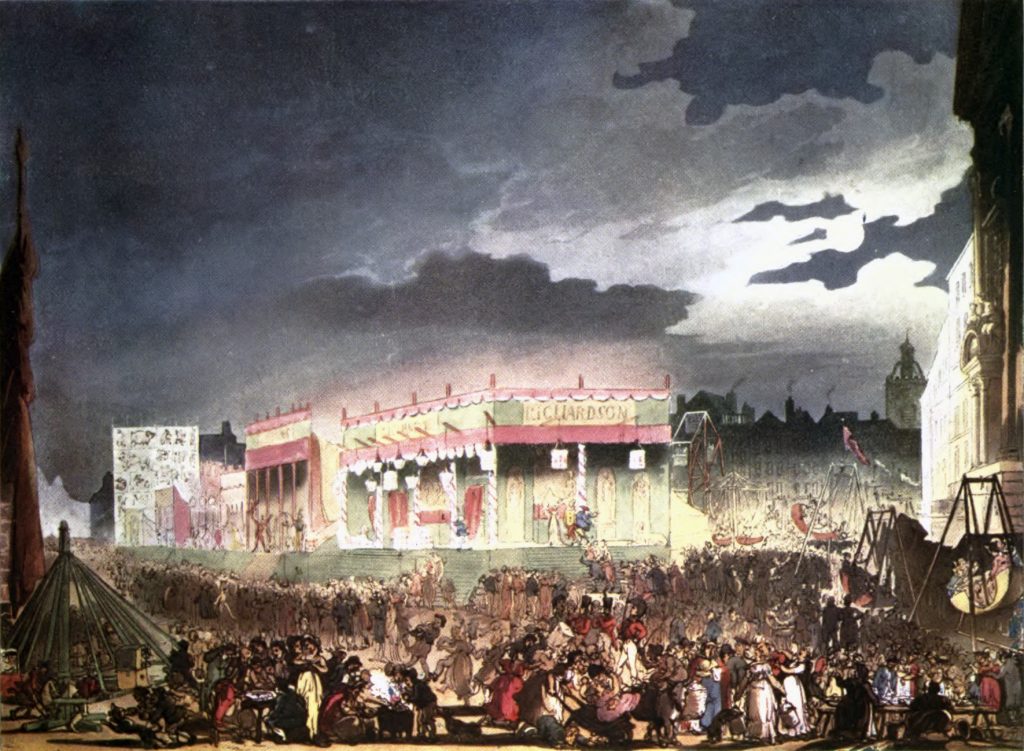
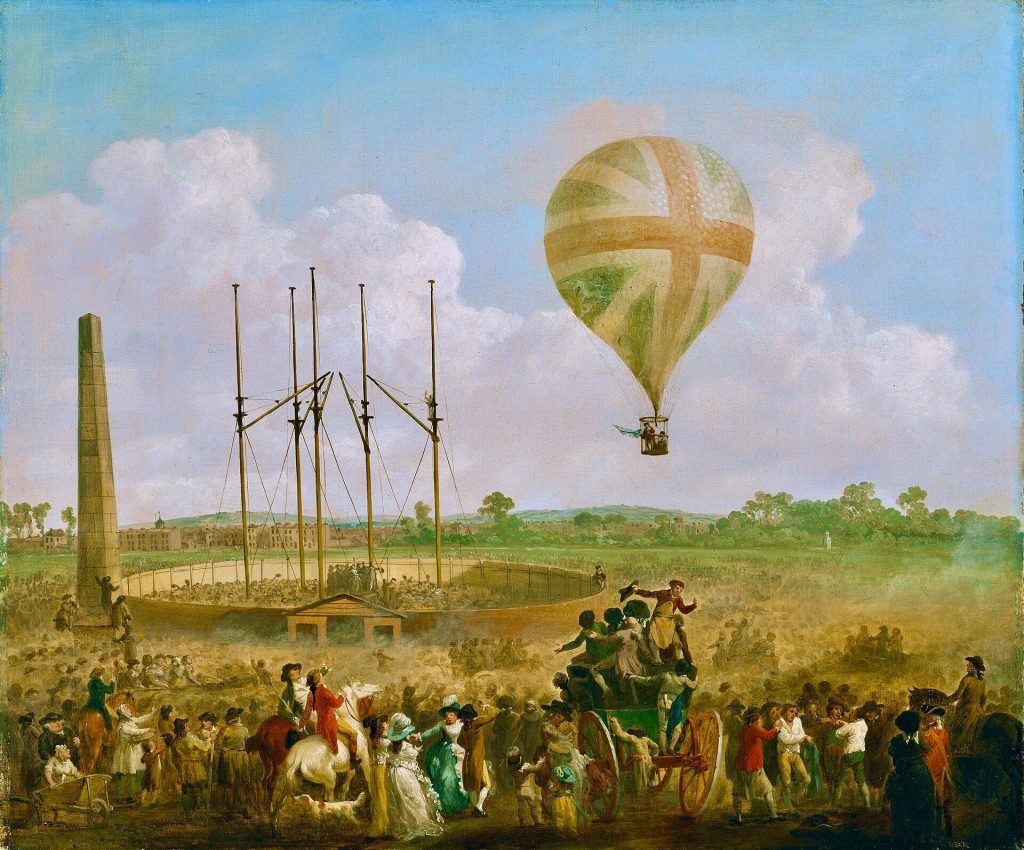
Another notable event to take place at the Artillery Ground was the first hot-air balloon flight in the U.K. in 1783. The following year Vincenzo Lunardi completed the first manned flight from the same place. Fairs were also popular throughout the era. Bartholomew Fair (started by the abbots of the Priory of St Bartholomew, in Smithfield, in 1133) and Southwark Fair were held annually, along with the May Fair at Mayfair, which was only abolished in 1764 (after the upper class residents of the area complained about the disreputable people that were drawn by the event). Frost fairs, which were held on the frozen Thames, continued too, with one of the biggest being held in 1789.
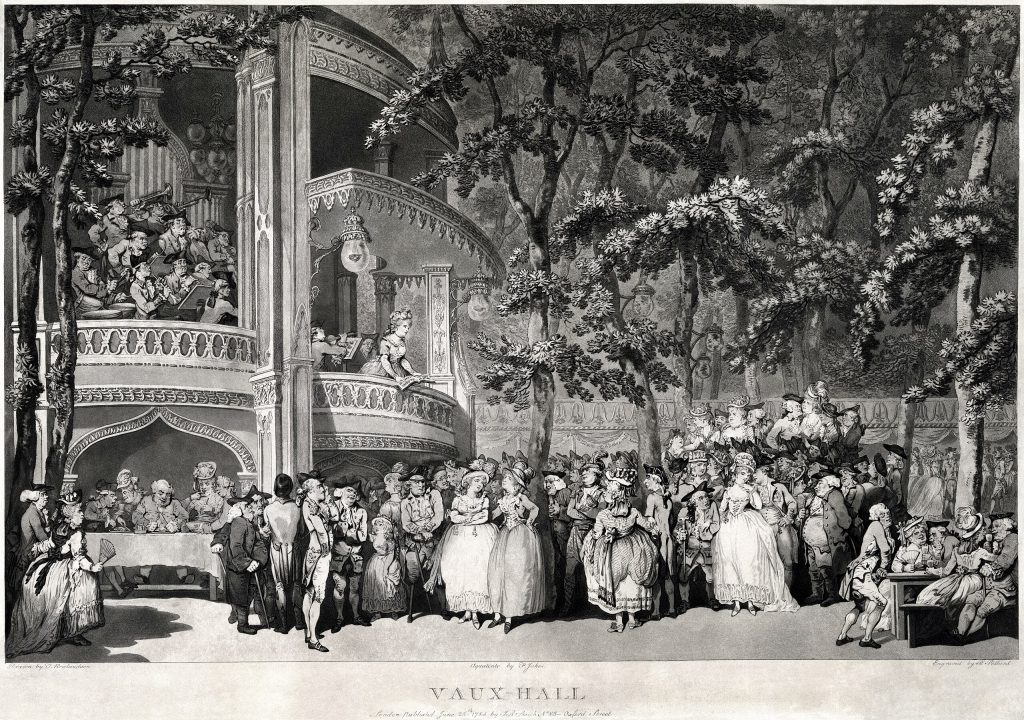
Vauxhall Gardens on the south bank of the Thames became a huge attraction during the period, having opened around 1660. The pleasure garden initially consisted of several acres of trees and shrubs with attractive walks; entrance was free, with food and drink being sold to support the venture. By 1785, under new management, the gardens began charging admission and offering more entertainment, such as tightrope walkers, hot-air balloon flights, concerts, theatrical performances and fireworks. The shaded walks were also popular for romantic assignations, and prostitution, giving a new meaning to the term pleasure gardens. Vauxhall Gardens continued operating until 1859.
Georgian Era Healthcare in London
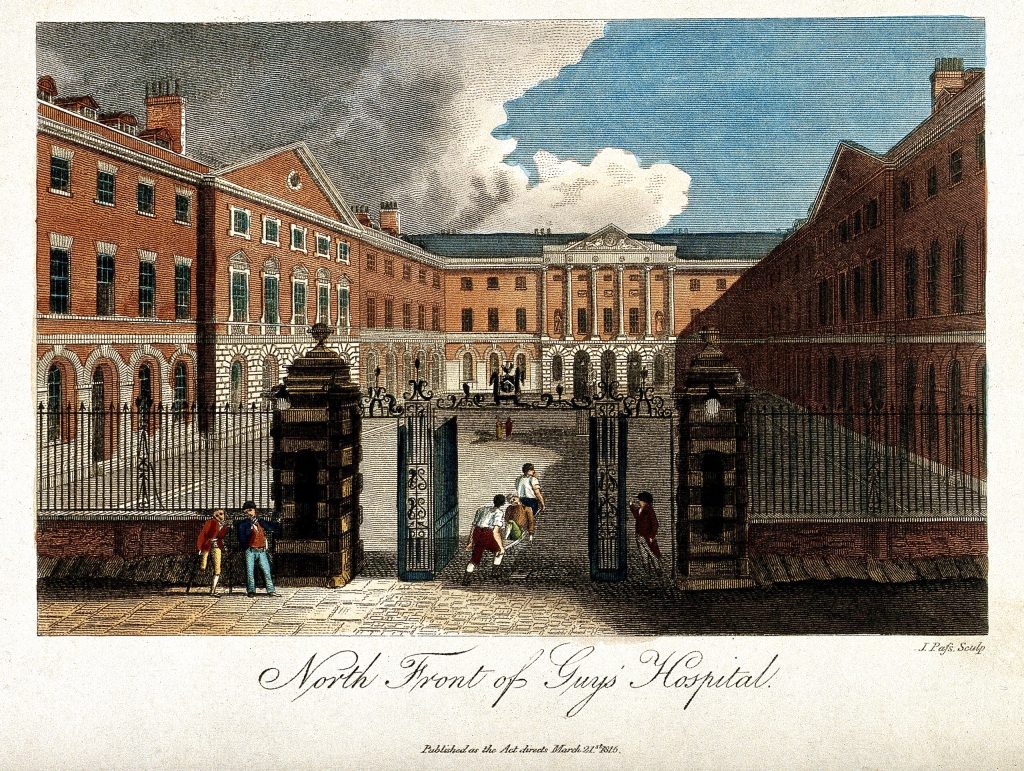
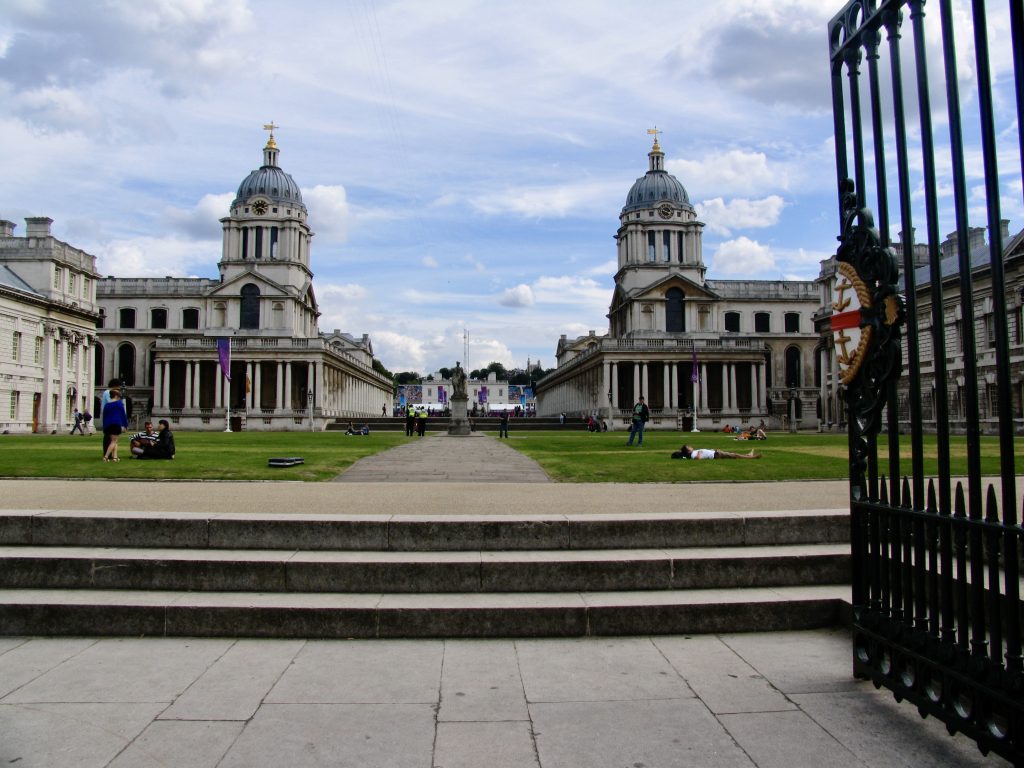
The main hospitals in London for most of the Georgian period were St Bartholomew’s (now known as Barts), and St Thomas’, both founded in the 12th Century. 1725 saw the opening of Guy’s Hospital and the London Hospital was founded in 1750. All are still operating today. Also the Royal Hospital for Seamen at Greenwich gradually took shape from the 1700’s on the site of the old Palace of Greenwich. It was a counterpoint to Royal Hospital Chelsea, which was for soldiers.
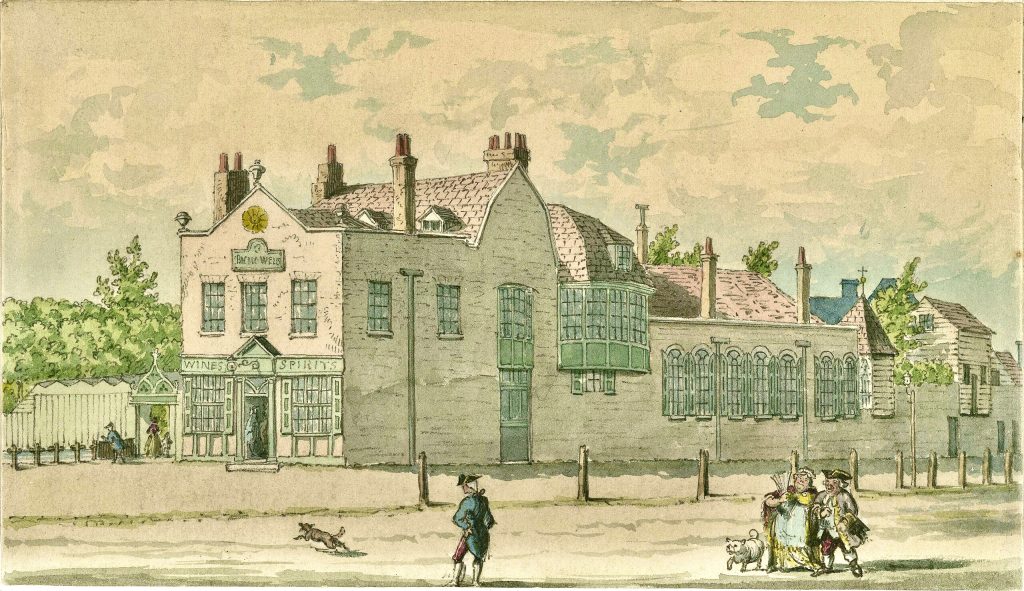
There were several springs at King’s Cross which were thought to have medicinal qualities, and in 1759, the Bagnigge Wells opened, with a pump room where visitors could drink the water, play skittles and enjoy concerts.
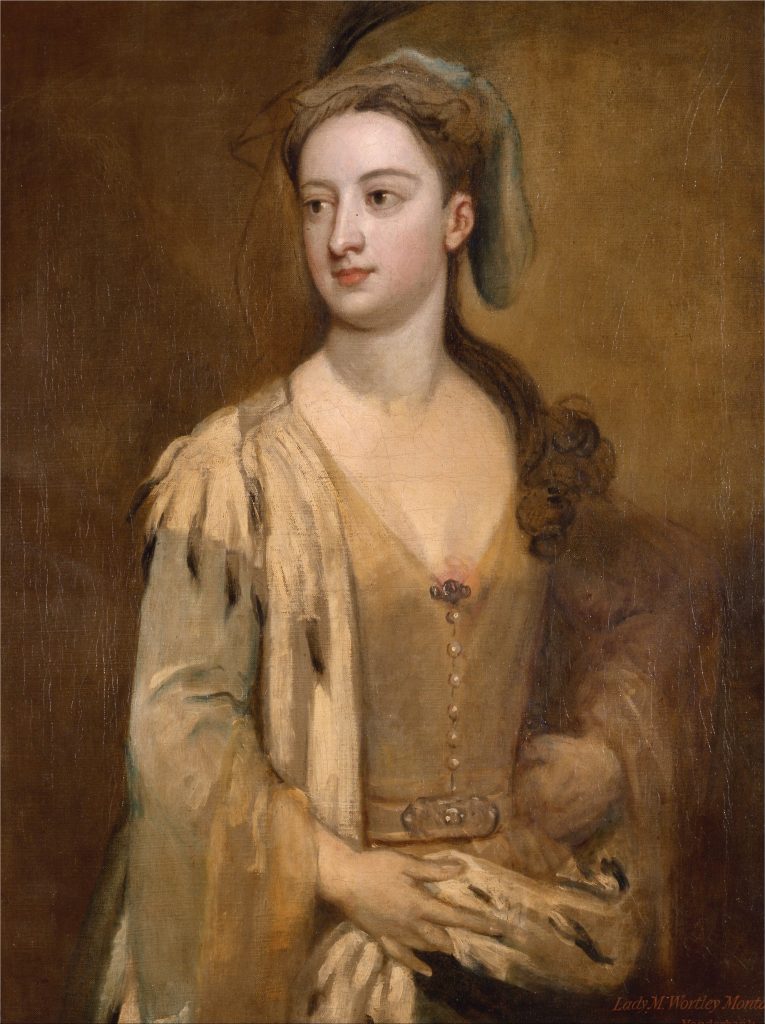
Inoculation against disease was first tried in the U.K. in London, in 1721, when Lady Mary Wortley Montagu had her three-year old daughter vaccinated against smallpox at the Royal College of Physicians. She had learnt of the treatment while living in Constantinople with her husband, the British ambassador to the Sublime Porte. It kicked of a craze for vaccinating amongst the wealthy of London (after it had been further tested on some condemned prisoners at Newgate Gaol, who thankfully survived). The widespread use of inoculation is one of the greatest developments in human history, but one that seems to have become controversial in recent years.
The Regency Years
Unfortunately George III suffered with mental illness most of his life, and in 1795 his son (who would become George IV) began to take over the role of monarch, creating what became know as the Regency era. The Prince Regent was ambitious and extravagant, wanting to make his mark on London, also the U.K. was rapidly industrializing, so London rapidly developed during this period.
In the 1800’s the U.K.’s national canal network was taking shape, with the Grand Junction Canal reaching up to the Midlands from London. The Regent’s Canal was cut through the northern districts of London, from Paddington to the London Docks, to link the port with the industrial regions of Birmingham and the Midlands.
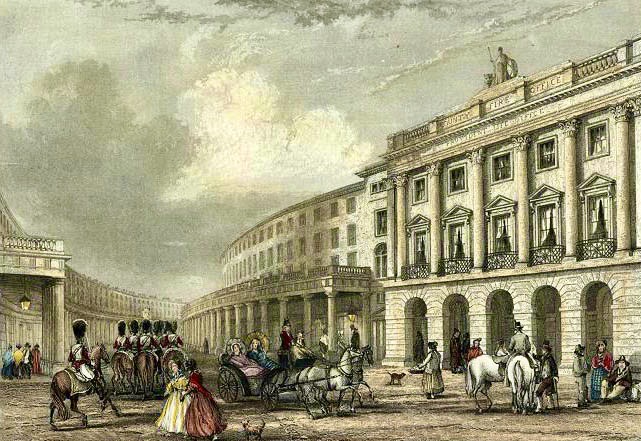
The Prince Regent was also fundamental to the development of Regents Park and Regents Street, which linked the park with his residence of Carlton House, on Pall Mall. Ever since the Great Fire of London there had been proposals to redesign London’s congested and confusing warren of streets, to create a more aesthetically pleasing, grander and cleaner streetscape. The plans for this grand new boulevard were designed by John Nash and were approved in 1813.
By 1819 the new street was largely complete, separating the working class neighborhood of Soho from the upper class Mayfair and St James. The street curved towards Leicester Square and the West End, instead of cutting down to Pall Mall through St James’s Square. Lower Rent Street runs north-south parallel to the Haymarket. The new boulevard created two new junctions: Oxford Circus and Piccadilly Circus (originally called Regent Circus North and South respectively).
Regents Park opened to the public in 1835. In the Middle Ages the land had belonged to Barking Abbey, but after the Dissolution of the Monasteries in the 1530’s it passed into the ownership of the Crown, and became known as Marylebone Park. London Zoo opened in the northern part of the park, near where Regents Canal passes across the top of it. Originally the zoo was for scientific study, but it opened to the public in 1847.
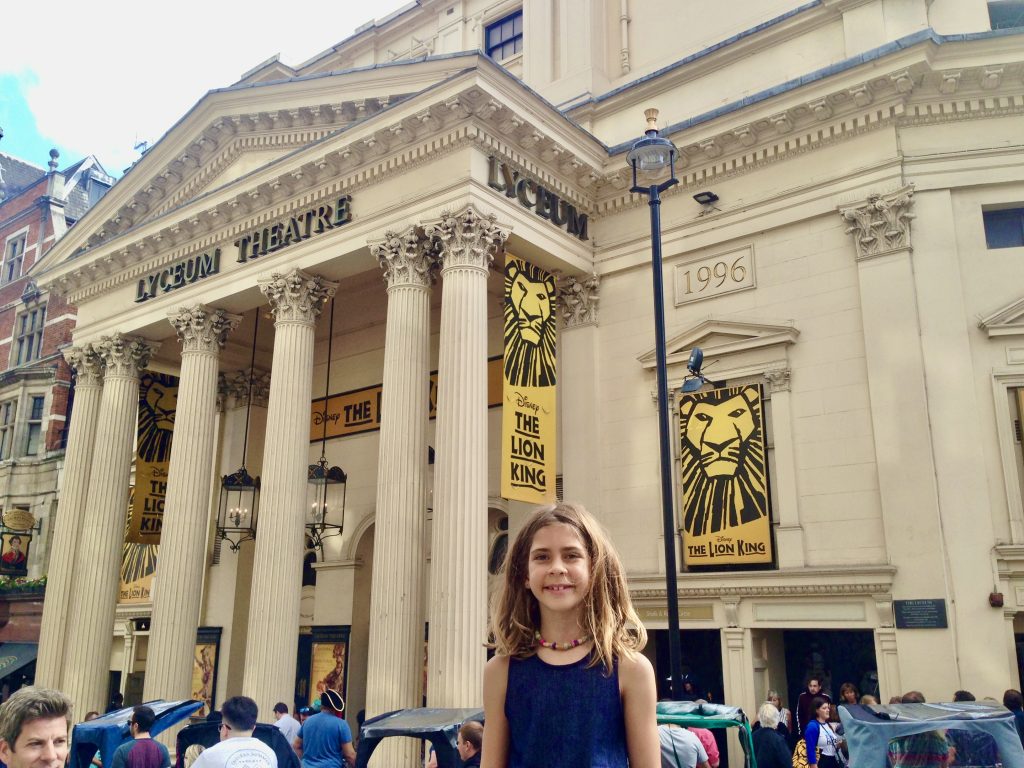
Something else that exploded during the Regency era was gas-lighting, which replaced the earlier oil lamps. The first gaslight in London was installed at the Lyceum Theatre in 1804, street gas lamps were installed on Pall Mall the following year, and in 1813 Westminster Bridge was lit by gas. By 1823 there were some 40,000 gas street lamps, across 215 miles of streets in London.
The Georgian period ended with the death of William IV, the younger brother of George IV, in 1837. Queen Victoria then inherited the throne from her uncle, in the absence of a male heir. By that time France, Britain’s great commercial and imperial rival for centuries, had been weakened by its defeat in the Napoleonic Wars, so London was poised to grow further and faster.
Learn More About London in the Georgian Period
Our London in a Day Tour and Introduction to London Pt 1 Tour both start at the political heart of London, at Westminster, and we cover all of the history related here on those tours, giving guests a proper understanding of London’ origins and a timeline of its development. Guests can even have lunch in the building which was the Bow Street Magistrates Court (it’s now a pub). The Introduction to London Pt 2 Tour also starts at Covent Garden, and visits the City of London and the Tower of London (as well as taking a trip on the Thames).
If you have any feedback on the Georgian Era London: Law & Disorder please email us or reach out on social media, we’d love to hear from you.
– By Damien Blackshaw (Instagram)
You must be logged in to post a comment.