
Inside London - The London Rundown
London: The Golden Elizabethan Age
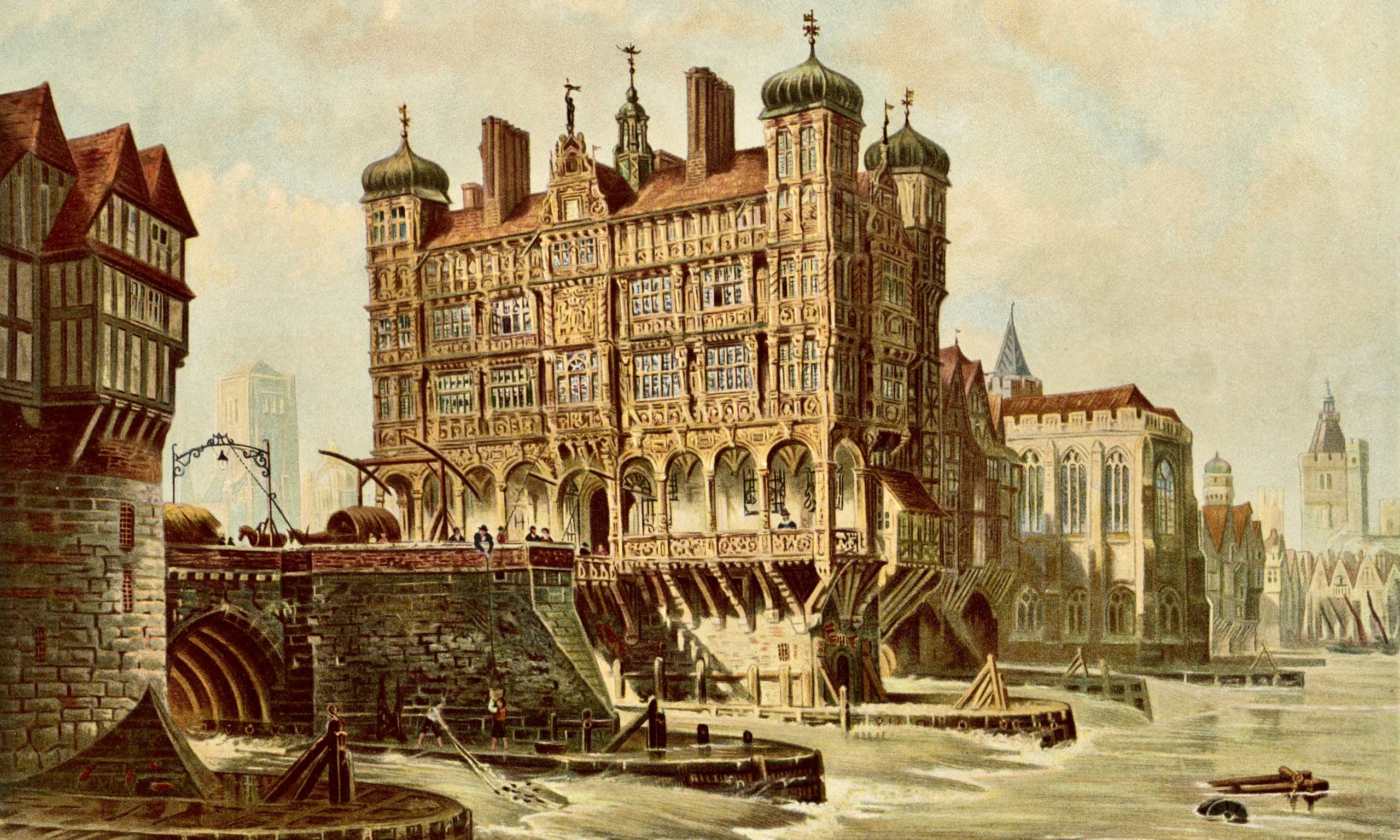
The era of London in the Elizabethan Age begins in the middle of the Sixteenth Century, with the ascent to the throne of Elizabeth I, and ends in the early 1600;s. During those fifty-something years London doubled in population to 200,000 inhabitants, marking a period of explosive growth for the city. Alongside that London went from being the capital of a relatively minor European kingdom to being, according to one Londoner of the time “the fairest, largest, richest and best inhabited city in the world”.
You could say he was biased, and undoubtedly he hadn’t been to many other cities around the world, but previous generations of Londoners probably wouldn’t have said that. So why was there this flowering of civic pride in the city during this period?
London at the Dawn of the Elizabethan Age
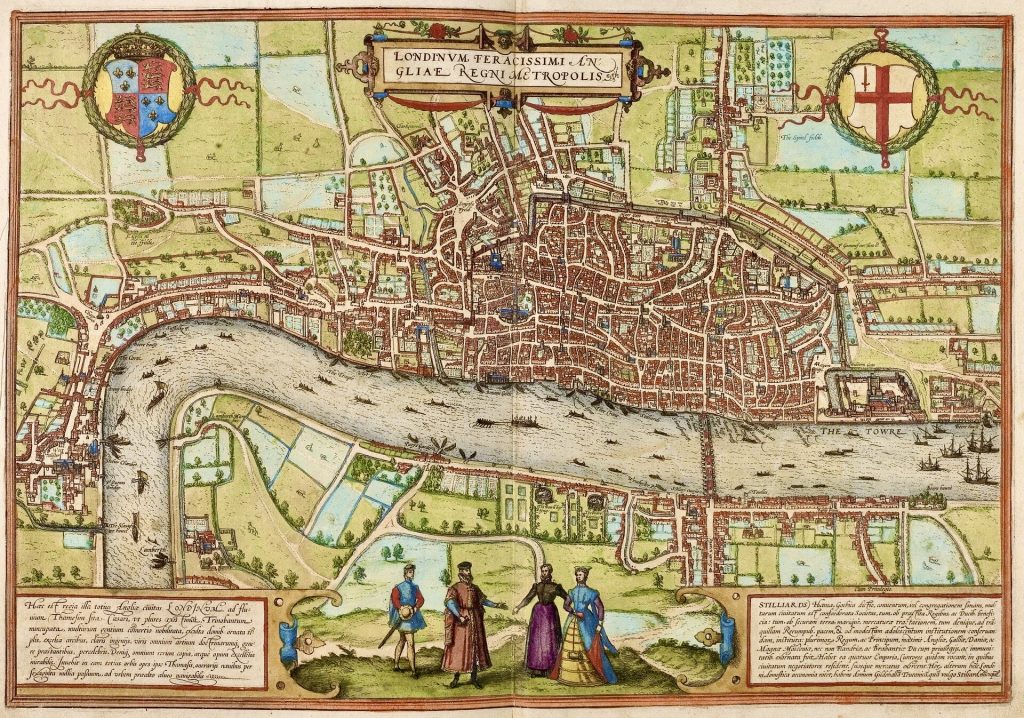
If a visitor from Londinium was to visit the city around 1550, they probably wouldn’t have noticed much that was different about it (apart from the fact that Latin was no longer the Lingua Franca). While London had probably double the population, it was still contained by its Roman walls, and the street plan was more or less the same as it had been nearly 1,500 years earlier.
The most visible changes the Roman time-traveler would probably have noticed would be the disappearance of the forum and the amphitheater (apparently much of the original structure of the amphitheater survived up to the beginning of the previous century, when the Guildhall was built). The temples had largely been replaced by St Paul’s Cathedral and numerous churches.
The other big change was the loss of the Roman fort on Cornhill and the emergence of the Tower of London on the other side of the city. This is symbolic of the fact that the Romans were concerned about attacks by land, from rebellious Brits like Boudicca, whereas by the Sixteenth Century London was looking outwards to the Thames, and the sea beyond its estuary.
In 1551 there was an outbreak of Sweating Sickness, a nasty infectious disease that killed tens of thousands over the Summer and Autumn of that year. We don’t even know what causes it today, but it sounds more than a little like Covid 19. Fortunately, whatever it was it seemed to disappear after this outbreak. There were also frequent smaller outbreaks of Bubonic Plague during the late Sixteenth Century.
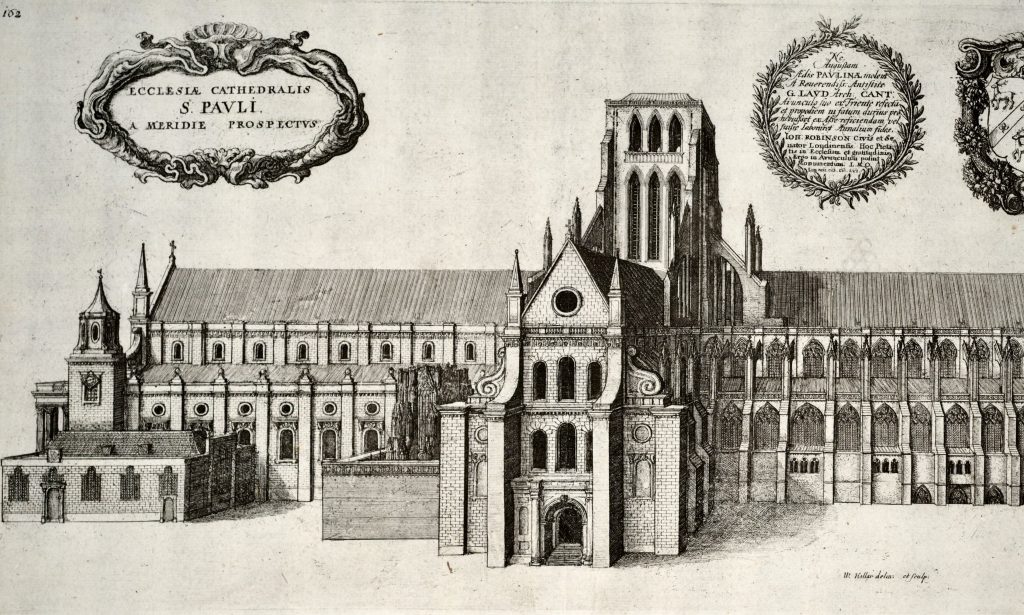
London received a nasty bad omen in 1561, when lightning struck the spire of St Paul’s Cathedral, starting a fire that caused it to crash through the roof of the nave, into the cathedral below. The subsequent conflagration was so hot the cathedral’s bells and the lead covering the wooden spire melted and “poured down like lava upon the roof”, destroying it. The spire was never rebuilt, although the roof was repaired.
Nevertheless, as the Middle Ages receded with the accession of the Protestant Elizabeth I in 1558, after the short and tempestuous reign of her half-sister, the Catholic Mary, at least the political and religious strife of the previous few years began to dissipate.
Stocks, Shares and Trade
In many ways we’re still living with the effects of that first, great, Elizabethan Age. It was during these years that the international corporation was born, the Company of Merchant Adventurers to New Lands, founded in 1551, the Muscovy Company (1555), the Venice Company (1583), the Levant Company (1592), and the famous/infamous East India Company (1600).
As trade routes to the world beyond Europe and the Mediterranean opened up, London entered the era of Mercantilism. The Royal Exchange opened in 1571, offering a market in which goods could be traded (stocks and shares were sold in nearby bars and coffee-houses at first, since stockbrokers were considered too rude and loud for it). It was the new Roman Forum.
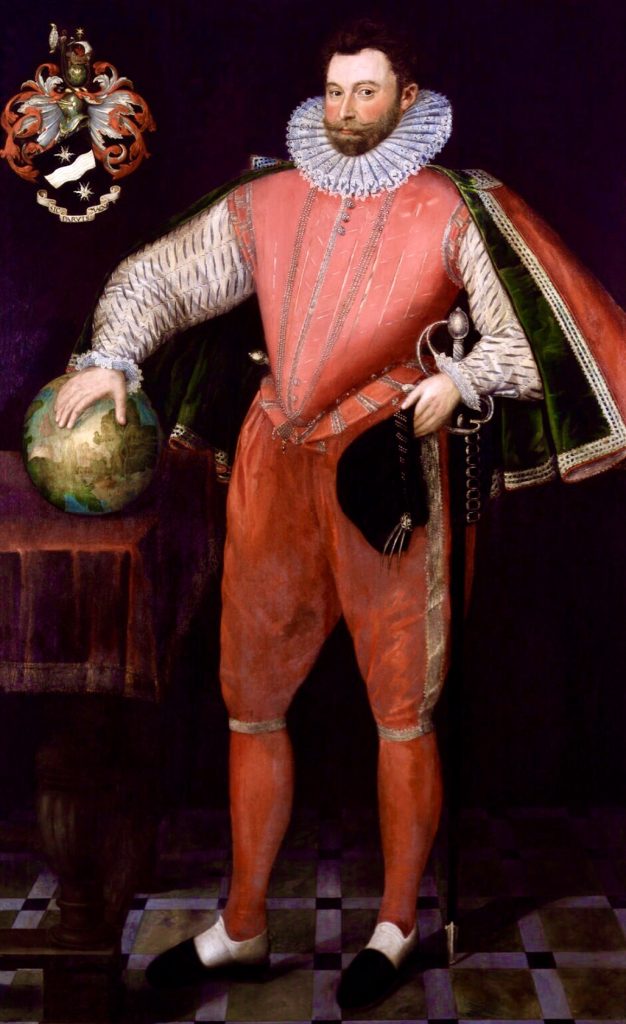
Trade and enterprise also extended to what we would consider piracy today. From 1562 enterprising adventurers were increasingly given letters of marque by the Crown, that allowed them to capture foreign ships (especially Spanish ones). By 1598 half of all English privateer ships were from London, and the greatest of these was undoubtedly Sir Francis Drake.
The Age of Discovery
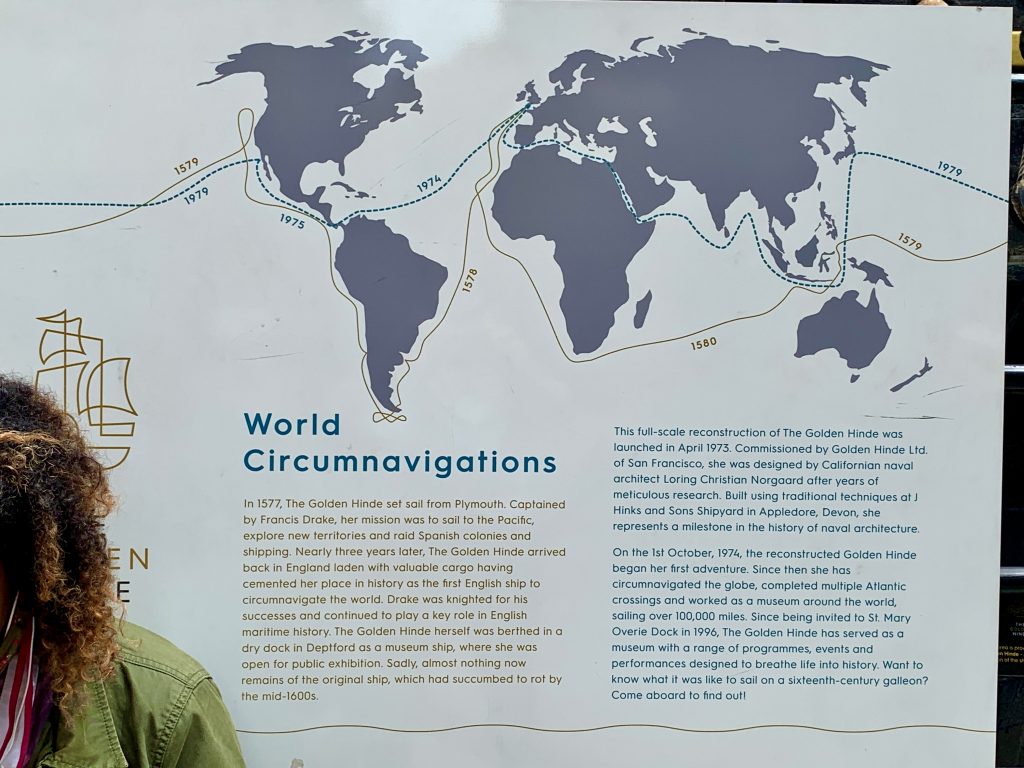
Up until 1940, asked who was the greatest-ever Brit, most English people would usually name Drake. Between 1577 and 1580, he completed a circumnavigation of the world, only the second navigator to have done it and an incredible feat in and of itself.
He fared considerably better than the first explorer to do it too. Ferdinand Magellan having died half-way into his voyage, fighting in the Philippines (and only one ship and 18 men returned, out of an original fleet of 270 sailors crewing five vessels).
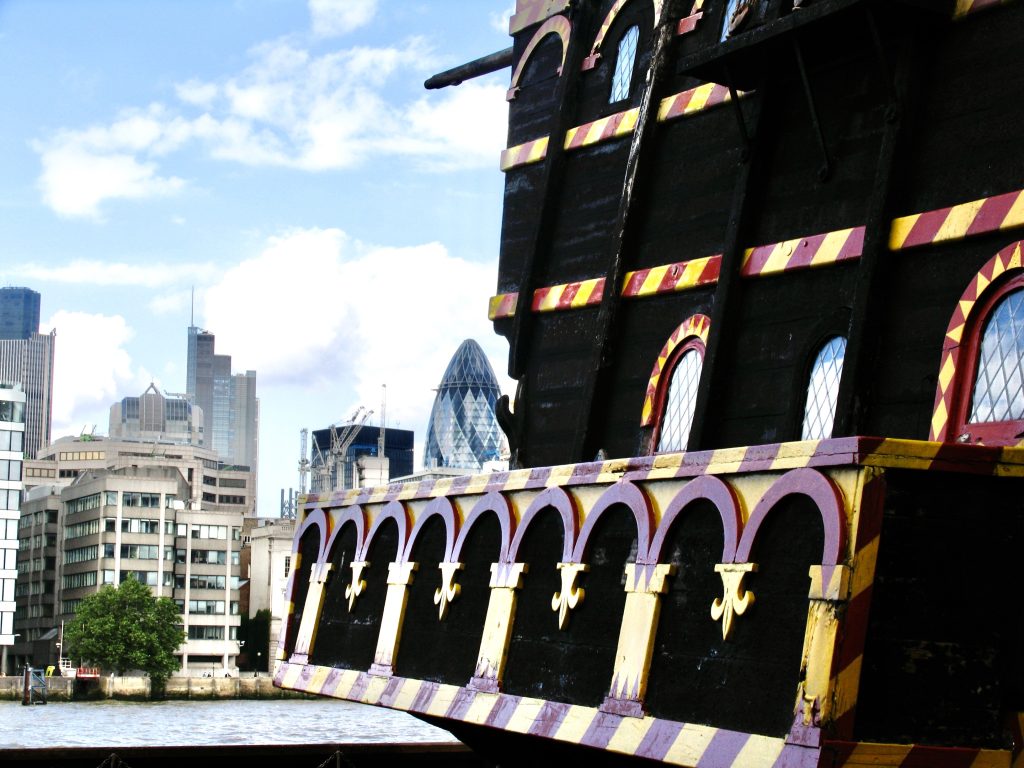
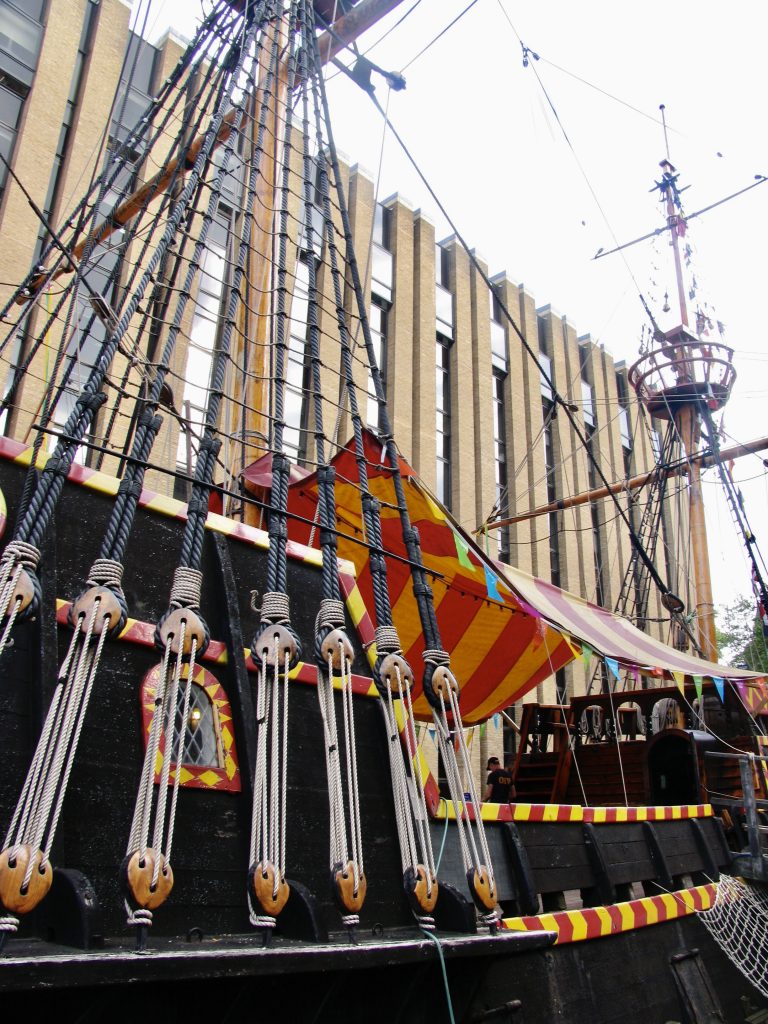
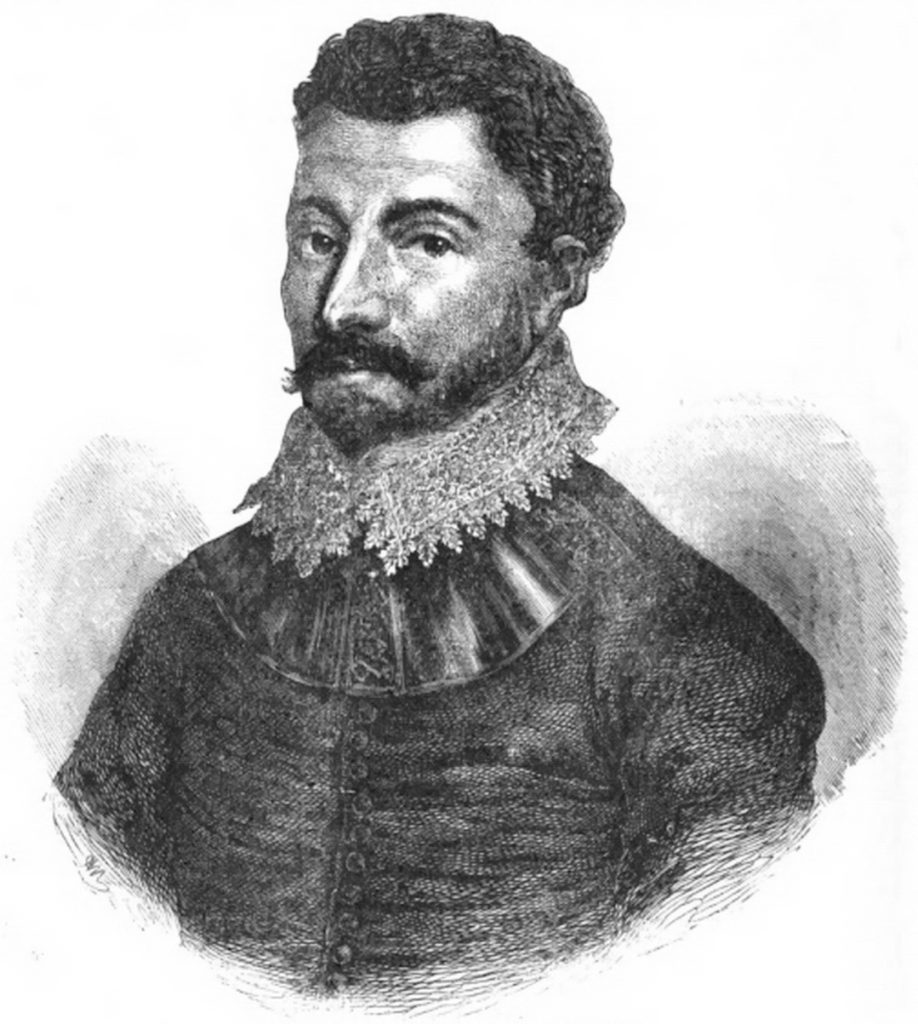
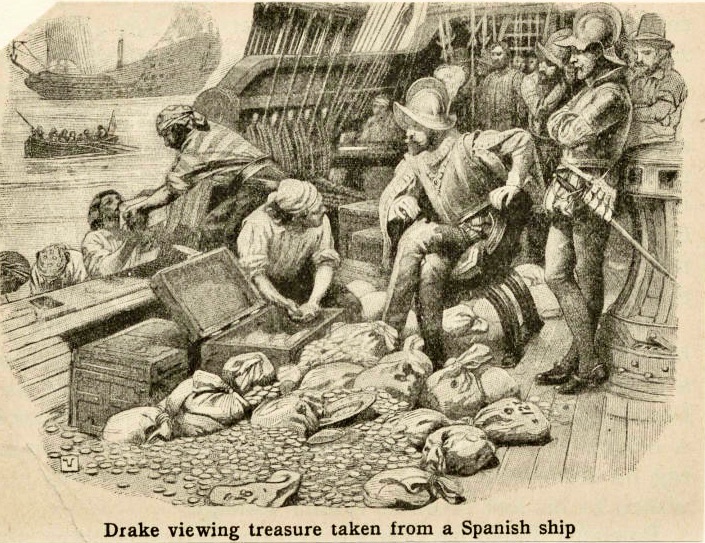
In addition to visiting the West Coast of what would become the U.S. (Drake’s Bay, near San Francisco, is named after him), he captured a veritable fortune in treasure from the Spanish. When he returned from the voyage his ship, the Golden Hind, was loaded to the gun ports with gold, jewelry and other precious goods, such as silks and spices. They’d completely replaced the ballast with 26 tons in silver ingots.
And that was after jettisoning three tons of cargo to escape reefs off the Celebes Islands (part of modern-day Indonesia) – the crew opted to deep-six their guns rather than lose much treasure. They were lucky in that decision, because if they had run into any more Spanish warships they would have looked pretty foolish.
It’s said that the Queen’s half of the plundered loot was more than the entire revenue of the monarch that year (a magnificent return on her original investment of a thousand crowns). Drake shared the other half with his happy crew.
Following that the Spanish King Philip II decided to attack England, partly to stop further attacks like Drake’s. So Elizabeth I commissioned Drake to lead a naval expedition to try to disrupt the Spanish Navy’s preparations. Drake ended up attacking Cadiz, sinking around thirty ships belonging to the Spanish, and delaying the planned invasion by a year. The expedition was known as ‘the Singeing of the King of Spain’s Beard’.
Nevertheless the following year, in 1588, the mighty Armada reformed and sailed up the English Channel, intent on invasion. It was the biggest threat to England since Caesar’s attack more than 1,600 years before. Drake was appointed second-in-command of the defending English fleet and waited at Plymouth for the expected attack.
According to legend, when interrupted at a game of bowls with news of the sighting of the huge enemy fleet, Drake took one look at it, and nonchalantly remarked that there was plenty of time to finish the game and still beat the Spanish (of course he knew the tides and weather patterns favored him).
He finished his game and, crucially, won the subsequent battle (largely through luck), but nevertheless it gave the Elizabethan English this feeling of invincibility (rightly or wrongly). That protected by mists, seas, and men with sang-froid like Drake, they could profit by plunder, and trade, with countries and people across the globe. Really, London became a global city.
The modern Royal Navy dates back to this era, and continues to draw from the spirit of Drake to this day (although Spain is now an ally of course).
Sir Walter Raleigh
Another famous adventurer of Elizabethan Age London is Sir Walter Raleigh. A little younger than Drake, Raleigh fought in the religious wars in France, on the side of the Protestant Huguenots against the catholics, in his teens. Then, later, he fought for the Crown in Ireland where he was responsible for the beheading of some 600 Spanish and Italian soldiers who’d already surrendered at the siege of Smerwick.
According to legend he famously won the favor of Queen Elizabeth when she was stepping out of a coach one rainy day in London, only to be confronted by a large puddle. Raleigh seized the moment and threw down his velvet cloak, covering the puddle and ensuring that the queen would not get wet feet. It’s a lovely story, but almost certainly untrue (it first appeared more than 40 years after his death). Although it is true that she did favor him more than almost any other courtier at the time, giving him one of the grandest mansions in London, Durham House, on the Strand.
In 1584 she gave Raleigh permission to form a colony in the New World (today’s USA), or as it was put in the charter:
(to colonize any) remote, heathen and barbarous lands, countries and territories, not actually possessed of any Christian Prince or inhabited by Christian People.
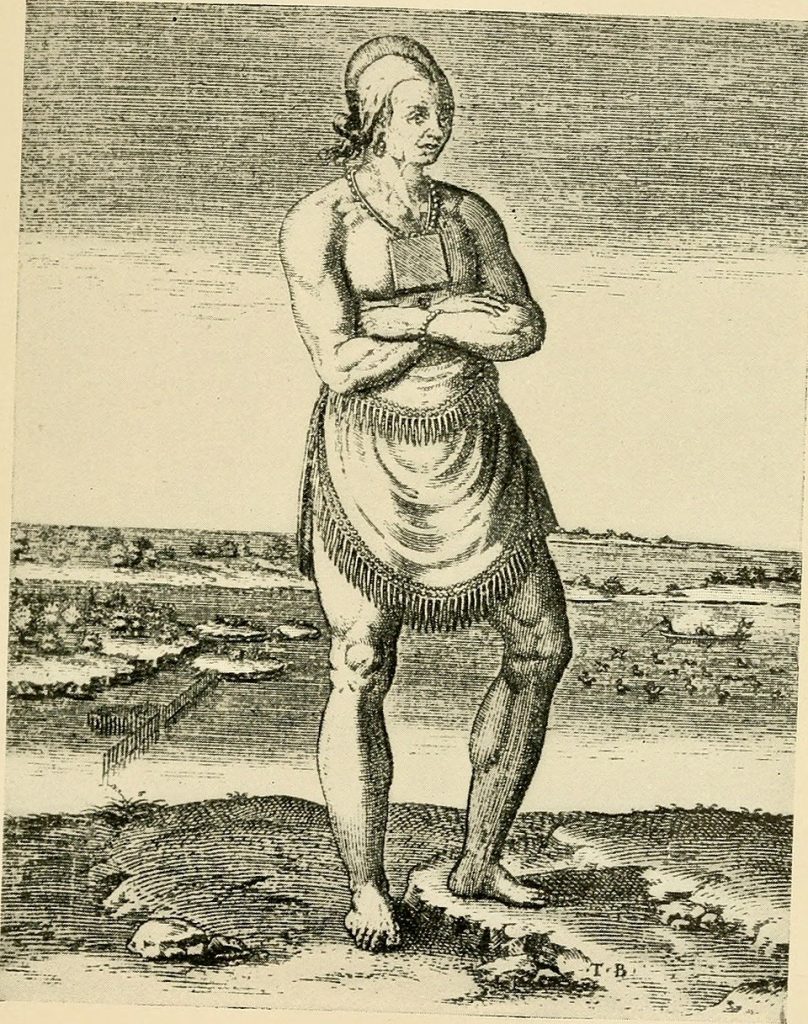
He put together an exploratory expedition, but was prevented by Elizabeth from making the journey himself. Nevertheless, the mission was largely successful and returned with two First Americans, Manteo and Wanchese. Raleigh named the land Virginia, after the virgin queen, and hosted the American visitors at Durham House.
The second expedition created England’s first colony in North America, on Roanoke Island, in the Outer Banks just off the coast. However the colony struggled to survive and the settlers were picked up by Drake on his circumnavigation of the world. Not long after another attempt was made to establish a colony with just 15 soldiers, but they were soon attacked and killed by the local tribe, which was led by Wanchese, who’d returned with them but had decided, understandably, to oppose the colonists.
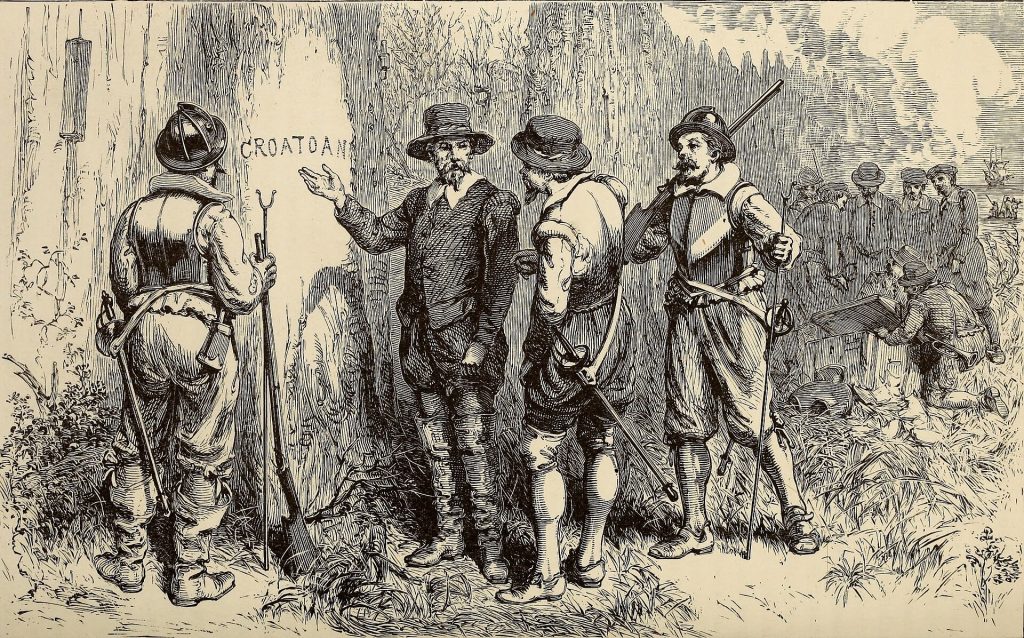
A third attempt by Raleigh and his partners in 1587 led to the establishment of a settlement and the birth of the first English child born in the New World, Virginia Dare. However, due to the attack of the Spanish Armada, a relief voyage could not be made until 1590, and by that iime the colonists had disappeared. The only clue as to their whereabouts was the word “Croatoan”, the name of a nearby island, carved into a post in the settlement wall. Due to persistent bad weather the expedition was never able to investigate further, and to this day the fate of the lost colony remains a mystery.
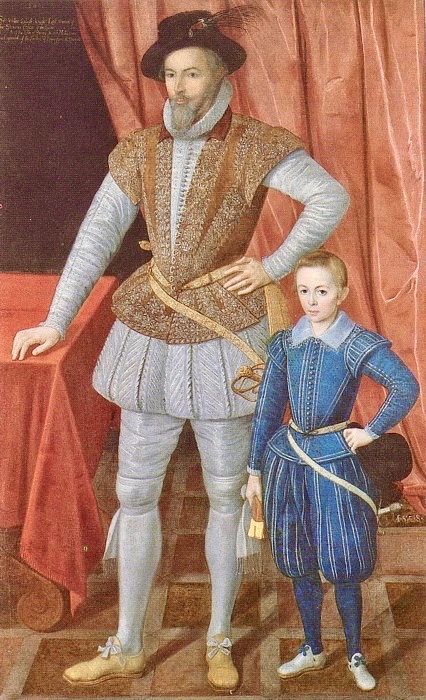
In 1592 Raleigh suddenly lost the favor of the queen, when she discovered that he’d secretly married one of her ladies-in-waiting, and got her pregnant. The couple were both imprisoned in the Tower of London for several months, suggesting that she was more than a little piqued by his marriage. Fortunately he was able to win Elizabeth back over, and she even gave him a manor in Dorset, Sherborne Castle.
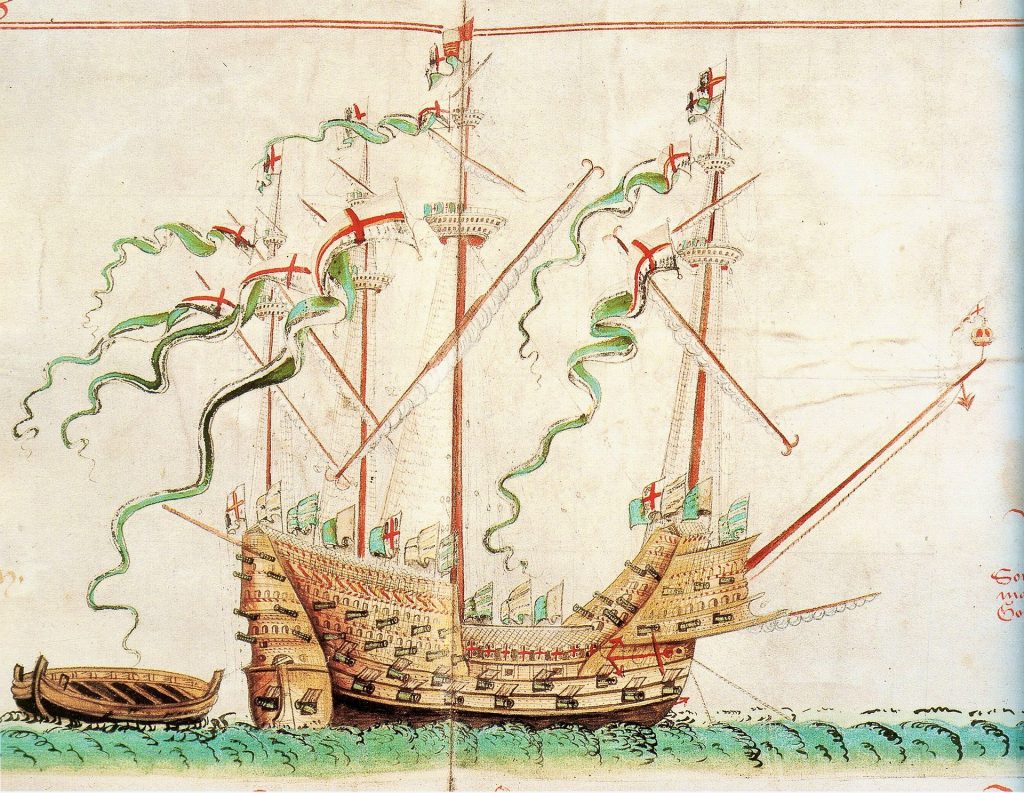
Raleigh is credited with bringing potatoes and tobacco to England, and popularizing them, but in fact there’s no evidence that he did, and he himself never visited North America. Something he did do was have a large ship built for exploring and fighting the Spanish, to be called Ark Raleigh. However he sold it to the Crown and it became Ark Royal, the flagship of the High Admiral during the victory over the Spanish Armada. Since then there have been four other Ark Royals in the Royal Navy, the last being an aircraft carrier launched in 1981.
Another aspect of his legacy is Raleigh, the state capital of North Carolina, which was named after him. It was a planned city, created after the War of Independence, in 1792.
The exploits of Drake, Raleigh and other privateers also meant there was now yet another way to fortune other than trade or royal service: the path of adventuring. A kind of sea-captain/pirate/entrepreneur. That route also lead through London, in that the financing, and often construction and provisioning, was done in or near the city. Many officers and crew were from, or lived in, London.
By this time a huge naval dockyard had opened at Deptford, just downstream of London, on the south bank of the Thames. It was here that the Golden Hind and Ark Royal were constructed. On the other side of Greenwich Palace was the important dockyard of Woolwich. Taken together they were the largest shipbuilding facilities in Europe.
It was an era of giants. And none more so than the greatest writer there’s ever been: dramatist, poet, and one of the creators of modern theatre, William Shakespeare. To this day he often tops lists of the greatest Briton.
Shakespeare in London
It’s funny that the language of Shakespeare’s plays is considered to be archaic and sometimes hard to understand today, because in many ways we’re still speaking it. Even if you’ve never read or seen one of his plays you’re literally talking his language. There are dozens of words and phrases that came to us solely through him. The following is a very short list:
To be cruel to be kind.
To wear your heart on your sleeve.
The world’s your oyster.
Break the ice.
Heart of gold.
Apple of my eye.
Idioms and phrases of William Shakespeare
Shakespeare had an incredible talent for perfectly capturing an idea or concept in a simple, short, but colourful phrase. That’s why we’re still using so many of them, over 400 years after he died. 99% of the time not even realizing Shakespeare’s authorship.
If that was the limit of his genius, he would still be hugely significant, but it was allied to an innately sensitive and acute understanding of human psychology, before anyone knew there was such a thing. He also had a real flair for writing for the theatre, both in drama and comedy, an ability that was undoubtedly heavily influenced by the fact that he was an actor of renown too.
In every personal success story, there’s always a right place right time element, and that’s definitely true with Shakespeare. Up to the 1540’s theatre in London, such as it was, mostly took the form of miracle plays based on Biblical stories, usually performed on holy days and other celebratory events. However, during the reign of Elizabeth I, these were banned for being too Catholic, and secular plays performed by traveling companies became popular. Their productions were short plays mostly drawn from English history and legends, which were presented with other circus type entertainment.
It was, to all intents and purposes a new, start-up, industry.
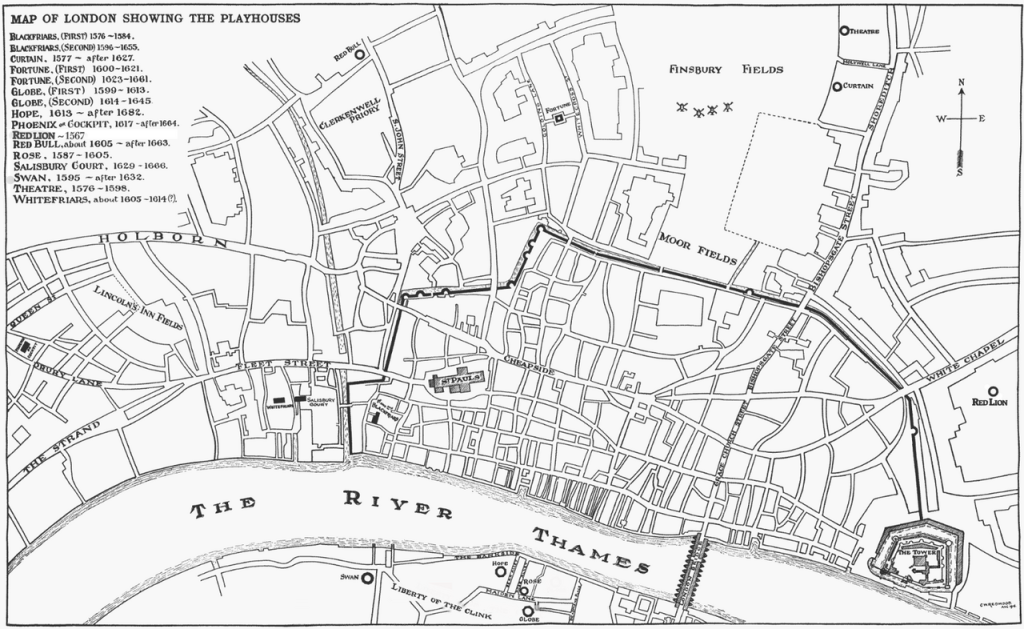
These companies traditionally performed at galleried coaching inns and the great houses of nobility, before beginning to build their own permanent theatres. The first known purpose-built theatre was the Red Lion in Whitechapel, just outside London, in 1567. With London rapidly developing a monied middle class, interest in leisure and entertainment was increasing too, and almost overnight new theatres were opening up all over London. Audiences were fascinated with this new form of entertainment and it quickly became extremely popular.
The first significant dramatists of this period were John Lyly and Thomas Kyd. In the late 1580’s another dramatist became arguably the leading playwright in London: Christopher Marlowe. Much of Marlowe’s life remains a mystery, including speculation that he was a spy for the Sixteenth Century version of MI6. Nevertheless, the six plays that he’s known to have written were hugely popular, and he was a big influence on Shakespeare. He died in 1593, killed in an argument over money at a pub in Deptford (although that too is disputed and debated).
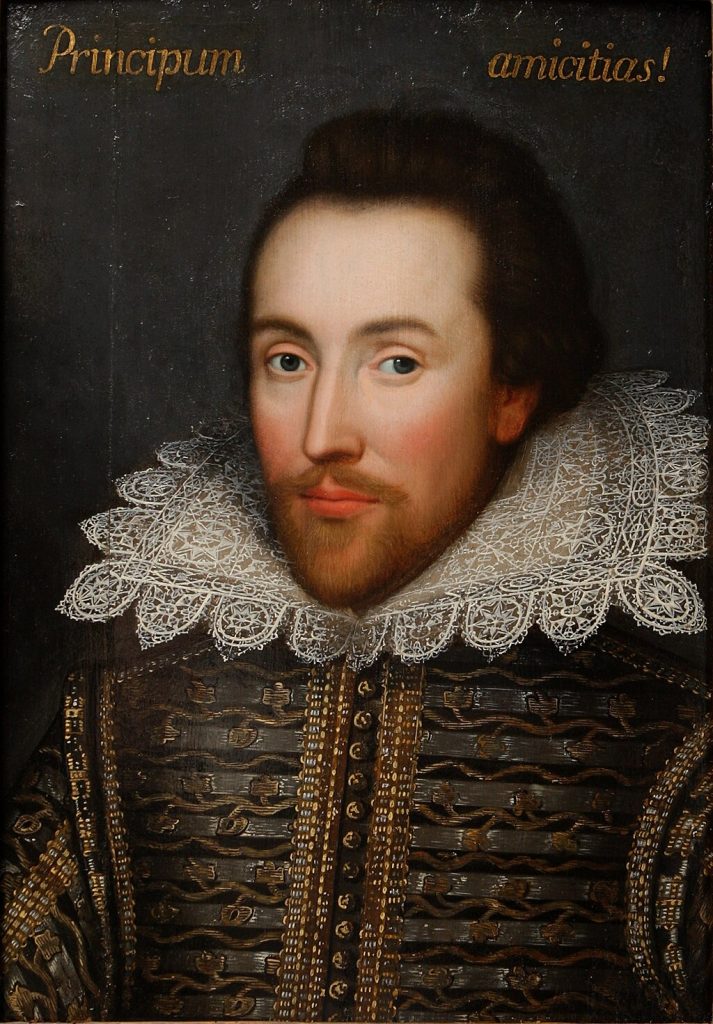
Often known as the Bard, Shakespeare was born in Stratford upon Avon, in Warwickshire, the son of moderately wealthy parents, in 1564. By 1592 he was a member and part-owner of the Lord Chamberlain’s Men, a new theatre company sponsored by Henry Carey, 1st Baron Hunsdon (the Lord Chamberlain), and living in London. Think of it like Charles Chaplin arriving in Los Angeles in 1913, at the birth of Hollywood.
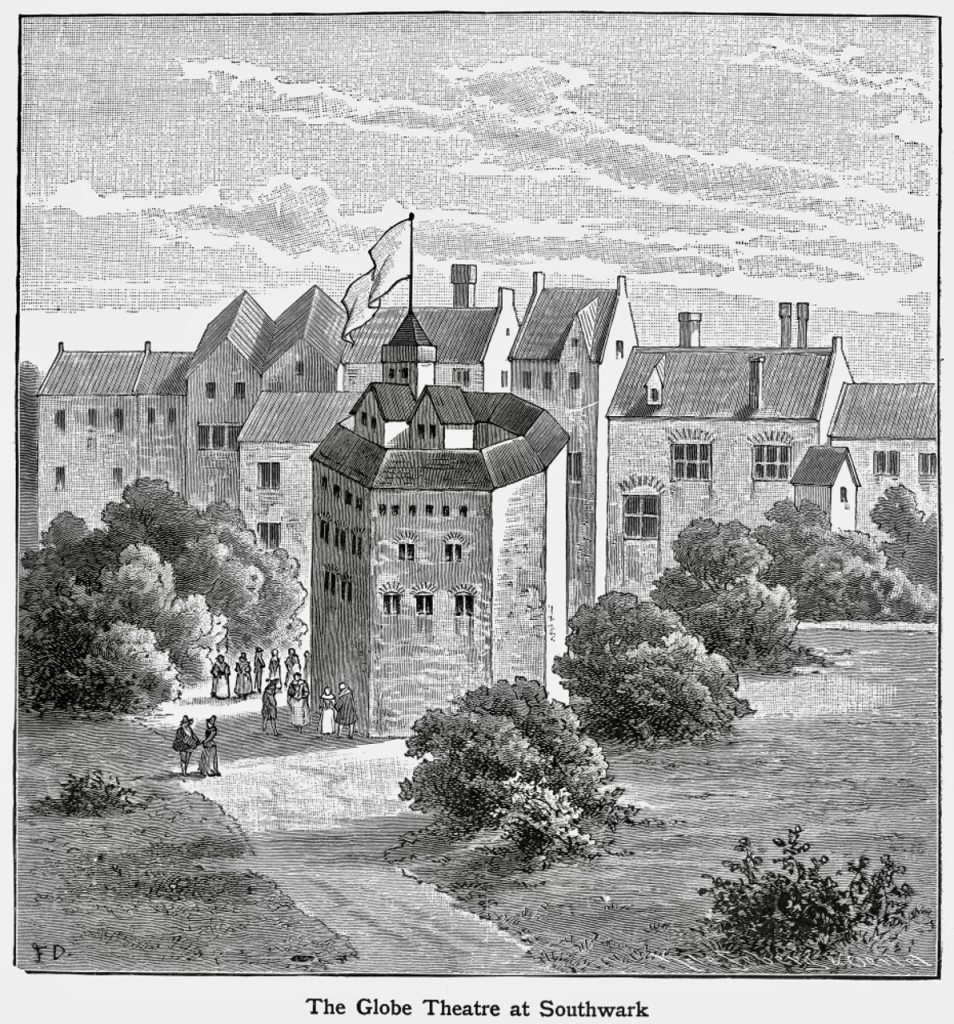
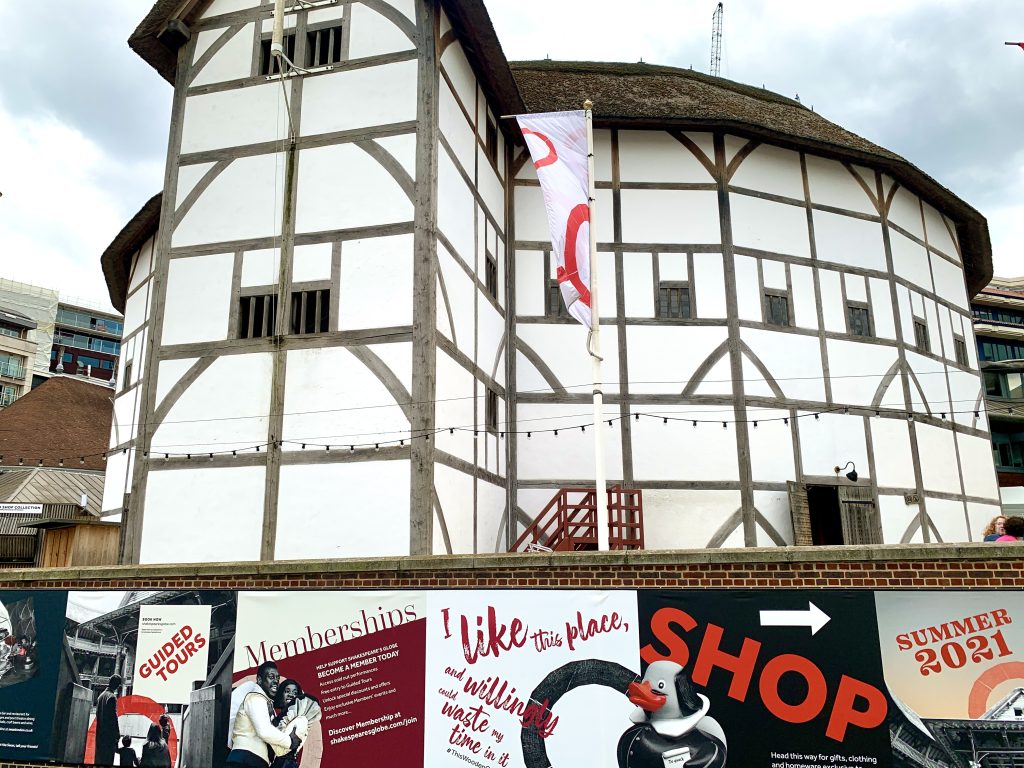
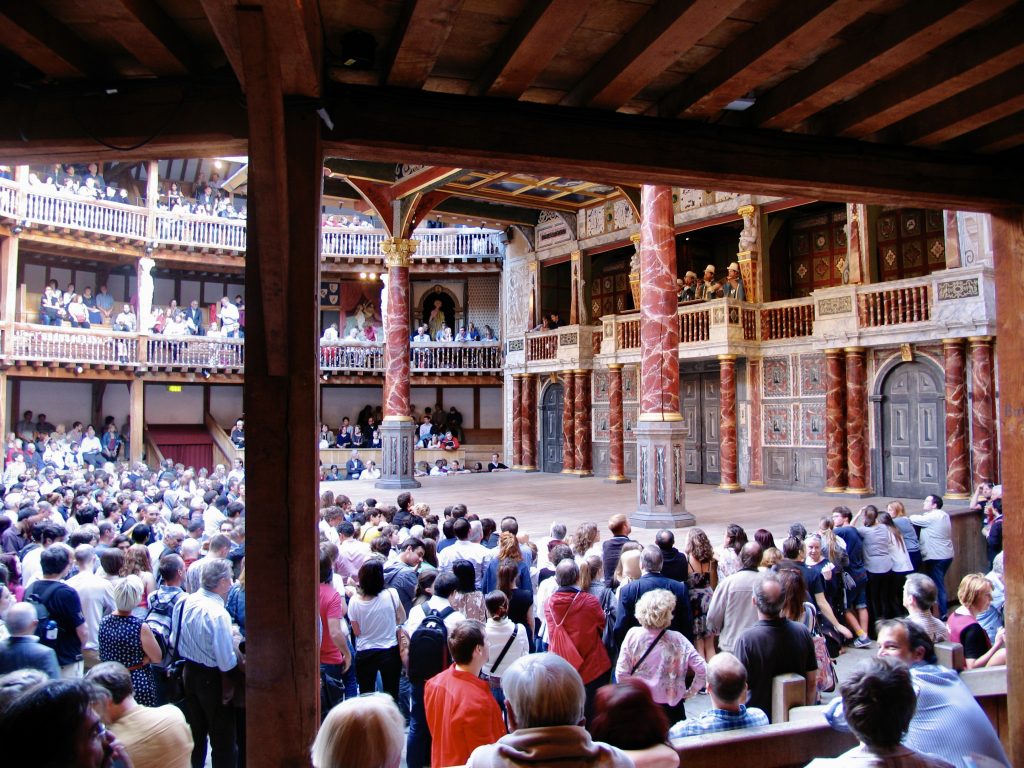
Within a few years Shakespeare had become one of the leading writer/producers (and actors) in the new industry. Since 1574, theatres had been banned within the walls of London so, in 1599, Shakespeare and his partners financed and built a new theatre in Southwark, on the other side of London Bridge from the city. They named it The Globe Theatre.
Both Richard Burbage, who was the Lord Chamberlain’s Men’s principal actor, and his brother Cuthbert Burbage owned double shares, or 25%; four others, Shakespeare, John Heminges, Augustine Phillips and Thomas Pope owned single shares, or 12.5% each.
The theatre probably opened with a production of Henry V, and the following Shakespeare plays were subsequently performed there:
- Antony and Cleopatra
- As You Like It
- Hamlet
- Julius Caesar
- King Lear
- Macbeth
- Measure for Measure
- Much Ado About Nothing
- Othello
- Romeo and Juliet
- Titus Andronicus
- Twelfth Night
- The Taming of the Shrew
- The Tempest
The Globe had a capacity of three-thousand people, and in 1609 Shakespeare and his partners began renting the indoor Blackfriars Theatre, which had a capacity of six-hundred. This allowed the company to make money year-round, from productions at both indoor and outdoor theatres. Later Shakespeare bought an apartment in the old gatehouse of the Blackfriars Monastery, as his London residence.
Long before that he had also bought one of the largest houses in his birthplace of Stratford (where he could escape the periodic plague epidemics that broke out in London during this period). Shakespeare had become a very wealthy man (although not Drake rich). The minimum entry price at the Blackfriars was sixpence, six times that of the Globe, with better seats priced from eighteen to thirty pence.
With the accession of James I (VI of Scotland), uniting the Kingdoms of England, Scotland, Wales and Ireland, on 19 May 1603 the company became the King’s Men, by royal patent. To have gained royal patronage and such wealth and fame, from his comparatively modest starting point, was an enormous success.
On 29 June, 1613, the Globe Theatre caught fire during a performance of Shakespeare’s Henry VIII and burnt to the ground. A theatrical cannon was used during the performance, misfiring and igniting the wooden beams and thatching. According to one of the few surviving documents of the tragic event no one was hurt – except a man whose burning breeches were put out with a handy bottle of beer. A lovely theatrical tale.
It was rebuilt in the following year but, like all theatres in London, the Globe was shut down during the British Civil Wars, when the Puritans of Oliver Cromwell closed all London theatres. The building survived until 1644-5, when it was demolished in order to make room for tenement housing.
Shakespeare had died in 1616, probably unexpectedly, and from there his reputation has only grown in the intervening years. He is the most influential writer in the English Language, and there will always be productions of his plays, and interest in his work.
One final point to make is that he definitively explodes the theory of the tortured genius, that an element of madness is needed for true greatness to flower. Information about his private life is quite thin, a couple of minor legal issues and a scandalous story of how he seduced a lady that had come backstage hoping to meet Burbage.
Make of that what you will, but bearing in mind that he was a wealthy and well-known man, running a business in a high profile industry, if there were any major scandals we’d probably know. We do know he had a prolific output, he wrote 39 plays, 154 sonnets, three long narrative poems and a few other verses, so he must have been an extremely dedicated writer. Unfortunately, from the point of view of scriptwriters looking for material, it very much looks like he led a largely abstemious life. And he was one of the greatest ever genius’.
Printers and St Paul’s
The fact that we still have copies of Shakespeare’s plays so many years later is because he was writing in the era of the printing press. Funnily enough there is considerable evidence that the reason his plays probably weren’t printed before the First Folio, in 1623, is that this would give the King’s Men exclusivity when it came to producing Shakespeare’s plays.
Nevertheless there was an explosion in reading material during the Elizabethan period.
William Caxton, owner of the first-ever printing press in Britain, was based at Westminster, but after he died his apprentice, the appropriately named Wynkyn de Worde, moved it to Fleet Street, making the neighborhood the center of the new publishing industry. In 1588 a law was passed banning printing presses from operating anywhere except in Oxford, Cambridge or London.
De Worde was the first person to set up a stall and sell books to the public at St Paul’s Churchyard. It soon became the centre of the burgeoning book trade.
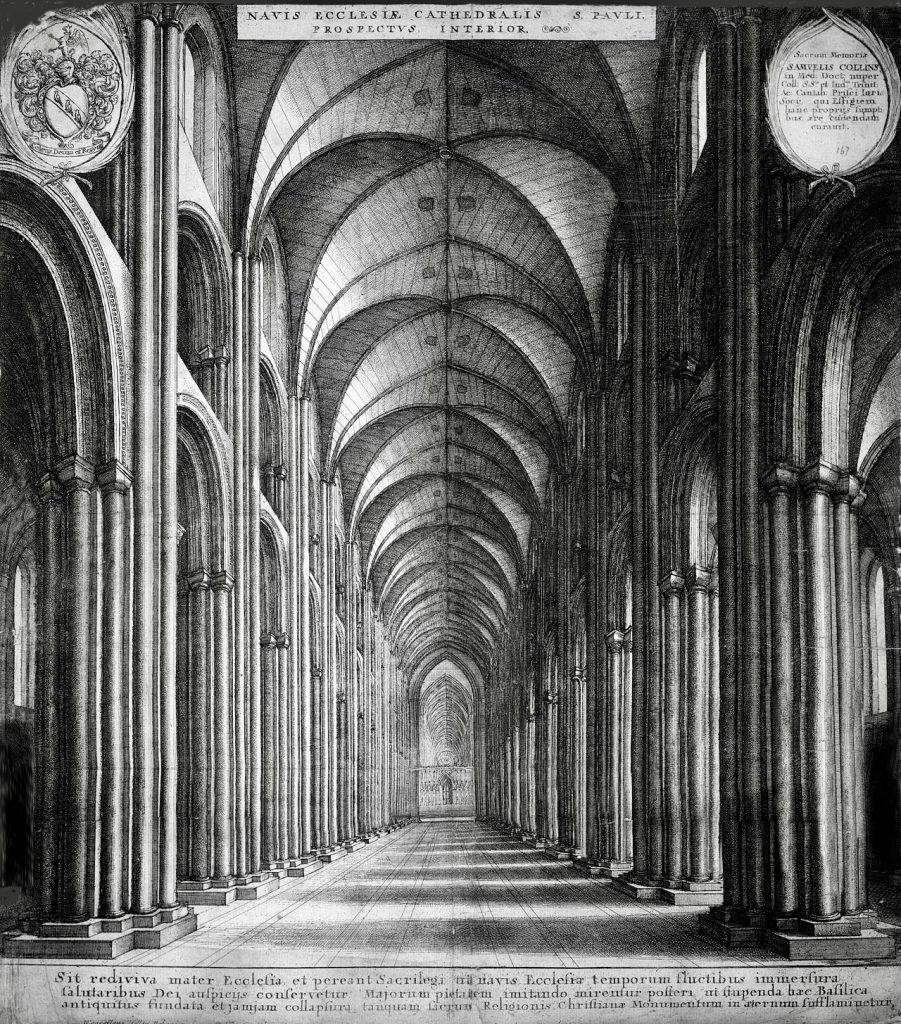
Long before the Elizabethan era though St Paul’s Cathedral had become one of the main markets in London, as more than one bishop complained. Merchants conducted business in the aisles, and used the font as a counter upon which to make payments, lawyers received clients at certain pillars and the unemployed looked for work.
It was the fashion of those times … for the principal gentry, lords, courtiers… to meet in Paul’s Church by eleven and walk in the middle aisle till twelve, and after dinner from three to six, during which times some discoursed on business, others of news… And those news-mongers, as they called them, did not only take the boldness to weigh the public (on) intrinsic actions of the state, (but what some) courtier or other did (i.e. gossip).
Francis Osborne (1593–1659)
It was also the center of the news business, such as it was then. The proximity of St Paul’s to Fleet Street meant that the grapevine and the publishing industry were closely linked from the beginning.
The cathedral was also Infested with beggars and thieves by then, and Paul’s Walk was a place to pick up topical jokes and prostitutes, as well as news and gossip. In 1585 a thieves’ school was discovered in Billingsgate, where apprentice pickpockets would attempt to take coins from a purse. Hanging on the wall next to the purse was a bell which would ring if the students were not dexterous enough.
Changing Population of London
As well as trade becoming global during the Elizabethan era, London also became a global city in terms of its population, which grew increasingly diverse. As England transformed into a Protestant country, it became a refuge for Protestants fleeing religious persecution elsewhere.
The first big influx came in the wake of the 1572 St Bartholomew’s Day Massacre, which saw 70,000 Huguenots brutally murdered across France, and Elizabeth I declare a period of mourning in honour of the Protestant lives lost to the Catholic terror. Most of these immigrants brought their trades with them and set up in business in London: French hatters established themselves in Southwark and silk-weavers in Shoreditch and Spitalfields.
At the same time London witnessed the first large-scale migration to the city from Ireland. Since Irish immigrants were mostly Catholic, they weren’t necessarily welcomed by Protestant London though. In 1593 Elizabeth banned Irish migrants unless they were homeowners, domestic servants, lawyers, or university students.
Although Jews had been expelled from England in 1290, by the late Sixteenth Century there was a small community of around a hundred Portuguese Jews living in London, refugees from the Spanish Inquisition.
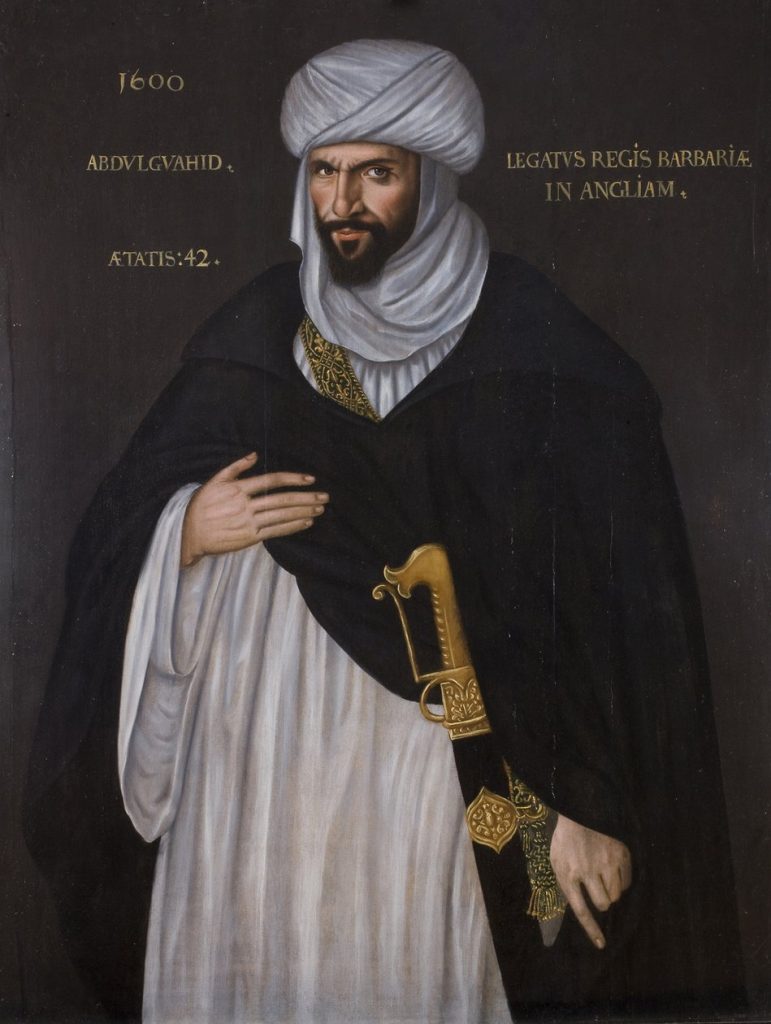
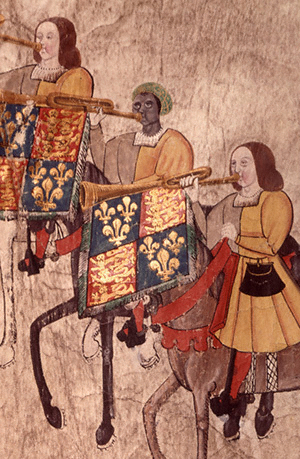
The Tudor period saw London’s first portrait of a named black person, the royal trumpeter John Blanke, who performed at the courts of Henry VII and Henry VIII. In 1600 Ambassador Abd el-Ouahed ben Messaoud arrived in London from Morocco, seeking an alliance between the King of Barbary and Elizabeth I. He brought a retinue of Muslim men with him, and had his portrait painted during his visit
Beautiful Games in Elizabethan Age London
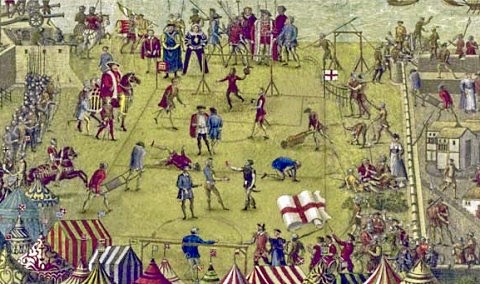
Football also became increasingly popular entertainment during this period, believe it or not. Nowadays, the Elizabethan game s known as ‘Medieval Football‘ (not the type of football that was played in the 1980’s, although there were some similarities). It was a much more violent and lawless game than today, allegedly, with one chronicler of the day describing it as “a friendly kind of fight”. In 1582 a man was reportedly killed playing football in West Ham, so it clearly wasn’t always friendly, but it surely had nothing to do with the Premier League club.
Players would use a pig’s bladder, that was filled with beans that made a rattling noise as it was kicked about the field. Later, leather would be tied around the ball to make it stronger.
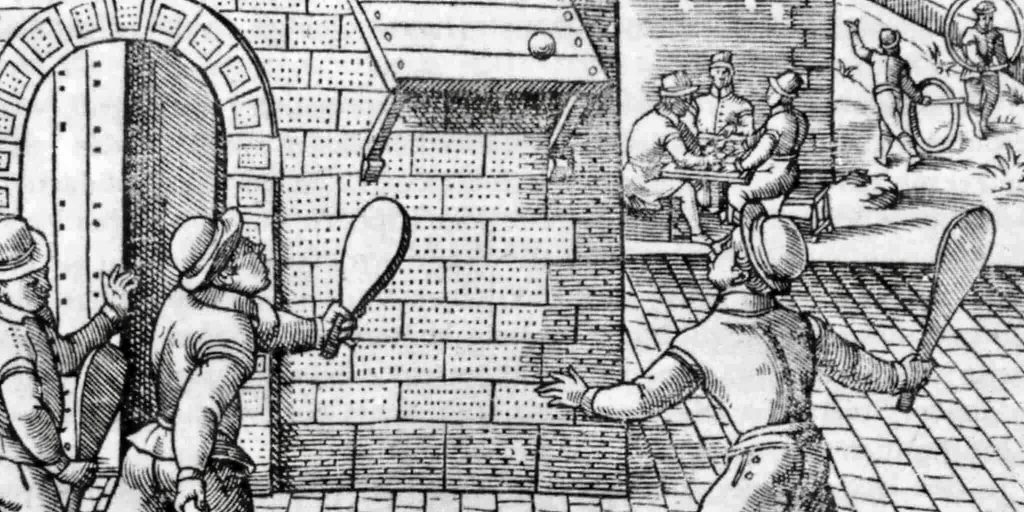
Tennis had also been popular with the upper classes since the reign of Henry VIII, who enjoyed the sport and had courts built at Hampton Court. It was played indoors with balls made of hair!.The playing of the game was similar to that of tennis today, except that the balls could also be bounced off court walls.
Archery practice was still mandatory for boys, and bear and bull baiting were much enjoyed, although even many people at the time found it excessively cruel. In 1585 Parliament banned it, but Elizabeth I quickly overruled the law. The brutality of the ‘sport’ was well-captured by a German immigrant to Elizabethan London.
There is still another place, built in the form of a theatre, which serves for the baiting of bulls and bears; they are fastened behind, and then worried by great English bull-dogs, but not without great risk to the dogs, from the horns of the one and the teeth of the other; and it sometimes happens that they are killed upon the spot; fresh ones are immediately supplied in the places of those that are wounded or tired.
Paul Hentzner
The Virgin Queen
There have been so many films and TV shows about Elizabeth I that it’s impossible to list them all. That’s a testament to the huge fascination that she still inspires today. She was a hugely significant figure, creating and bestowing her name upon an era. Elizabeth I was the original prototype of the independent woman “who’s doing it for herself”. She was named the Virgin Queen since she never married, and the reasons for that are largely unknown, but what isn’t in dispute is that she definitely didn’t want a man telling her what to do.
And who can blame her. I wouldn’t like it.
Also the fact that her father, Henry VIII, had his wife and her mother, Anne Boleyn, executed must have had some kind of impact. But that was also because he was so desperate for a son and heir. Shouldn’t Elizabeth have been too? It appears not.
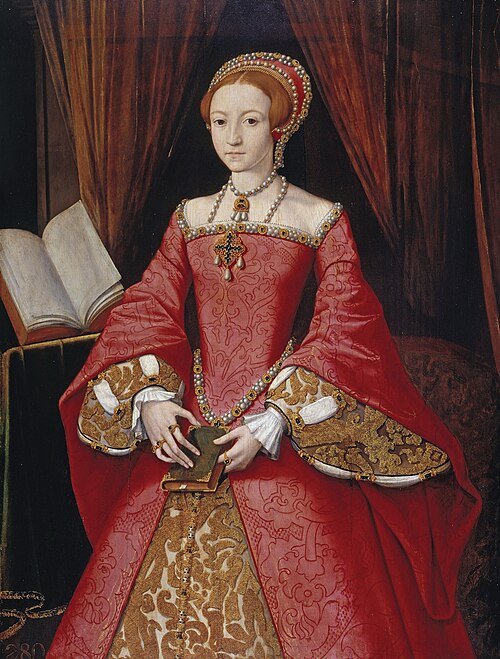
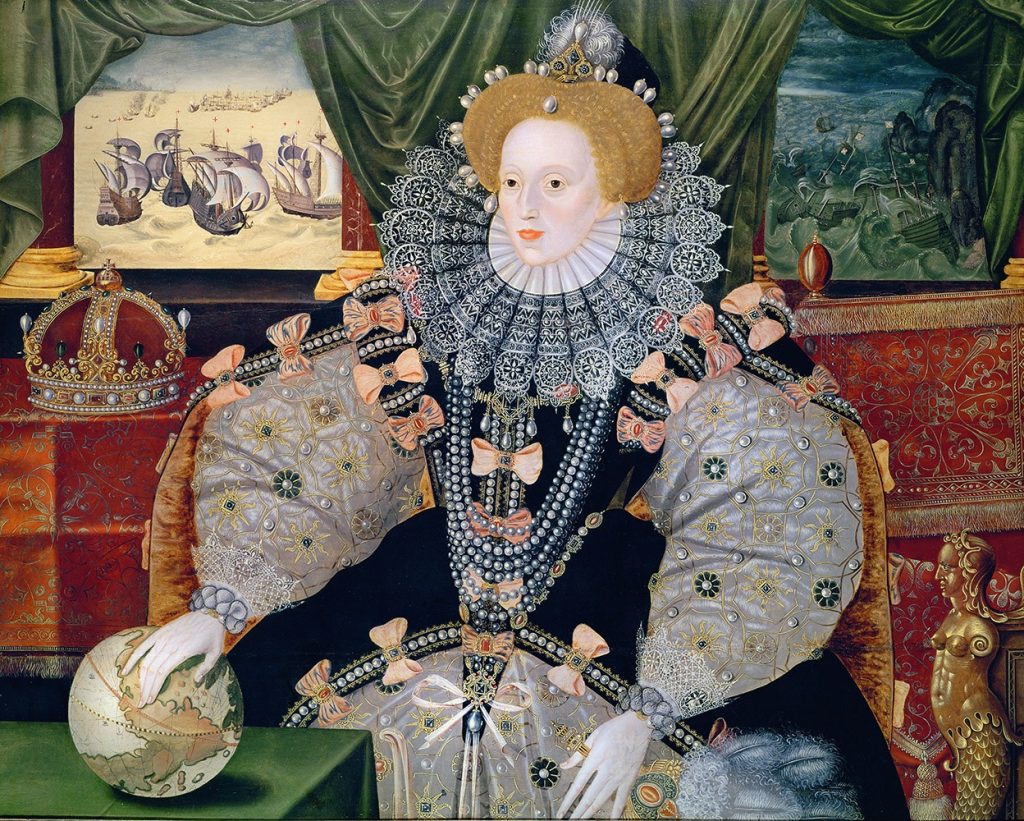
Like many women, especially back then, Elizabeth was the figure of unwanted sexual advances as a teenager. In her case from Thomas Seymour, effectively her foster-father. While she was living with him and his family in Chelsea, he took the opportunity to convince her to marry him (after his wife had died during childbirth). He failed in his “romantic” endeavors and was later executed for his temerity. To desire the crown is dangerous.
Before that she’d been declared illegitimate (by her father). Later, she was under suspicion throughout the reigns of both her siblings, Edward VI and Mary I. When she finally became queen in 1558, it was to a background of discontent, and outright rebellion. Finally there were no examples of successful queens in England’s history. She had it all to do.
It definitely helped that she was a good communicator, speaking fluent French, Dutch, Italian, Spanish, Latin and Ancient Greek, as well as Welsh, Cornish, Scottish and Irish. Think that’s impossible? The Venetian ambassador stated in 1603 that:
(She) possessed (these) languages so thoroughly that each appeared to be her native tongue.
Recently, in 2019, a translation of Roman historian Tacitus that was found in Lambeth Palace Library was confirmed as Elizabeth’s own work, after a detailed analysis of the handwriting and paper.
Although there were defeats and setbacks, by the time she died, the kingdom was much more powerful and prosperous. London had grown massively and was thirteen times the size of the next biggest city in England (which was Norwich at the time). The footy-four year reign of Good Queen Bess was an unprecedented time of peace (at least at home) and growth.
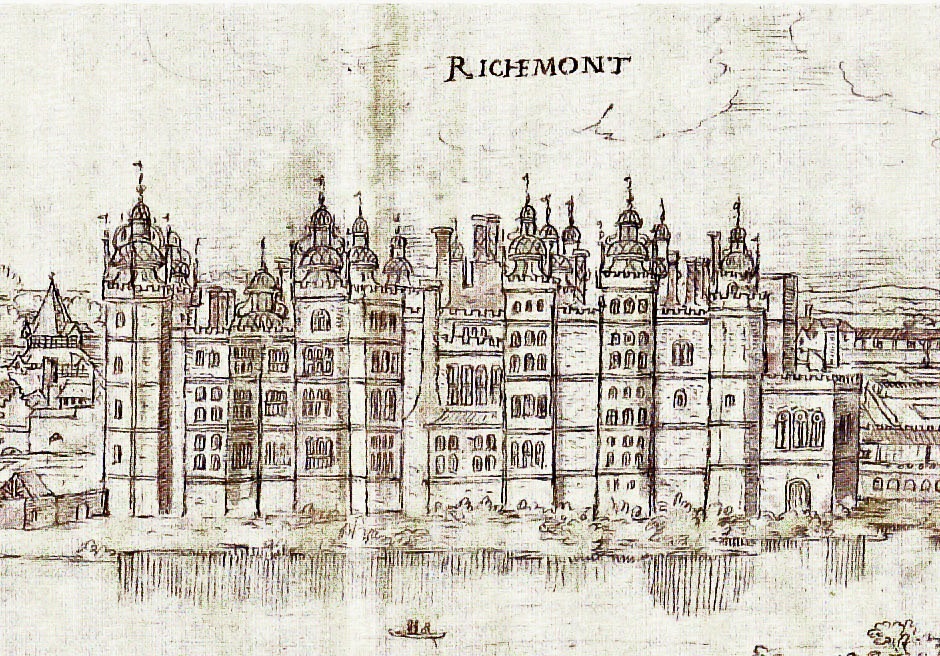
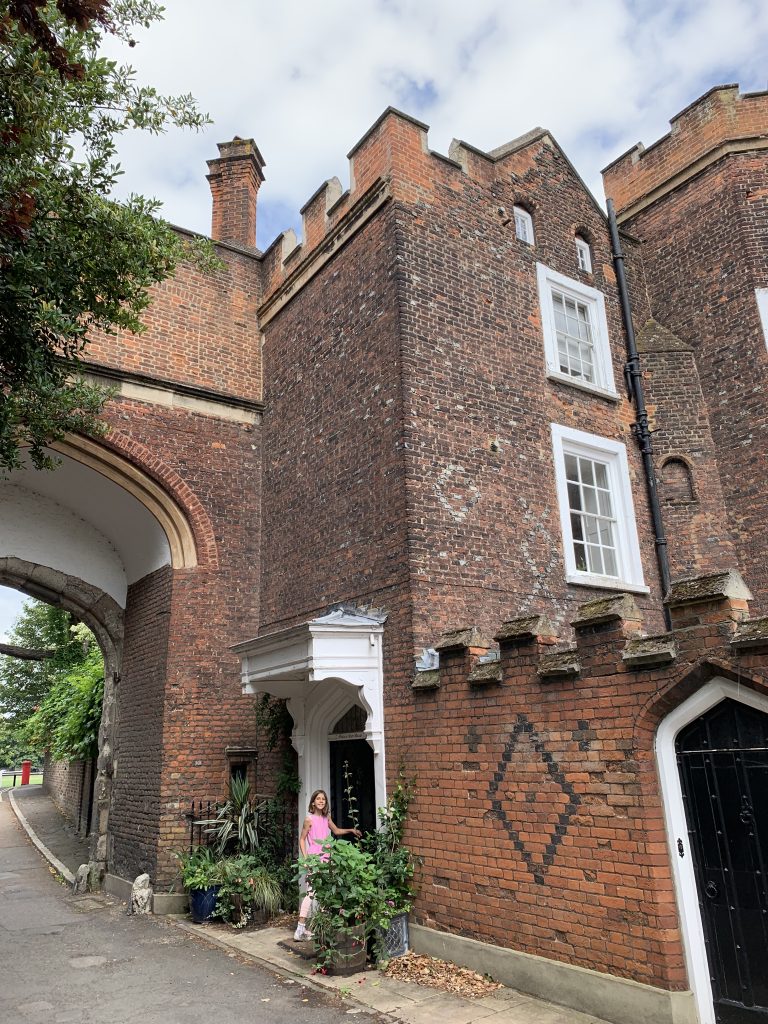
She died at Richmond Palace, her favorite home, in 1603, bringing an end to the Elizabethan Age.
Learn More About London in the Elizabethan Age
Our London in a Day Tour and Introduction to London Pt 1 Tour both start at Westminster, the perfect place to begin an exploration of the city, and we cover all of the history related here on those tours, giving guests a proper understanding of London’ origins and a timeline of its development. The Introduction to London Pt 2 Tour also visits the a replica ship of Drake’s Golden Hind, St Paul’s Cathedral and Shakespeare’s Globe Theatre.
If you have any feedback on London: the Golden Elizabethan Age please email us or reach out on social media, we’d love to hear from you.
– By Damien Blackshaw (Instagram)
You must be logged in to post a comment.