
Inside London - The London Rundown
London’s Founding: Romans To Dark Ages
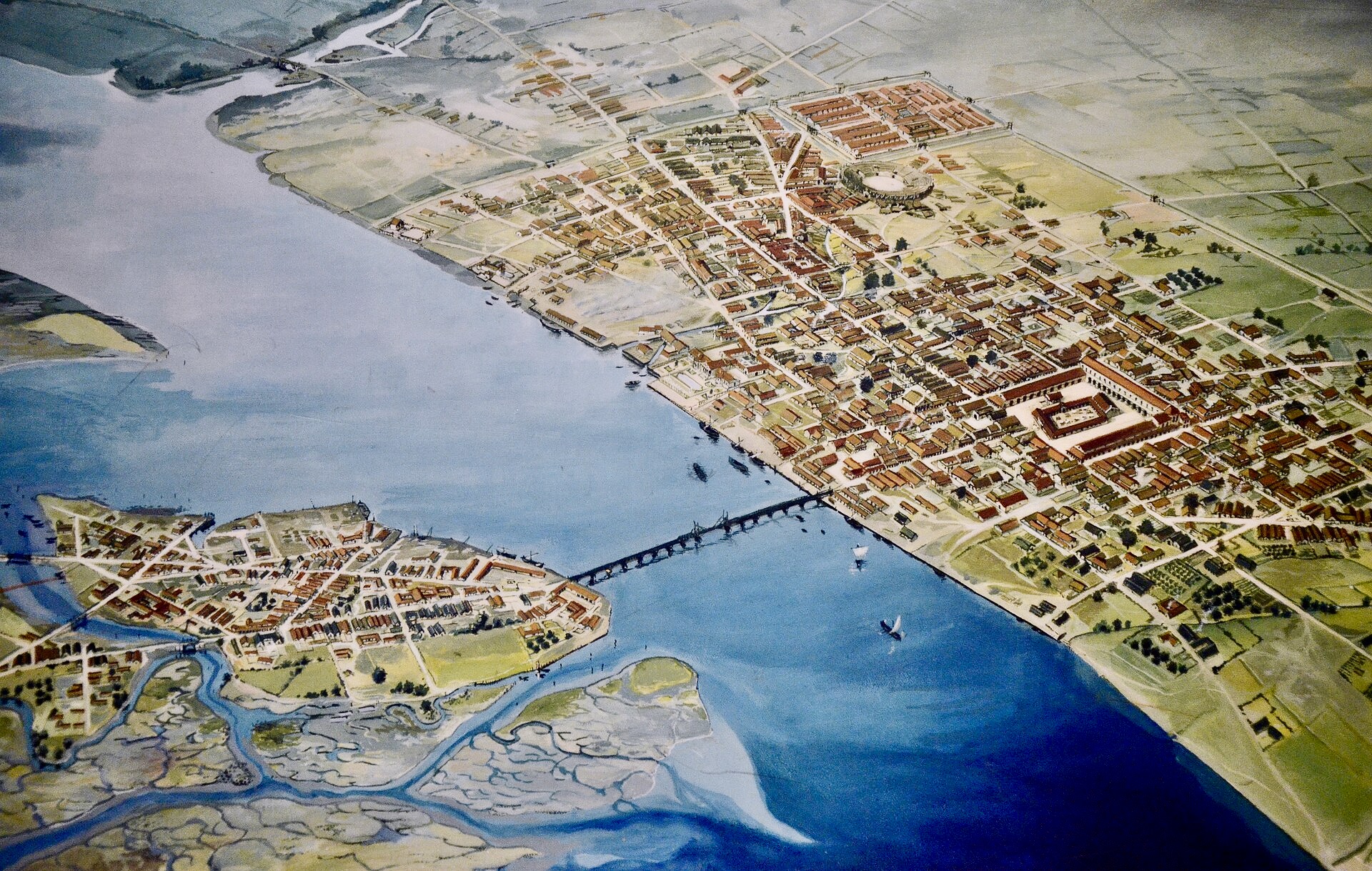
London is generally understood to have been founded by the Romans in around 47 AD. They gave it a name from which it’s, more or less, been known by ever since: Londinium. The real story of London’s founding is more complicated though. In fact the Romans were probably rendering the name by which the area was already known to the locals but, nevertheless, from those small beginning that settlement has become one of the most famous and important cities in the world.
Since that founding by the Romans, London has been razed by fire (a few times) and wracked by disease and death. It was abandoned for a couple of hundred years and its future has often looked far from rosy. Yet this city has always been able to rise from the ashes, and confound the many doubters, with its uncanny ability to not only survive, but grow and thrive.
So, how and why is London where it is? Does the name mean anything? Why is it the biggest city in the U.K., and was it always destined for greatness? In this article I’m going to try to answer those questions.
London: the Prehistory
If we consider that the Romans founded London, then what happened before the Big Bang?
Not a lot is known of the Ancient Britons, except through the conquering Romans (and of course the minimal archaeological record). The British Isles had been continuously inhabited for at least 10,000 years by the time the Rome’s legions arrived, but by that time the islands were mostly populated by Iron Age tribes, whose culture was largely similar to the Celtic inhabitants of Gaul (modern day France).
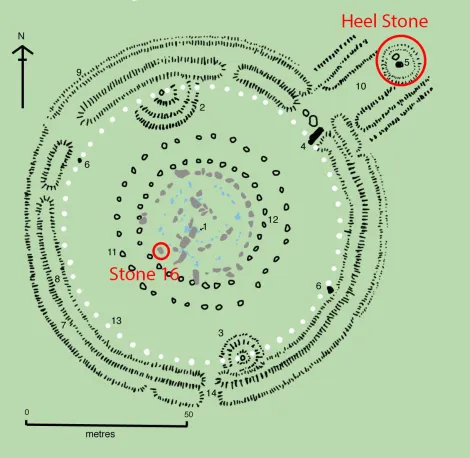
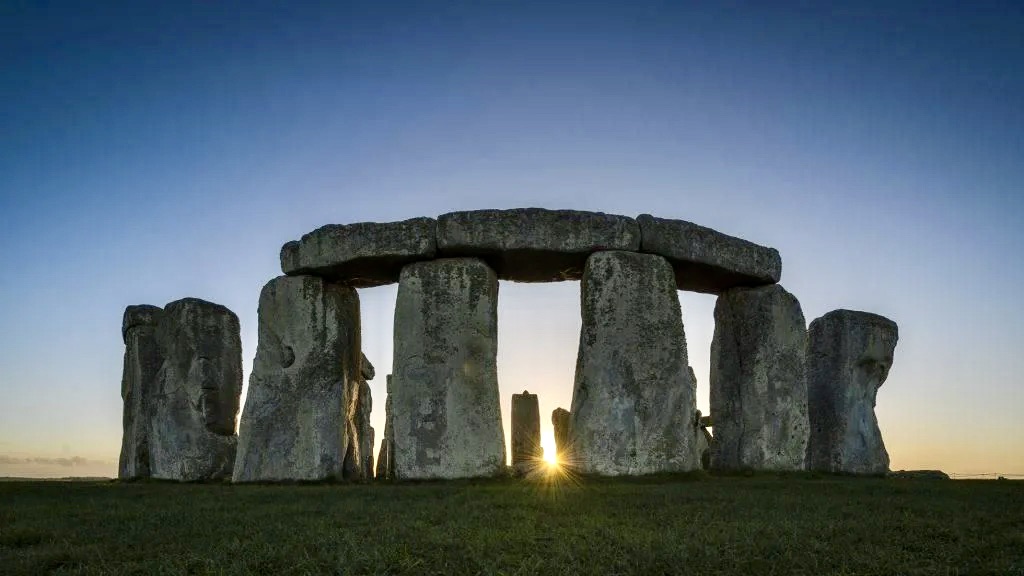
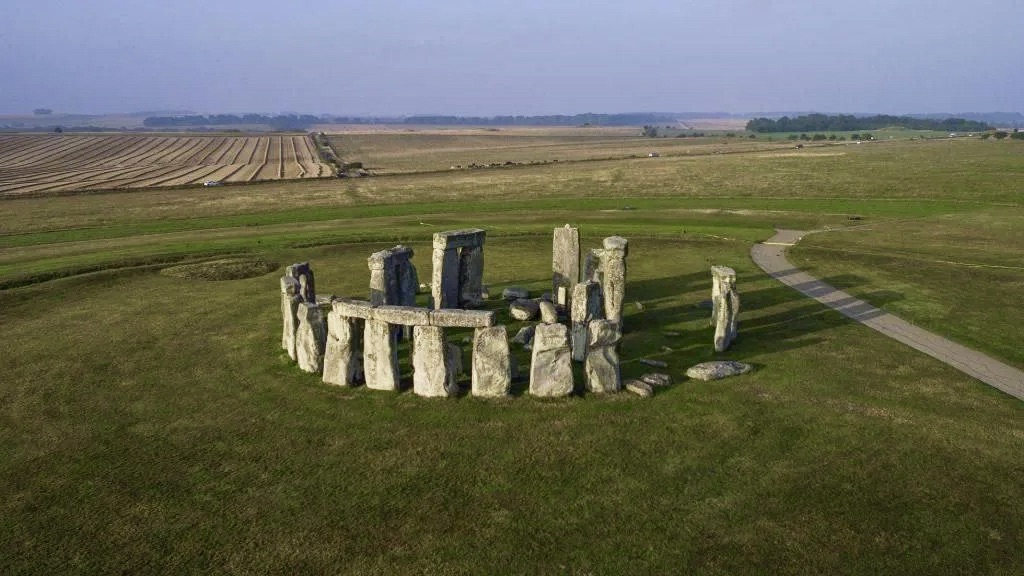
That most of the people of these northern European islands were on friendly terms with each other and were united, at least on matters of religion, is shown by the construction of Stonehenge, about 80 miles from London in Wiltshire. Developed over a 1,500 year period, from 3100 BC to 1600 BC, the site seems to have been considered sacred from around 8000 BC.
Many of the stones are from different parts of the U.K., including the enormous bluestones, which are from a quarry more than a hundred miles away, in Wales. So clearly early Britons had some kind of unified culture, and the skill, determination and well-being to move those huge pieces of rock. However the site is clouded in mystery and there’s much that we don’t know about it.
That the Britons were a trading people is shown by the discovery of copper, tin and gold mined in Wales, Cornwall and Devon, in places as far away as the Middle East (possibly traded by the Phoenicians). As time passed and mainland Europe came to be controlled by the Ancient World’s dominant superpower, Rome, Britons would have been aware of the change in the geopolitical weather and were probably getting a little nervous.
Nevertheless they traded significantly with Europe, even before the Romans conquered most of it, as was reported by Third Century BC writer and geographer, Pytheas. He was the first person, that we know about, to take a trip to the U.K. and he noted that the Britons were renowned wheat farmers. That trade only increased after the rise of the Roman Republic.
Pytheas also coined the name Briton, which is derived from Bretanoí. The name likely referred to the practice of Britons to paint their faces bright colors, as one meaning of the word is “painted people”. The Greeks and Romans called the main island Albion and it was considered to be the edge of the known world.
Conquest by Rome
For some time Rome had been casting covetous glances at this seemingly wealthy, and mineral rich, island. In 55 BC Julius Caesar, with all the confidence that came from his lightning conquest of Gaul, made the short trip across what’s now known as the English Channel. This expedition was just a reconnaissance exercise though, and he returned in force the following year with five legions and 2,000 cavalry.
Caesar was amongst the first Romans to see the Thames, when he crossed it on the way to forcing the British chieftains to submit to Rome’s authority. The chiefs were overawed by the size of Caesar’s army and quickly capitulated. However, surprisingly, the Romans were content to return to mainland Europe, with oaths of allegiance, rather than outright conquest. In time, they would be back.
Caesar returned to Rome a conqueror, with the lustre of his successful campaigns in Gaul and Britain, and he used that status to overthrow the Republic, and become dictator. Although he was assassinated shortly afterwards, Rome was now an Empire.
When Rome did return, in 43 AD, it was on the flimsy pretext of supporting Verica, the rightful king of one of the British tribes, the Atrebates, who had been sent into exile by another tribe, the Catuvellauni, who occupied the land where London now lies and to the north and east (heir capital was today’s Colchester) Verica was a client king of Rome, but it does show that sketchy rationales for a war are nothing new.
The new emperor, Claudius, was far from the military genius that Caesar had been, in fact he was considered weak and uninspiring at first, so he felt he needed to do some conquering of his own. The Romans now knew a lot more about the British, making conquest of the island a more appealing and straightforward prospect than it had a hundred years earlier.
Rome would rarely underestimate an enemy, and they didn’t do so this time. The invasion force was made up of four legions (about 40,000 soldiers), and included war elephants (something the Britons would never have seen), cavalry and archers. They even had war machines, such as catapults and rock throwers, that the Britons would never have even dreamt of, never mind possessed.
Future emperor Vespasian distinguished himself in battle, and Claudius himself turned up to receive the fealty of the British leaders, when they surrendered after a short campaign. Following the ceremony Claudius quickly returned to the pleasures of his palace in Rome, with the island now confirmed as the Roman province of Britannia.
Nevertheless, Roman rule was not immediately accepted by many Britons and the king of the Catuvellauni (meaning war chiefs), Caratacus, led a guerrilla campaign against it for several years. After Caratacus was eventually defeated and captured he was taken to Rome as a tribute, where he impressed the Emperor himself with a speech he gave to the senate.
Very cleverly Caratacus pointed out that his stubborn resistance had only made the glory of Rome all the greater:
If I were now being handed over as one who had surrendered immediately, neither my fortune nor your glory would have achieved brilliance. It is also true that… if you preserve me safe and sound, I shall be an eternal example of your clemency.
Tacitus
Caratacus was pardoned immediately and lived out his days in exile in Rome, which he apparently grew to love. The first Briton of many, no doubt.
London’s Founding
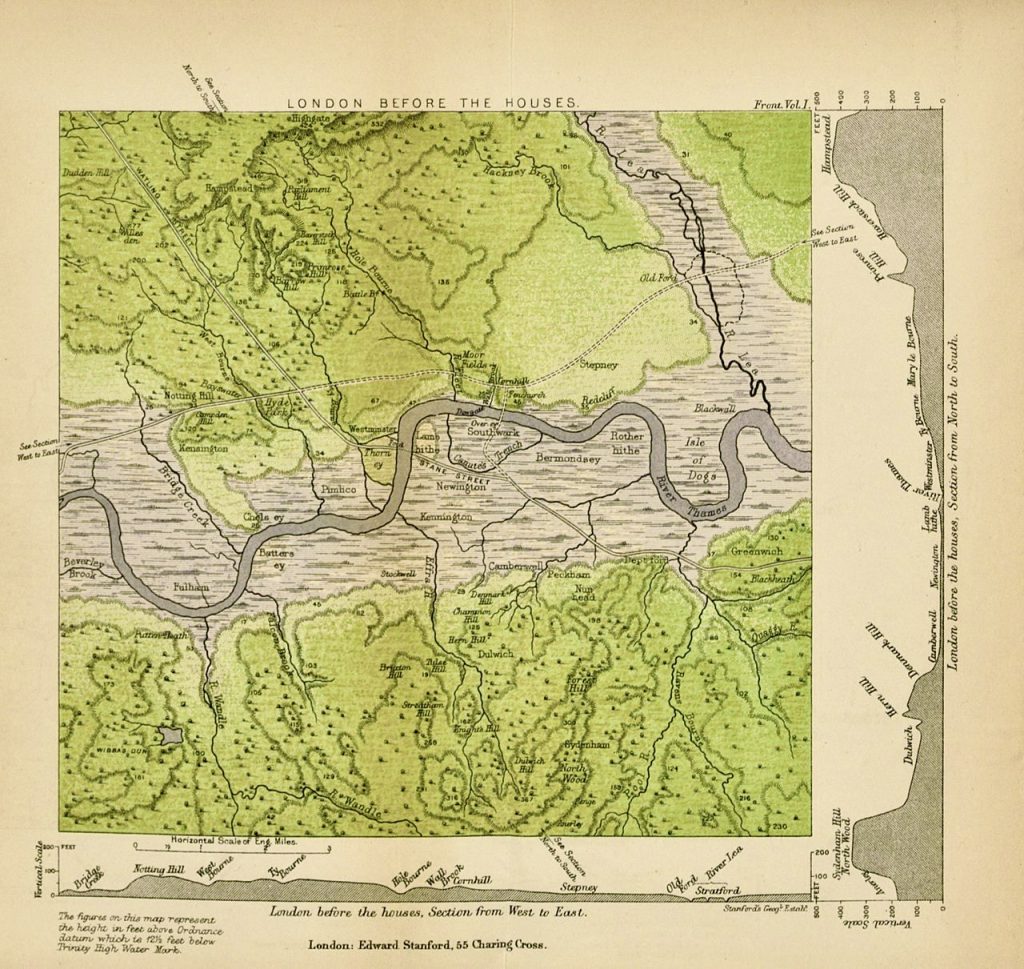
There were undoubtedly settlements dotted along the river, and there may have been a village and bridge where Vauxhall is now, but no evidence has been found of any significant development where the city now lies prior to London’s founding by the Romans.
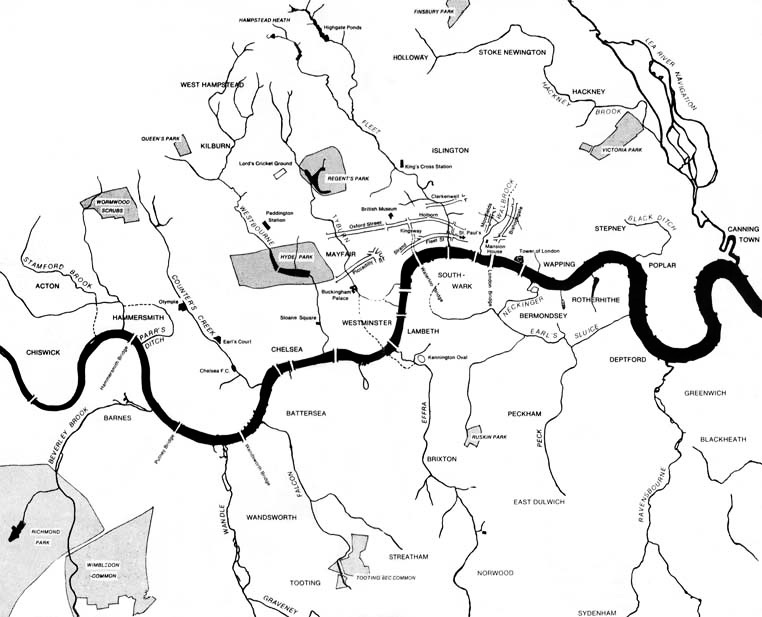
It’s a pretty obvious thing to say, but it bears mentioning here, that the valley in which London sits, would have looked completely different in 47 AD. It was hilly and probably heavily forested, with several rivers and streams flowing down from the hills onto a more open flood plain. The river was at least twice its present width and there would have been many islands in its serpentine path. Parts of the area, especially towards the river’s lower reaches, would have been quite marshy.
Believe it or not, but London’s weather is quite mild, compared to other cities at a similar point in the Northern Latitudes, because of the Gulf Stream, which brings warm water from the Caribbean up the west coast of the U.K. British weather is (relatively) warm, and wet of course, and the land is incredibly fertile.
This would probably have meant that the valley, where it was cleared, was being used for agriculture, perhaps growing the afore-mentioned wheat. It would have seemed like the perfect spot for the siting of the new town that the always logistics-focused Romans were planning for their box-fresh province. They were in the habit of creating new towns and cities as they went round conquering the world, so London’s founding was standard practice for them.
Reasons for Founding of London
Why here? The river is the biggest on the island, offering access in to the interior, and out to the rest of Europe and Rome. At the point where it was narrow enough for the construction of a Roman bridge, but still deep enough to handle ships, the Romans would found the settlement. Its positioning on the tideway permitted easier access for ships sailing in both directions.
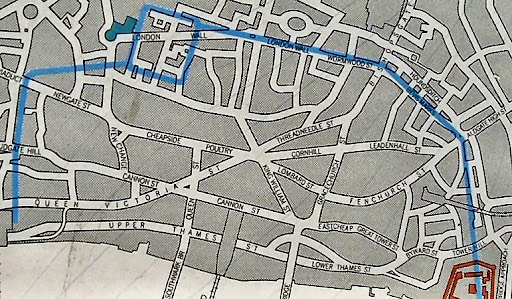
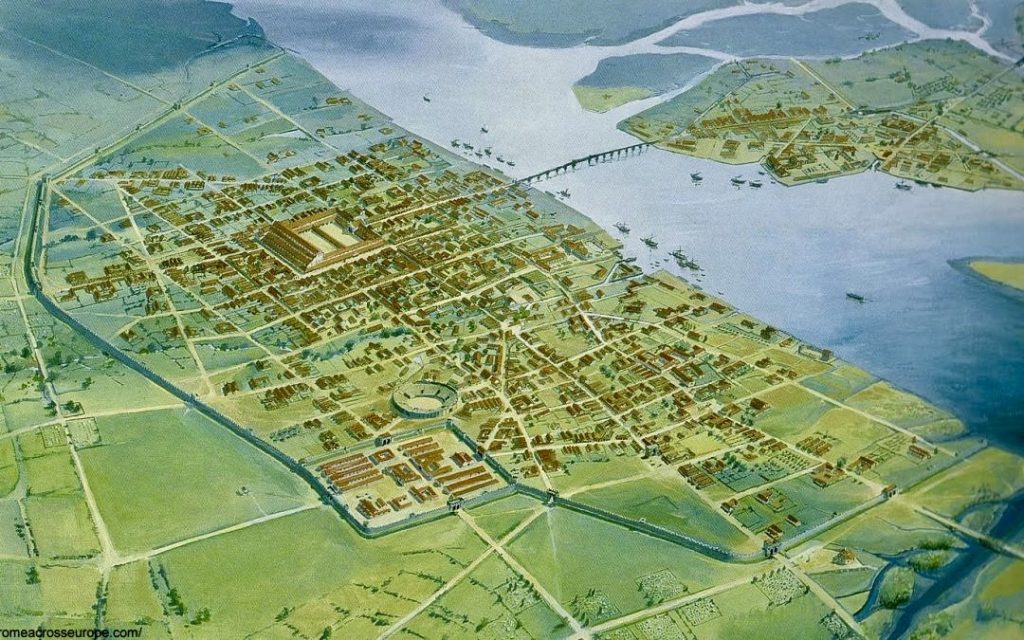
The site of the crossing is almost exactly where London Bridge is today. Over the next few years the town was laid out in standard Roman grid fashion, on a north-south axis, with a forum, temples and baths, mixed with docks, warehouses and residential buildings, all behind a wooden wall and defensive ditch.
Of course the Romans needed a name for the new town and so it became Londinium. The Romans likely took the place name that the Catuvellauni had for the area, which has been suggested as Londos-inio or Londinio, which would mean ‘place that floods’ (periodically or tidally). Since Londinium has no meaning in Latin, this is very possibly the case.
Londinium occupied almost exactly the square mile of the modern day City of London. Its 350 acres making it roughly the size of Hyde Park.
The River Thames gets its name from ‘Tamesa’ in Brittonic (the language of the Ancient Britons), which meant dark or muddy. The Thames shares this origin with several other rivers in the U.K., including the Tamar in Devon and Cornwall and several rivers named Tame in the Midlands. It’s very possible the word just essentially meant ‘river’. Under the Romans the Tamesa was latinized to Tamesis.
Within a decade or so of London’s founding Londinium had become a relatively large city, of between 30-45,000 residents, which is pretty stratospheric growth, if you think about it. Studies suggest that it was a very cosmopolitan place, even then, with merchants and traders from all over the Empire living in the thriving entrepôt.
London Destroyed (for the First Time)
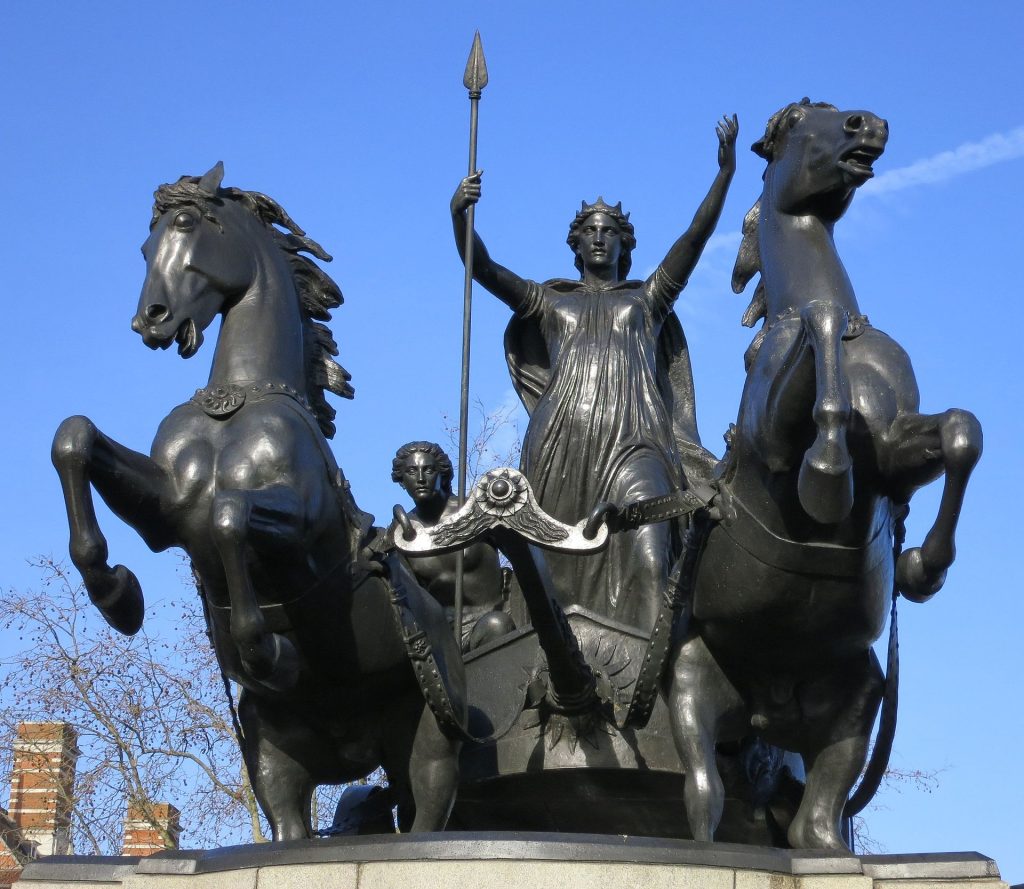
Disaster struck Londinium in 61 AD. when there was a major rebellion against Roman rule in the province, led by the warrior queen Boudica. According to Roman historian Tacitus the revolt began after Boudica’s husband, the King of the Iceni, died. According to Roman law a woman could not inherit royal titles and land, which the king had tried to circumvent by leaving them jointly to his two daughters and the Emperor Nero.
Nero though decided he’d have the lot and when Boudica objected, she was flogged and her daughters raped in front of her. This Game of Thrones style behavior enraged the Iceni (not surprisingly) and they rose up in rebellion against the Romans. The rebels killed the soldiers in the local garrison and marched south from their base in Norfolk.
First they sacked Camulodunum (Colchester), the capital of the province of Britain. Then when the 9th Legion arrived to put down the revolt it was ambushed and completely annihilated by Boudica’s warriors, the commander only escaping with a few other officers on horse. This was a stunning and unprecedented setback for the mighty Roman army.
Next the Iceni marched on Londinium, destroying Verulamium (modern St Albans) on the way. When the rebels reached Londinium, they quickly captured and burnt it to the ground (according to Tacitus, Boudica ordered that all the inhabitants who hadn’t already left town be executed). Deep below modern-day London a thick layer of black ash, debris and human remains has been found, which is thought to be the result of Boudica’s destruction of the city.
Perhaps this was Boudica’s mistake, she doesn’t seem to have united the British tribes against their recently arrived overlords. If anything it appears that she used the rebellion to settle some old scores with other tribes (such as the Catuvellauni). Maybe she didn’t feel that she needed their help? Indeed, many Romans fled to Gaul to escape, and it seemed like Roman rule in Britannia may have been at an end.
However the governor, Suetonius, returned from Wales where he was on an expedition of conquest at the head of the 14th Legion. Cobbling together a force from other military units he met Boudica in battle (probably in the Midlands). Although vastly outnumbered the Romans defeated the Iceni and slaughtered their entire army. Tacitus reports that Boudica killed herself and her two daughters, after the battle although other reports say that she died and was given a lavish burial.
No one can be sure what happened to her, but either way Roman rule of the island was reestablished, and Londinium was rapidly rebuilt. By the turn of the First Century AD the city was thriving once again and had almost certainly become the provincial capital of Britannia.
Londinium During the Roman Empire
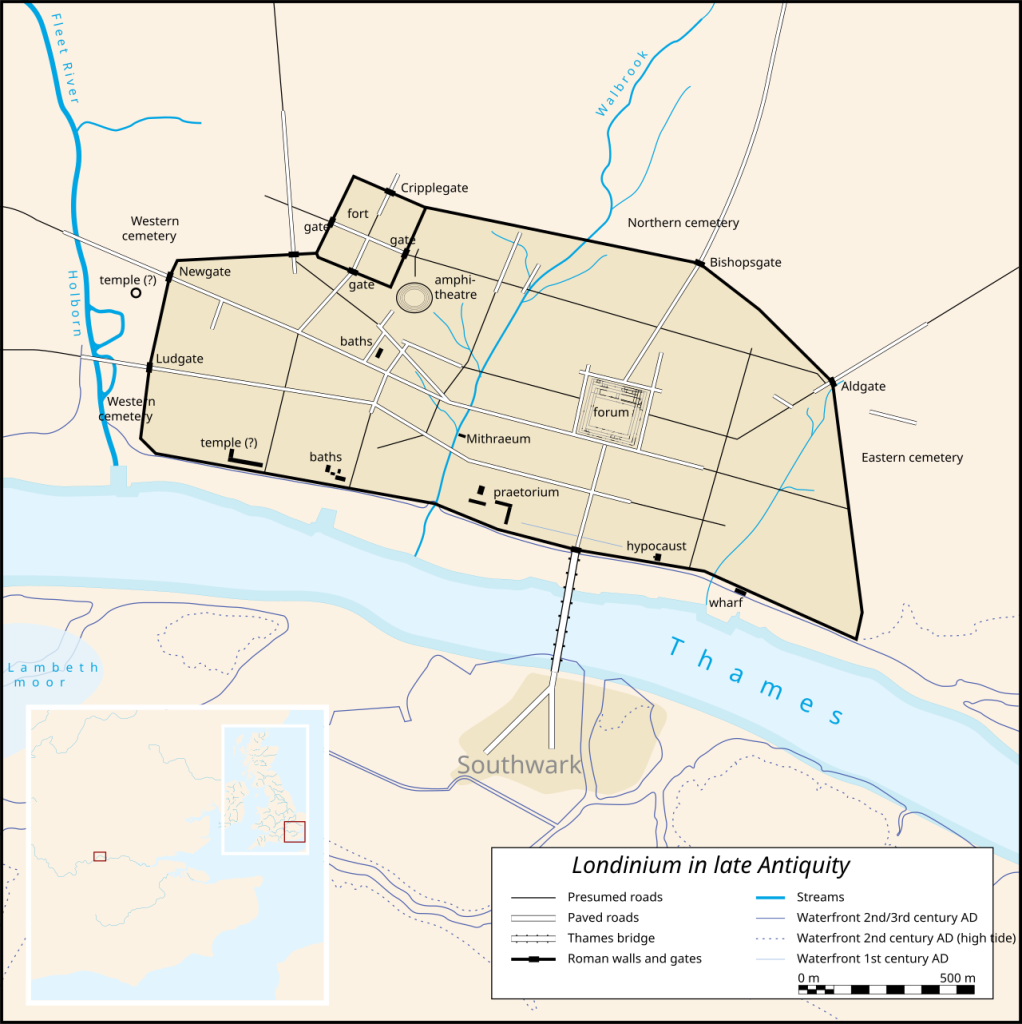
The Romans rebuilt London with a new military fort on Cornhill and surrounded it with new wooden walls. By AD 120 the first forum, from around 70 AD, had been replaced by one that had the biggest basilica north of the Alps (with three floors). The Forum was at the heart of every Roman town, with a market in the plaza, and law courts and town council meetings in the basilica.
Londinium also boasted a 7,000-spectator amphitheater, which was under today’s Guildhall (its dimensions are marked out in the plaza in Guildhall Yard, where it’s possible to see a section of the wall). There was a large governor’s mansion by the Walbrook (an ancient London river, since then covered up), near the centre of the town. The London Stone is thought to have been part of the mansion’s gatehouse.
Prostitution was legal – and taxed at the appropriate rate of course.
Londinium at Its Height
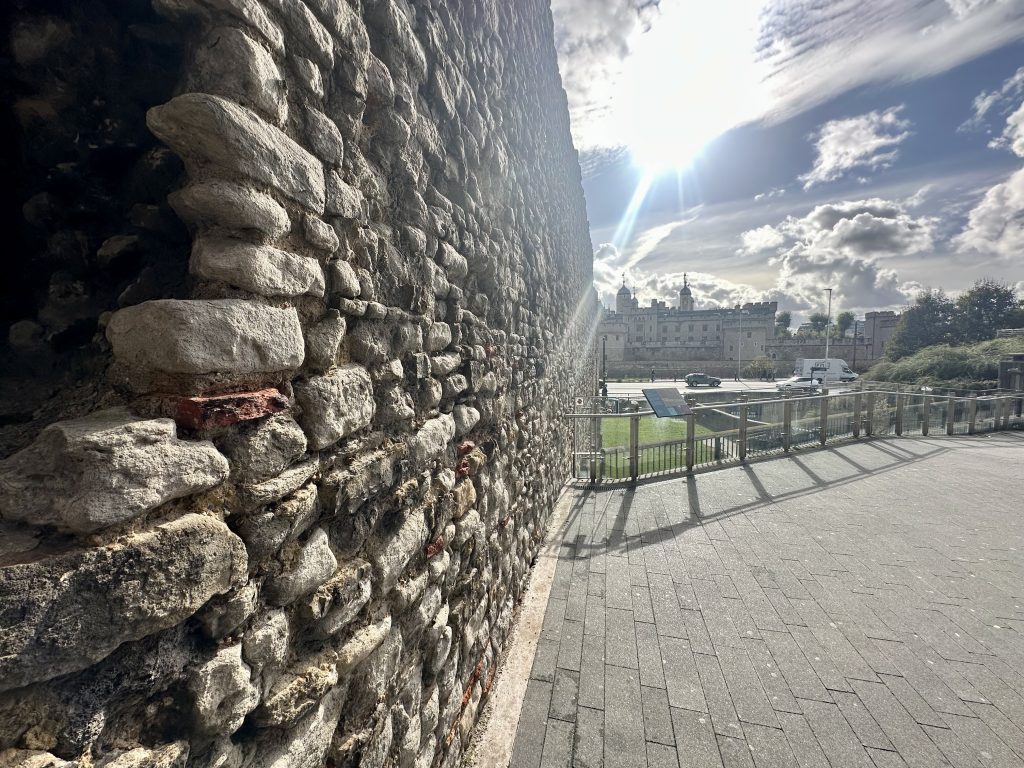
By the late Second Century Londinium was home to around 60,000 inhabitants. During that period the Romans built new stone walls around the town. At around three miles long, twenty feet high and ten feet deep, with a dry moat fifteen feet wide and seven foot deep, it was a huge construction project. The wall more or less defines the modern-day City of London and can still be seen in several places.
There were six large gates in the wall, at Bishopsgate, Aldgate, Newgate, Ludgate, Cripplegate and Aldersgate (a little confusingly). Those names are medieval of course, since the original buildings survived into the Middle Ages, until they were demolished in the 17th and 18th centuries to accommodate various street widening schemes.
In the Third Century AD the town walls were extended along the banks of the Thames, presumably to protect Londinium from attacks from the river itself (probably by Saxon pirates), but thereafter the archaeological record doesn’t show much further construction in Londinium.
As a counterpoint, there are theories that the walls were as much about cowing Londoners as they were about keeping an external enemy at bay. Some historians have likened the relationship between Britain and the Romans to being something like Ireland in relation to the later British Empire. A troublesome province, always on the edge of rebellion.
It is interesting in this context to note that in 400 years not one emperor hailed from Britain. When you consider that during that period emperors came from almost every other part of the Empire, including Africa, the Middle East and Northern Europe, it certainly feels significant that there were no Brits.
Fall of the Roman Empire
By 360 AD the Roman Empire was in big trouble and falling apart, due to a combination of factors including the sheer size of it, attacks by barbarians from the outside, and internecine strife amongst the Roman ruling class.
Around this time London’s walls were further strengthened with the addition of 22 towers, but that was probably more a sign of decline than expansion. By then Britannia was increasingly being attacked by Gaels (from modern-day Scotland and Ireland) and Saxons (from today’s Holland and Northern Germany), as well as being a hotbed of rebellion itself.
Shortly after 400 AD the western half of the Roman Empire, of which Britannia was a part, began to implode (the eastern half, rebranded as the Byzantine Empire, would continue for another thousand years). Roman rule in Britain, after nearly 400 years, effectively came to an end as the empire’s legions were withdrawn to fight in Europe in 407 AD.
However, it would be wrong to think of this as being like the US withdrawal from Afghanistan or Vietnam. The transition probably took several years or even decades, and it wouldn’t have been immediately obvious to Britons: Rome had recovered from other disasters in the past. Town council meetings and the law courts probably continued to operate for some time.
Nevertheless, the reality was that Britannia was now on her own and, although the historical record is minimal, it’s clear that within a hundred years or so Londinium was largely abandoned. Without finance, security and healthy international trade, it didn’t have much of a reason to exist. This would be the closest London ever came to extinction.
The consequences of the end of Pax Romana were far worse than the recent Brexit, it would appear.
The Dark Ages
Without a central authority to hold it together, after centuries of mostly benign Roman rule, Britannia began to fracture into different petty kingdoms. There were no institutions to keep it together, or any concept of a unitary Britain. Attacks from the Gaels across the southwest and north of Britain, and Saxons in the southwest, increased after about 440.
Around 450 the British appealed to the last Western Roman Emperor, Flavius Aetius, begging him to send military forces to defend the island (the missive was known as ‘the Groans of the Britons’).
The barbarians drive us to the sea, the sea drives us to the barbarians; between these two means of death, we are either killed or drowned.
Gildas, De Excidio et Conquestu Britanniae
The emperor, heavily engaged in battling Attila the Hun, was unable to send any legions, and it seems that the British may have invited the Saxons to settle in parts of southeast Britain as an alternative (if you can’t beat them, join them?). We only have one source for the Groans of the Britons, Gildas (writing nearly a hundred years later), so it may be an apocryphal story.
The fateful invitation to the Saxons, if it indeed happened because there’s no real record of it, is often put at the feet of Vortigern, possibly a strongman King of the Britons at the time. He supposedly reached out to brothers Hengist and Horsa, rulers of a Saxon tribe, to come and help him fight the Gaels. However Hengist and Horsa later betrayed him, killing his son, and establishing the Saxon Kingdom of Kent.
Recent research, including genetic studies of modern Brits, actually shows that there was significant immigration from Northern Germany into Britannia from the Second Century onwards, so probably there were already a lot of Saxons there before the end of the Western Roman Empire. Also there were huge movements of people all across the continent during the fifth century AD, so it’s not surprising that many Saxons were moving to Britain.
Within a few decades the Saxons had established several kingdoms across southeast Britain, Essex (East Saxons), Middlesex (where London lies today, Middle Saxons), Wessex (West Saxons) and Sussex (South Saxons).
Until recently it was thought that the entire London area was largely abandoned, but recent archaeological finds have shown that the Saxons established a town of their own outside the walls of Londinium, on high ground where Covent Garden is today, in around 650 AD. It seems that Londinium was an abandoned ruin by then (a Saxon poet records the lost, overgrown city as being “the work of giants”).
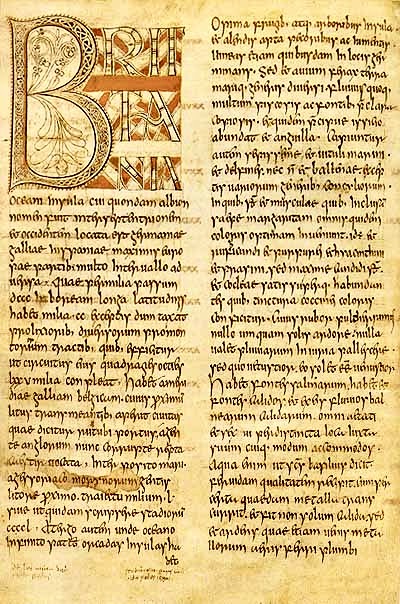
The Saxons named their town of 10-12,000 inhabitants Lundenwic, literally meaning London trading town. Now we have another source for information about London too: the Venerable Bede. He described it as being “a trading centre for many nations who visit it by land and sea”, in around 730 AD. Trade really is in London’s DNA.
Viking Raids
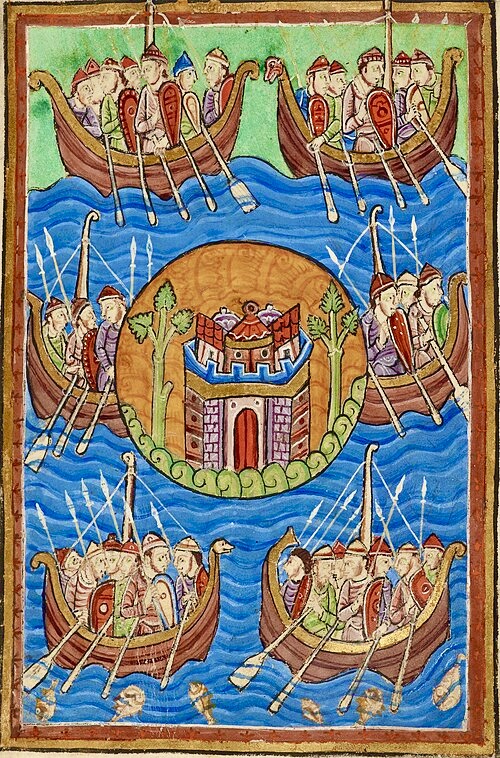
Lundenwic was disputed between different petty kingdoms, including Mercia, Essex and Wessex for the next hundred years, but a much bigger challenge came after 830 AD, with the onset of a series of massive Viking raids on the coast of Britain.
A huge Viking war party attacked in 842, in a raid that was called ‘the Great Slaughter’ by a chronicler, which gives some idea of how bad it was. In 851, another raiding party, apparently involving 350 ships, came to plunder the city.
Twenty years later a mighty Viking force known as the Great Heathen Army was camping within the old Roman walls for the winter, as the Danish invaders began to settle in Britain, instead of being content to just raid for booty. The army was led by legendary warriors Ivar the Boneless and Sigurd Snake-in-the-Eye, the names surely giving a good indication of their contemporary reputations.
London’s Founding (Again)
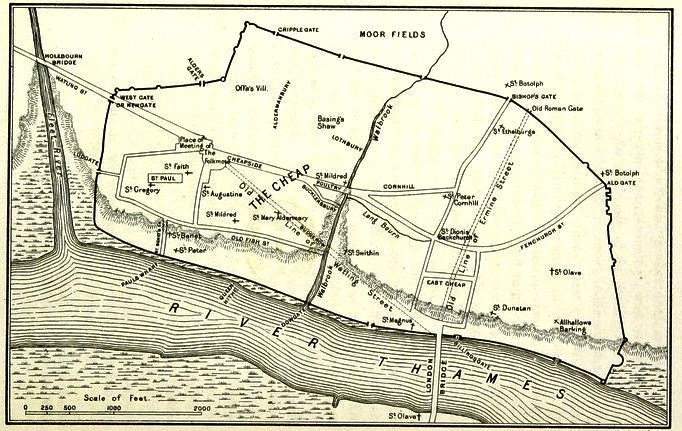
Then, in 878 Alfred the Great defeated the Danes and regained the territory around London for the Kingdom of Wessex. Alfred effectively founded London again in 886, as Lundenburh, a fortified port that was moved back inside the Roman walls for better protection.
Within ten years Lundenburh was up and running, with new ditches dug in front of refurbished city walls. London would maintain those boundaries for several more centuries.
The old Saxon town was largely abandoned, because it was outside the walls, and it became known as Ealdwic (old town), from which we have the name Aldwych today. Southwark, on the other side of the river, also became a fortified burh. During this time the Roman bridge, which had long since collapsed into the Thames was rebuilt.
However London was not, by any means, the pre-eminent town in Alfred’s Wessex, his capital was Winchester, and he would probably have thought of Dover and Hastings as being more important ports. Nevertheless with peace and international trade redeveloping, London rapidly grew in importance and prosperity.
The Birth of England
It was Æthelstan, Alfred’s grandson, that became the first King of the English, and then King of England, in 927. By now the people of England were known as Anglo Saxons, in a sign of the union of the Angles (another tribe originally from the North German coast, who had by then colonized East England in the region of today’s Anglia and Northumbria) and the Saxons.
The name of the emerging language, English, is from Englisc, which technically referred to the Saxon dialect used by the Angles, but was used for the language spoken by all Saxon tribes. Now the language they spoke is known as Old English, and it looks very different to Modern English. “Engla-land” meant “Land of the Angles”. Possibly the first letter was “Æ”, pronounced as ae, which was a letter in Old English.
By the time of Æthelred the Unready, around the turn of the millennium, the Kings of England were spending more and more time in and around London. Unfortunately for the Anglo Saxons though conflict with the Danes returned in his reign, as their king, Sweyn Forkbeard, attacked London several times in the late Ninth and early Tenth centuries. In 1014 Æthelred was forced to flee abroad, after a lengthy siege of London.
When he returned the following year, with the the help of the King of Norway, Æthelred’s soldiers were able to pull down the bridge that had been rebuilt by his great-grandfather, Alfred, in order to defeat the occupying Danish army. Several historians have theorized that the nursery rhyme London Bridge is Falling Down stems from this famous victory.
However soon Æthelred was dead. And not long after his oldest son, Edmund Ironside was too. This had the effect of uniting the two warring kingdoms that by that time made up England, Wessex and the Danelaw, which by then had been reconquered by the Danes, into one. The victorious King of Denmark, Cnut, would become King of England – as well as Norway.
Therefore, when both Cnut’s sons died, Æthelred’s younger son (and Cnut’s stepson), Edward the Confessor, became sole King of England. Edward was the last Anglo Saxon King of England, as he had no children and his kingdom would soon pass to the Normans.
London Gets Royal Seal of Approval
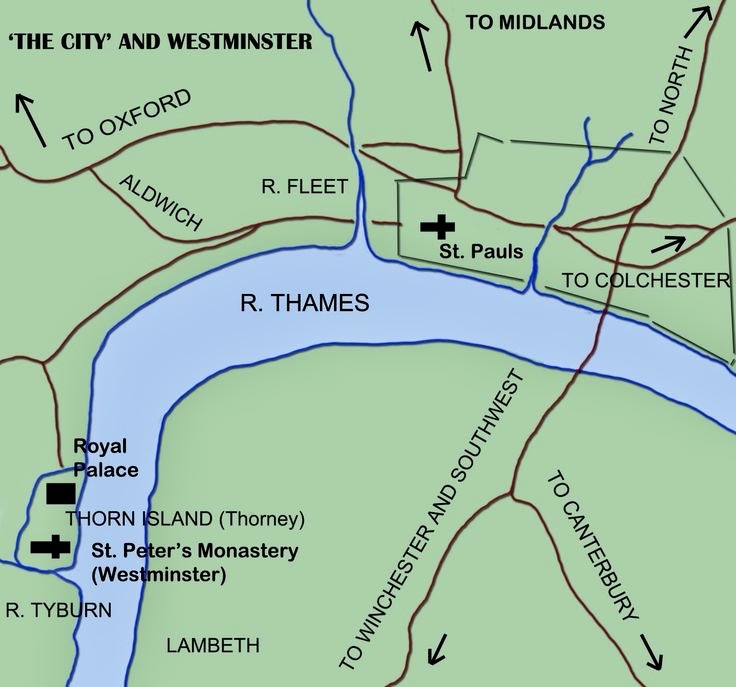
One very important thing that Edward the Confessor did (only in retrospect) was construct a modest palace by the Thames, several miles upstream of London, on Thorney Island. The island was formed where the Tyburn River forked before flowing into the Thames. There was also a ford over the Thames at that spot, which is thought to be where Caesar’s army had crossed the river more than a thousand years earlier.
Next to the palace was an old Benedictine Monastery that had been founded by Edward’s grandfather King Edgar, Saint Peter’s Abbey. Legend had it that a fisherman had been shown the spot during a visitation by Saint Peter himself, so it was a holy site.
For this reason every year, on St Peter’s Day, the Worshipful Company of Fishmongers present a salmon to the Dean, in commemoration of the mythical and mystical foundation of the Abbey, by Saint Peter.
The original charter granted the land to:
The needy people of God in Thorney, in the dreadful spot which is called Westminster.
Whoever wrote it doesn’t seem to have been a fan of the neighborhood, however it does give a clue as to why the monks settled on the island as the site for their monastery, ironically no one else wanted it. The fact of the monastery’s existence is probably one reason that Edward liked the location for his palace. He was famously devout and may well have wanted his palace sited next to such a holy place, with literate monks available to keep records.
The abbey became known as the West Minster, to distinguish it from the East Minster, London’s legendary first cathedral, which was either at Cornhill (near where St Paul’s Cathedral is now), or Tower Hill, depending on which legend you believe.
It is important to note though, that Westminster was not considered part of London, and would not be for another 700 years.
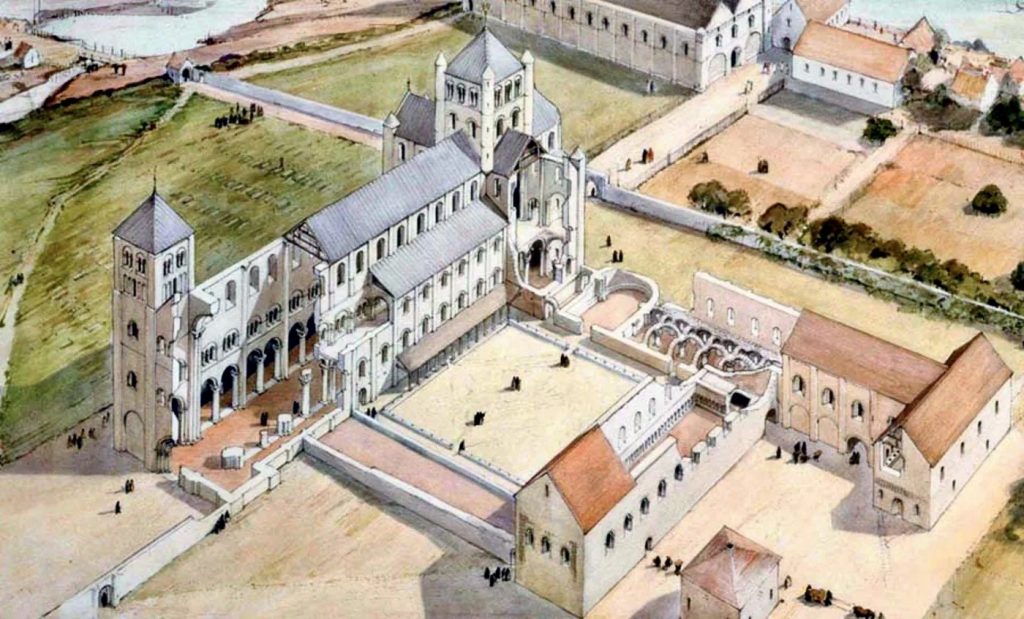
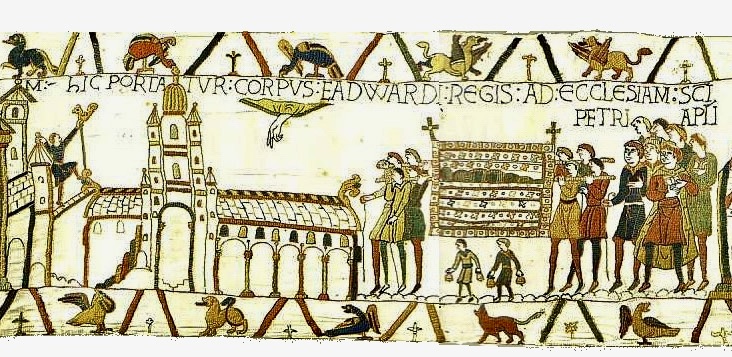
Edward rebuilt and expanded the small abbey into a royal church, finishing it in 1065. The new Norman, Romanesque building was completed just in time for Edward to be buried there, when he died a few days later. Today the only traces of Edward’s monastery are the round arches and massive supporting columns of the undercroft and the Pyx Chamber in the cloisters.
Because of the royal connection that Edward created, and the fact that his immediate successor, Harold Godwin, was probably crowned there, after William the Conqueror had successfully invaded England his coronation was also held at the Abbey. It was never formally determined, but over time it would become the seat of the country’s government.
Over the last thousand-odd years Westminster Abbey has been the location of the coronations of no less than forty monarchs (every single one since 1066, apart from two), and a burial site for another eighteen. Also at least sixteen royal weddings have taken place there since 1100.
Learn More About London’s Founding
Our London in a Day Tour and Introduction to London Pt 1 Tour both start at Westminster, the perfect place to begin an exploration of the city, and we cover all of the history related here on those tours, giving guests a proper understanding of London’ origins and a timeline of its development. The Introduction to London Pt 2 Tour also visits the city of London, which occupies the area of Londinium.
If you have any feedback on London’s Founding: Romans to the Dark Ages please email us or reach out on social media, we’d love to hear from you.
– By Damien Blackshaw (Instagram)
You must be logged in to post a comment.