
Inside London - The London Rundown
Stuart London: Death, Destruction & Disease
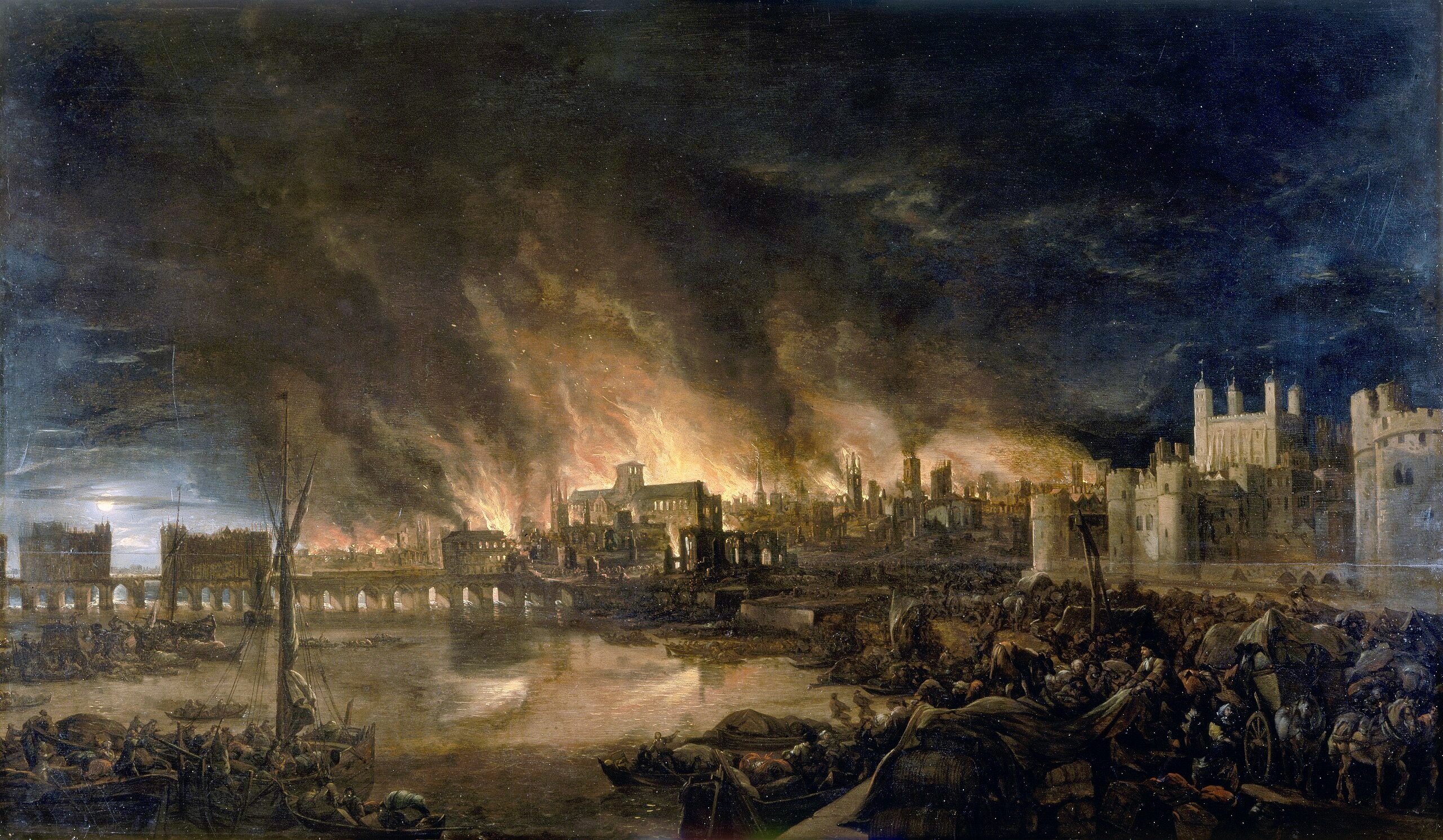
London would develop hugely during the period of 1603-1714, even as the city was rocked by a series of disasters, including wars, terrorism, plague epidemics and fiery destruction. In spite of these set-backs London continued to grow and become more prosperous throughout the Stuart era, finally outgrowing its medieval walls and uniting with Westminster to form one city
Once again, even as it was shaken and buffeted by these disasters of war, death and destruction, London showed enormous reserves of resilience and determination in order to continue its rise.
Treason and Gunpowder
One of the first major events of the Stuart Era (1603-1714) was one of the most famous: the Gunpowder Plot of 1605.
This failed terrorist bombing has to be seen in the context of the European Wars of Religion, which were raging at the time between Protestants and Catholics across the continent. Since 1532, during the reign of Henry VIII – apart from a very brief period under the Catholic Queen Mary – England had been a Protestant Country, more or less. There had also been a long war with Catholic Spain.
Despite several plots when he ascended the throne, James I (VI of Scotland) decided to pardon most of the conspirators, since he didn’t want too bloody a start to his reign. However, once he discovered that the Pope has secretly sent a rosary to his wife, James decided to reimpose suppression of Roman Catholicism. On 24 April, 1605, the Popish Recusants Act was introduced in Parliament which would outlaw all English followers of the Catholic Church. James also ordered all Catholic priests to leave the Kingdom.
This led to the hatching of what would become the Gunpowder Plot, when a group of conspirators including Guy Fawkes plotted to blow up the House of Lords with the titular gunpowder, upon the opening of Parliament in November 1605.
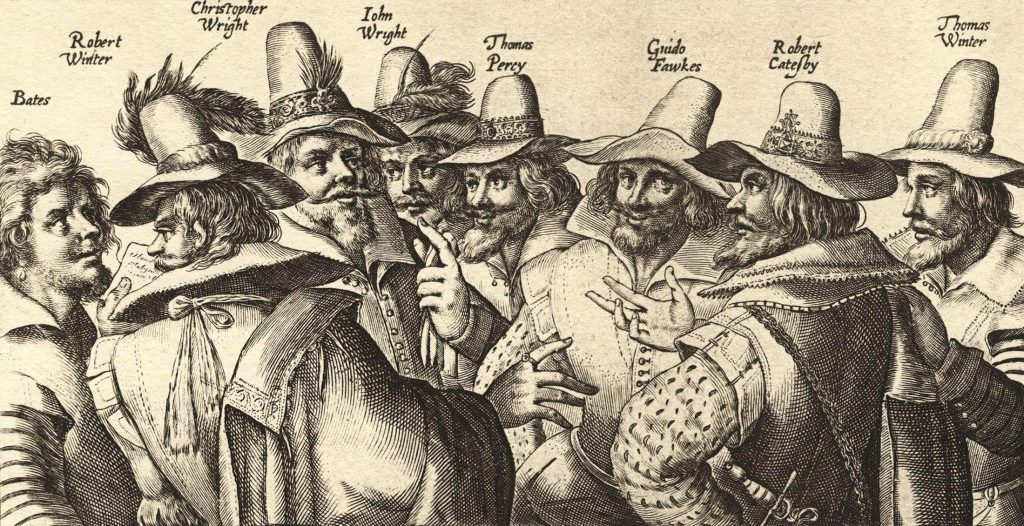
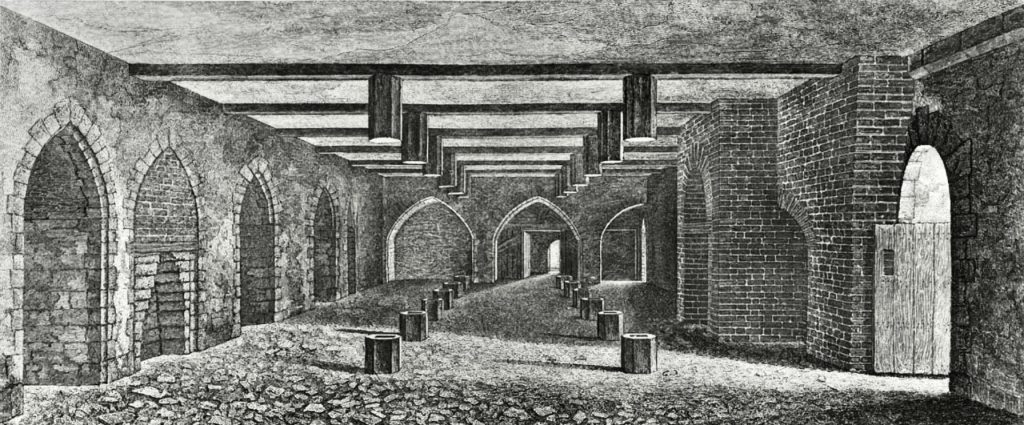
The plotters leased a house next to the Palace of Westminster, which wasn’t hard to do at the time as there were numerous residences and offices in the complex. In the undercroft (cellar) of the building housing the House of Lords (which was connected to their own property) they secretly placed 36 barrels of gunpowder, more than enough to blow the building into smithereens.
One of the conspirators seems to have written a note to warn off a Catholic aristocrat, William Parker the 4th Baron Monteagle, who would have been attending the event. He passed the note on to the authorities and a search was undertaken of the undercroft the night before the opening, leading to the discovery of Fawkes watching over the gunpowder.
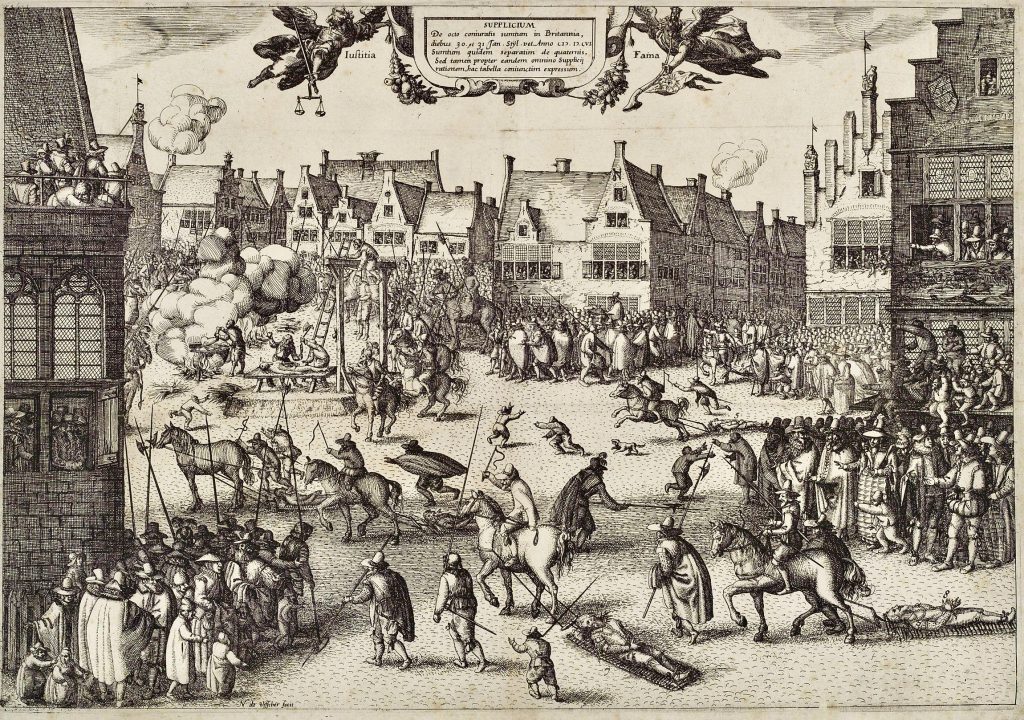
Under torture at the Tower of London he confessed and the plotters were revealed. After a series of trials they were all executed. Guy Fawkes himself was hung, drawn and quartered, opposite the building he had planned to blow up, in the Old Palace Yard at Westminster.
Remember, Remember, the 5th of November
In January 1606, during the first sitting of Parliament after the plot was discovered, the Observance of 5th November Act 1605 was passed, making commemorating the event an annual feature of English life. Towards the end of the Eighteenth Century children began begging for money with effigies of Guy Fawkes, and 5 November gradually became known as Guy Fawkes Day.
To this day the event is celebrated In Britain, and 5 November is variously called Bonfire Night, Fireworks Night, or Guy Fawkes Night. It’s a secular national celebration akin to Thanksgiving in the U.S., with a healthy does of Halloween.
London in the Stuart Age
This period saw the first major development of what is now known as London’s West End. Aristocratic land developers bought chunks of farmland around the city which had once belonged to London’s monasteries, building mansions for themselves to live in and houses to sell. Unlike previous developments, these new buildings were generally constructed of brick or stone rather than wood.
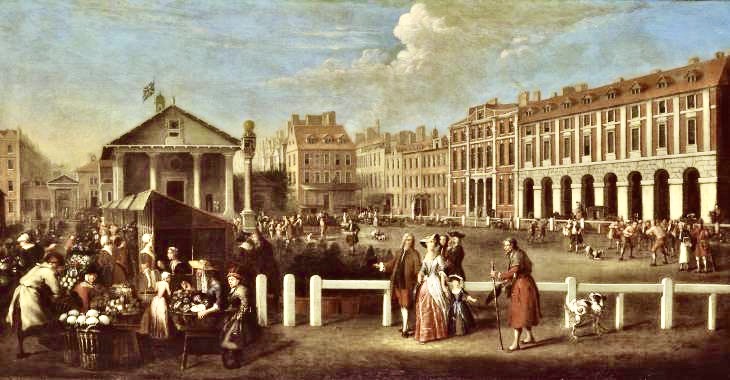
In particular, the Earl of Bedford, commissioned the famous architect Inigo Jones to turn fields and orchards west of London into Covent Garden, a square of aristocratic townhouses surrounding a public space (which became a marketplace). Jones based the design on the piazza of Livorno, Italy, making the houses identical in order to give the impression that they made up a single large mansion. This became the template for future London developments, even to this day.
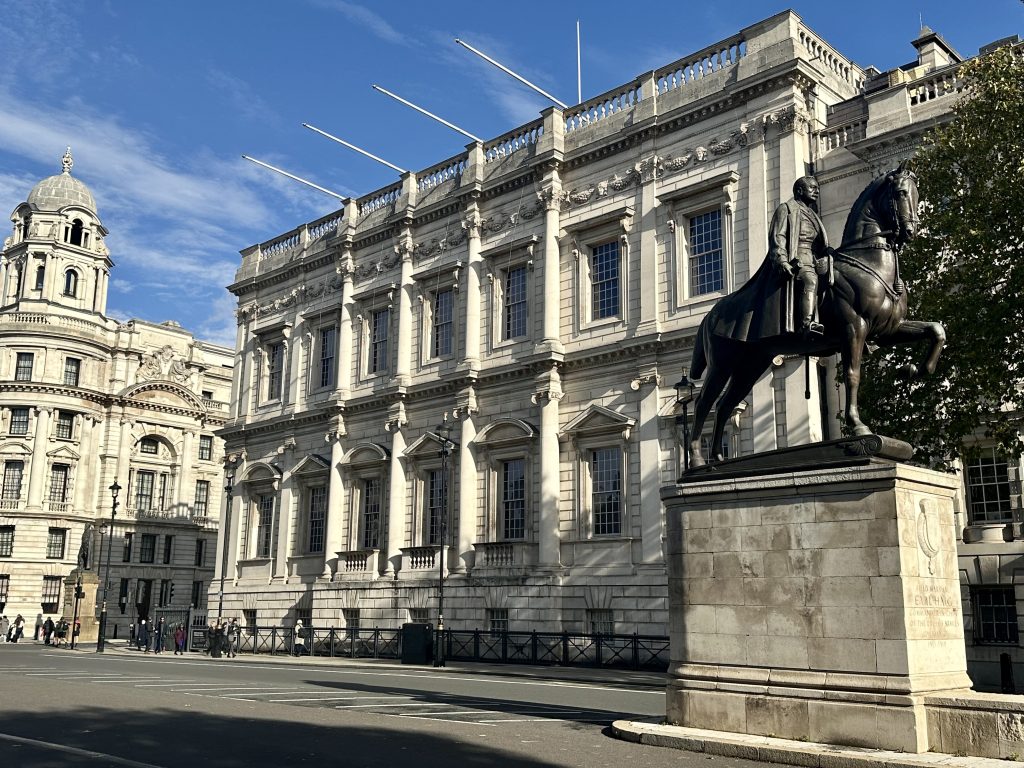
Jones is widely considered the first modern architect in England. As such he introduced the classical architecture of Rome and the Italian Renaissance to the country. He was instrumental to the design of Queen’s House in Greenwich and Banqueting House in Whitehall Palace (the only part of the palace that’s still standing).
He also made major contributions to the art of stage design with his work as a theatrical designer, often collaborating with famous playwright of the era Ben Jonson.
Development of Piccadilly and East End
Around 1611 or 1612, successful tailor Robert Baker acquired some land in the area north of St James’s Park. Baker was a famous maker and seller of piccadills (the lacy collars that you see being worn by men and women of the era in portraits). Shortly after purchasing the land, he enclosed it and erected several houses, including his home, Pikadilly Hall. It subsequently gave its name to the neighborhood, Piccadilly.
This development of the West End, meant that finally, after nearly 1,600 years, the City of London and Westminster had essentially joined and become one big city.
The East End would also develop, on the other side of London from the West End. Thanks in part to immigration, the population of the East End increased over 400% in this period, from 21,000 in 1600 to 91,000 in 1700. The expansion of the London docks meant lots of work loading and unloading ships.
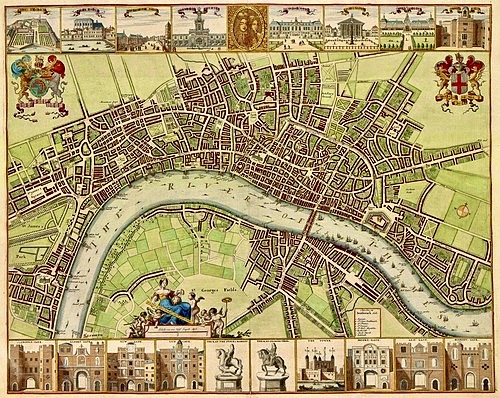
Since London Bridge remained the only crossing of the Thames throughout this period, Londoners often used boats to get across, or up and downriver, The most common boat on the Thames was a wherry– a river taxi that could seat up to five people. At Westminster was a ferry called the Horseferry, which crossed the river back and forth near Lambeth Palace (and was able transport horses).
The Gathering Storm
The causes of the British Civil Wars, also known as the Wars of the Three Kingdoms (there were technically separate civil wars in each kingdom), should also be understood in the context of the European Wars of Religion. The Parliamentary Roundheads were called such because they kept their hair closely cropped, unlike long-haired men of courtly fashion. The reason for that was largely connected to their Puritan beliefs.
Afraid that Charles I, the son of James, was going to rule as a tyrant and take the country back to Catholicism, Parliament tried to rein in the powers of the monarch. The King, for his part, resented the restrictions that Parliament placed on what he saw as his Divine Right to do whatever the hell he wanted. Charles dissolved Parliament in 1628 and ruled without it for eleven years, until he was forced to recall it due to a rebellion in Scotland, leaving him in desperate need of money.
On its return Parliament methodically began to eliminate the illegal taxes the King had raised over the previous decade and curtail his powers. Charles, needing their support, even agreed to summon Parliament at least every three years. However, this did little to ease the tension between the two, and they remained deeply distrustful of each other and determined to establish their own supremacy.
On 4 January, 1642, Charles went to Westminster with 400 armed men, to demand the handing over of the ringleaders of the King’s parliamentary opposition, known as the Five Members. They were:
He’d been egged on by his wife, the Queen, to go and arrest his biggest enemies in Parliament. It was alleged that she exclaimed to him:
Go you poltroon. Go and pull those rogues out by the ears, or never see my face again!
The king yielded, setting off immediately. However the Five Members had received word from the French Ambassador that Charles was on his way, and they left the Palace of Westminster, taking a waiting boat downstream to the City of London.
Charles burst into the Hall of Westminster, intent only on finding and arresting the Five Members. After the Speaker refused to tell him where they were Charles exclaimed:
‘Tis no matter, I think my eyes are as good as another’s.
He scanned the gathering of angry parliamentarians in vain for a while, before giving up in high dudgeon.
All my birds have flown.
With that he stormed out.
He later tried to arrest the five at the Guildhall, but was refused again, and with London in uproar he had to leave the Palace of Whitehall for the Palace of Hampton Court. Soon there was a militia of six thousand armed men, ready to protect London. The King had lost the city to the Roundheads and he would only return to it for his trial and execution.
Stuart London: Civil War
London was vitally important to the cause of Parliament during the war. Its wealthy merchants and livery companies, by far the wealthiest in the country, supplied much-needed finance through taxes and loans, the Royal Mint created currency, and the Tower of London provided a secure prison and armoury. London was the center of much of Britain’s industry too at the time.
The city would also be able to provide much of the manpower for Parliament’s army since, with a population of around 375,000 inhabitants, London was around 400% larger than the ten next largest cities in England put together.
By August 1642 hostilities had broken out between the King and Parliament. Later that year the Cavaliers, led by Prince Rupert, the King’s war-hero nephew reached Brentford, west of London. London’s militia responded with 20,000 men from the six London regiments, the force assembling at Chelsea.
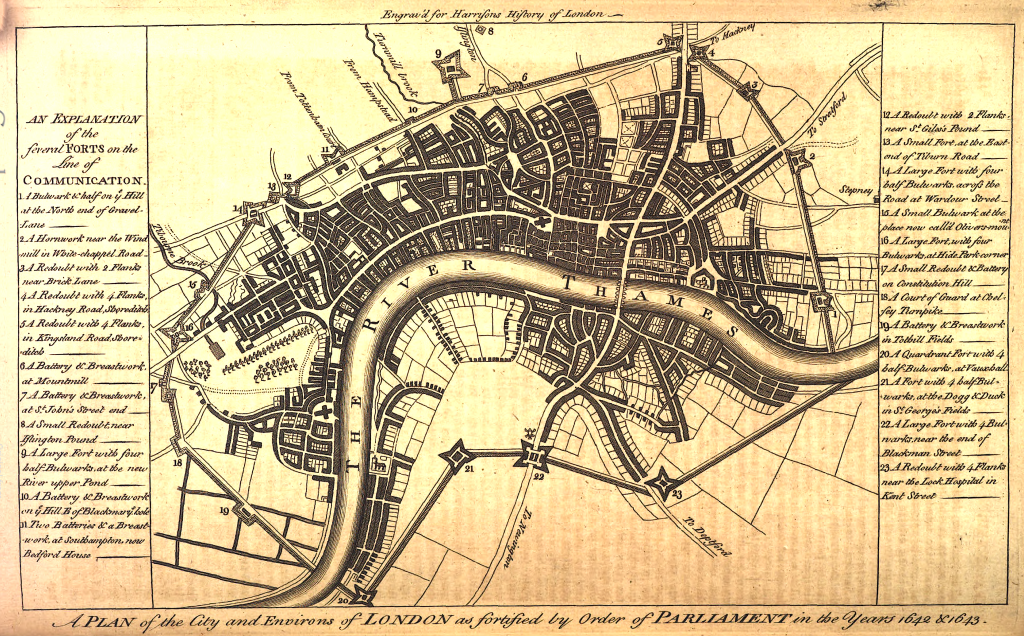
However, after a brief stand-off at Turnham Green, the Royalist force retreated, never to get as close to London again. Still the threat of further attacks led Parliament to quickly organize the construction of a line of defence around the city, This would be well beyond the old medieval walls, and was constructed by ordinary Londoners.
It was carried out in a holiday spirit, with workers marching with buckets and spades across the fields surrounding the city, accompanied by the sound of drums
By the following year there were 18 miles of trenches around London connecting 24 forts and redoubts at such locations as St James’s Park, Hyde Park, St Giles, Bloomsbury, Islington, Shoreditch and Whitechapel. On the south side of the river there were forts at Rotherhithe, Southwark, St George’s Fields and Vauxhall. Entry into London was restricted to just a few heavily-guarded roads.
Nevertheless, the war took a huge toll on London’s citizens. Trade suffered badly, especially as many of the city’s militia were shopkeepers and craftsmen who were away from their business. By no means all Londoners supported Parliament, in fact support for the monarchy was high, although in the minority. Civil wars have a habit of dividing families, friends and colleagues, and this was no different.
By 1644 dissatisfaction was leading to fears of insurrection. Parliament reached out to the King and negotiations for a peace treaty were held at Place House in Uxbridge (at what is now the Crown and Treaty pub) in January and February 1645, but to no avail. Within months though Parliament, with a reorganized, professional army, known as the New Model Army, had won.
The following year, Charles became a prisoner of the roundheads. Negotiations continued, but his enemies lost patience with his bad faith tactics and, after a short trial in the Great Hall of the Palace of Westminster in January 1649, Charles was executed at Whitehall Palace, in front of the Banqueting Hall.
In March 1649 a statute was passed by the Rump Parliament, as it was known, abolishing the monarchy. England was to be a Commonwealth and Free-State. By 1653 Parliament’s military leader, Oliver Cromwell had become the Lord Protector, and Britain’s ruler. The Lord Mayor of London refused to proclaim the abolition of the monarchy, and was imprisoned in the Tower as a result.
Puritan London
Theatres had thrived in London for well over fifty years by then, but it was considered to be frivolous and sinful entertainment by the godly Puritans. In September 1642 Parliament had declared that plays were of “lascivious mirth and levity”, and incompatible during “these times of humiliation”.
By law playhouses were closed, and other popular past-times such as bear-baiting and maypole-dancing were suppressed by the puritan kill-joys. Major theatres such as the Globe had no choice but to comply, although in practice the ordinance was ignored by a number of smaller establishments. A much stricter law was introduced in 1647 that allowed magistrates to send the militia into theatres and destroy their stages and seats.
Theatre would not return until the Restoration of Charles II, in 1660 (by which time the original Globe Theatre had been pulled down to make way for tenement housing).
Cromwell died in 1658, to be briefly succeeded by his son, Richard. Nevertheless, the debate over his historical reputation continues. He remains a controversial figure due to his use of military force to gain political power, his role in the execution of King Charles I and the brutality of his 1649 campaign to subjugate Ireland.
During the American Revolutionary War the Connecticut Navy commissioned a 20-gun warship called Oliver Cromwell. Unfortunately, it was promptly captured by the Royal Navy and renamed HMS Restoration, and later HMS Loyalist. Subsequently the French Navy captured her from the British, in 1781, and renamed her Loyaliste. A perfect example of how his reputation can mean different things to different people.
Restoration of the Monarchy
Richard Cromwell didn’t have the military or administrative genius of his father, and he resigned in 1659. This created a power vacuum that was ultimately filled by George Monck, the Governor of Scotland, who marched on London with his army. Luckily he wasn’t out to gain power for himself, he favored a return to what everyone knew, a restoration of monarchy.
New elections to the House of Commons were held in 1660, leading to the assembly of a new parliament in April of that year. Many Members of Parliament agreed with Monck, that perhaps the British Revolution had gone too far.
Puritanism lost its momentum too and the country yearned to move in the opposite direction. People were desirous of peace and stability, and there was no desire to go back to fighting a ruinous civil war. The most obvious path forward pointed to inviting back Charles I’s son to take the Crown, and restore the Stuarts to the throne. But only under certain conditions.
Following negotiations with Charles II, in which he promised leniency to his father’s enemies (except for the regicidal members of the Rump Parliament), and to rule in cooperation with Parliament, the monarchy was restored. Charles arrived back in London on 29 May, his thirtieth birthday.
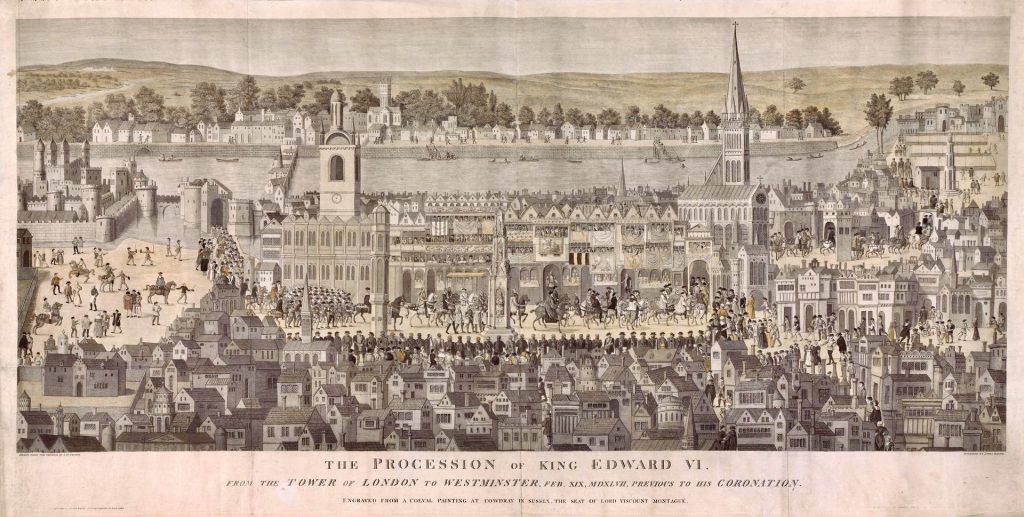
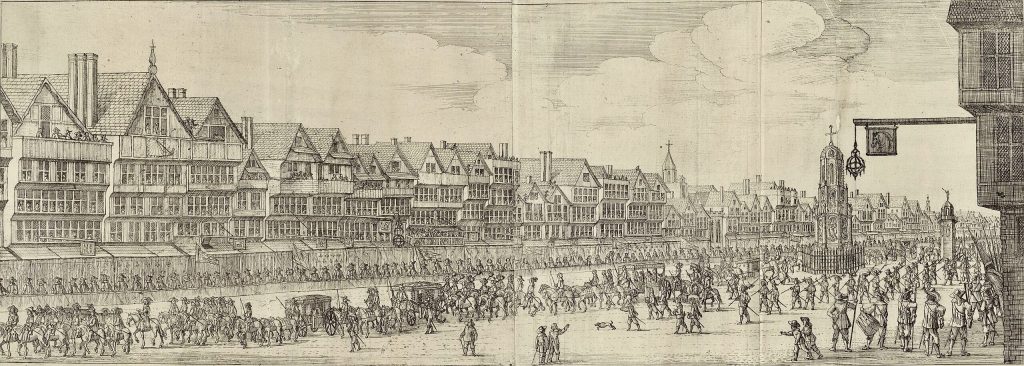
On April 23, 1661 Charles headed a royal procession from the Tower of London to his coronation at Westminster Cathedral. This had been a normal feature of coronations in the Middle Ages, but in fact it was the last time that this ritual happened, although it does seem like something that could be brought back at a future date.
Restoration Theatre in Stuart London
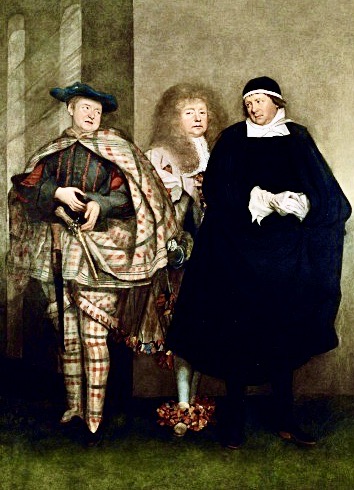
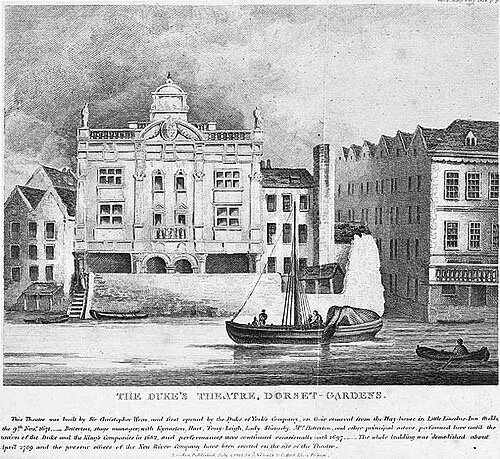
It was a time of rejoicing, theatres reopened after having been closed during the Puritan era, and a bawdy a new genre was born, Restoration comedy. Theatre licences granted by Charles required that female parts be played by “their natural performers”, rather than by boys as was the practice before. Audiences were fascinated to see women on stage, engaging in witty repartee and seduction scenes.
Several actresses of the era became famous, not least because it was well-known a number of them had affairs with the King. Charles had relationships, and several illegitimate children, with actresses Moll Davis, Nell Gwyn and Elizabeth Weaver. Actors became celebrities too, the most popular were John Lacy and Thomas Betterton.
Restoration drama is.. immoral. The dramatists did not criticize the accepted morality about gambling, drink, love, and pleasure. What they did was… to mock all restraints.
Historian George Norman Clark
Restoration theatre was largely a reaction to the Puritanism that had been forced on Londoners over the previous two decades. Charles himself, with his affable nature and many affairs, was almost the polar opposite of Cromwell, or his father Charles I.
Charles II also opened Whitehall Palace, his main residence, on a regular basis, and held audiences in which he would meet people from all walks of life, including diplomats, nobles and commoners. He also revived the popular ritual of the monarch touching the sick to cure them of scrofula, or the ‘King’s Evil’, using the Banqueting House for this purpose.
Disease and Death
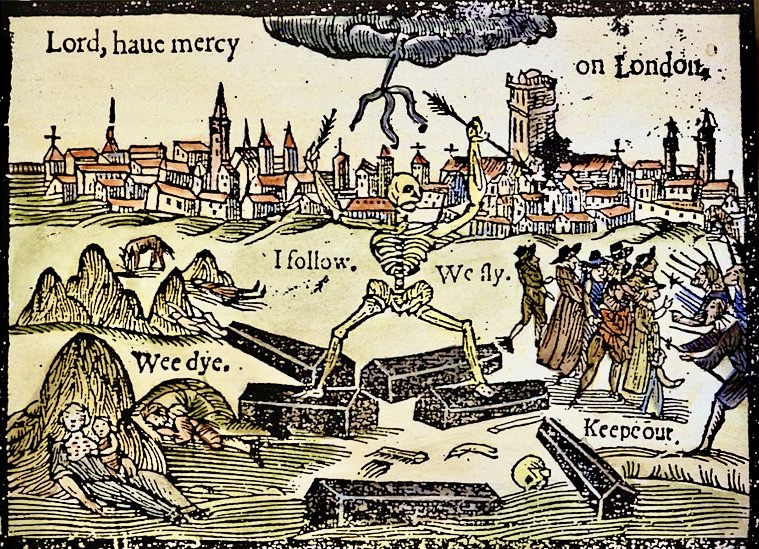
London had been plagued (pun intended) by various outbreaks of disease, such as the Black Death, for centuries going back to Roman times. However there was a particularly nasty pandemic in 1665, known as the Great Plague.
There were 30,000 recorded deaths in London due to an outbreak of the bubonic plague in 1603, 35,000 in 1625 and 10,000 in 1636, So Londoners were well-used to these desperate situations. And, looking back, it was hardly surprising that there were these regular outbreaks of disease in the city.
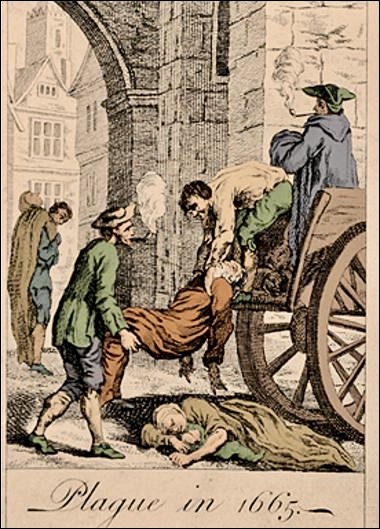
The poorer parts of the city were filled with overcrowded tenements and garrets, where hygiene was impossible to maintain. There was no sanitation or sewer system and open drains flowed along the centre of London’s winding streets. The cobbles were slippery with animal droppings, rubbish and the slops thrown out of the residential buildings. The roads were muddy and buzzing with flies in summer, and awash with sewage in winter.
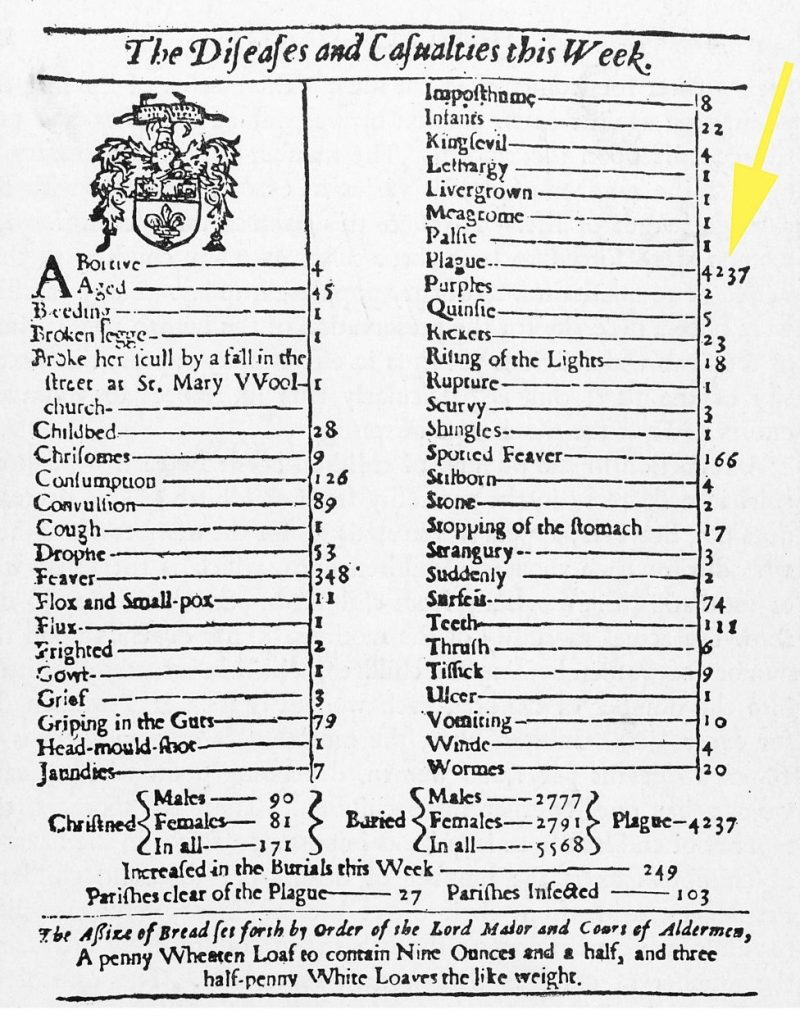
Probably brought on ships from Amsterdam in late 1664, where there was a particularly virulent outbreak of the plague at the time, in the Spring of 1665 the death-rate in London took an unexpected upturn. By the last week of July, the London Bill of Mortality showed 3,014 deaths, of which 2,020 were certified as having died from the plague (the normal death rate was around 300 per week, which suggests the true figure of plague deaths was much higher).
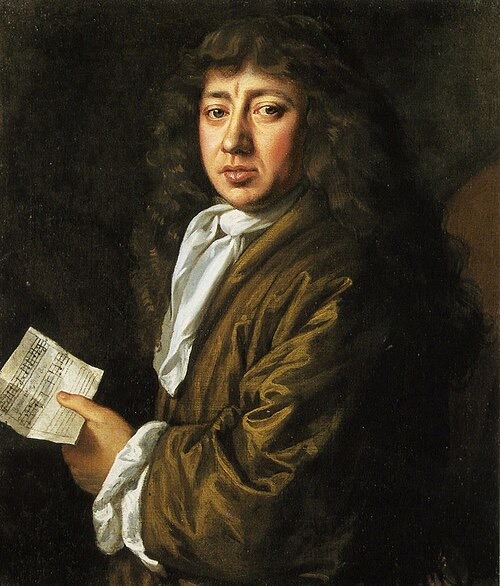
Londoners who could deserted the city, including the King, who relocated to Salisbury and then Oxford. One of the best historical sources for this period is Samuel Pepys, who was a Member of Parliament and official in the Royal Navy at the time (as well as being a friend of Charles II). Pepys kept a very detailed diary from 1660 to 1670 and it’s been an invaluable resource for historians, ever since it was published in the early 19th Century.
When the pandemic was at its height he wrote:
But, Lord! how sad a sight it is to see the streets empty of people.
The Great Plague killed an estimated 100,000 people jn London, almost a quarter of the city’s population, in just 18 months. An astonishing mortality rate by today’s standards. Fortunately, by early 1666, it seemed to be dying away and, in February, Charles returned to Whitehall Palace. Finally the city seemed to be safe.
Destruction: The Great Fire of London
Not so fast.
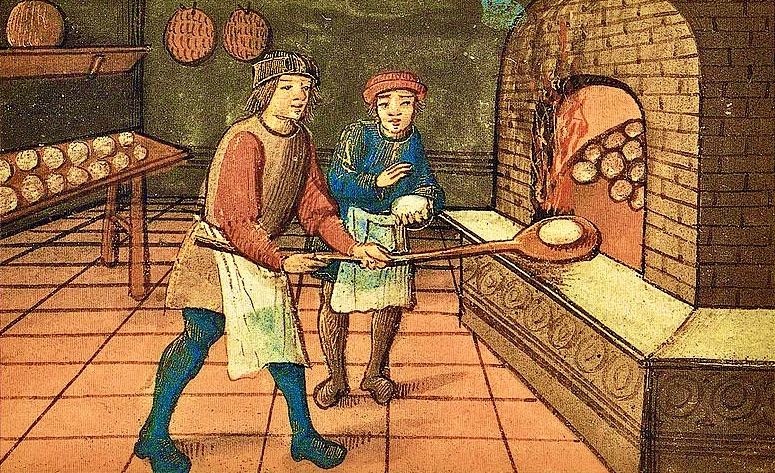
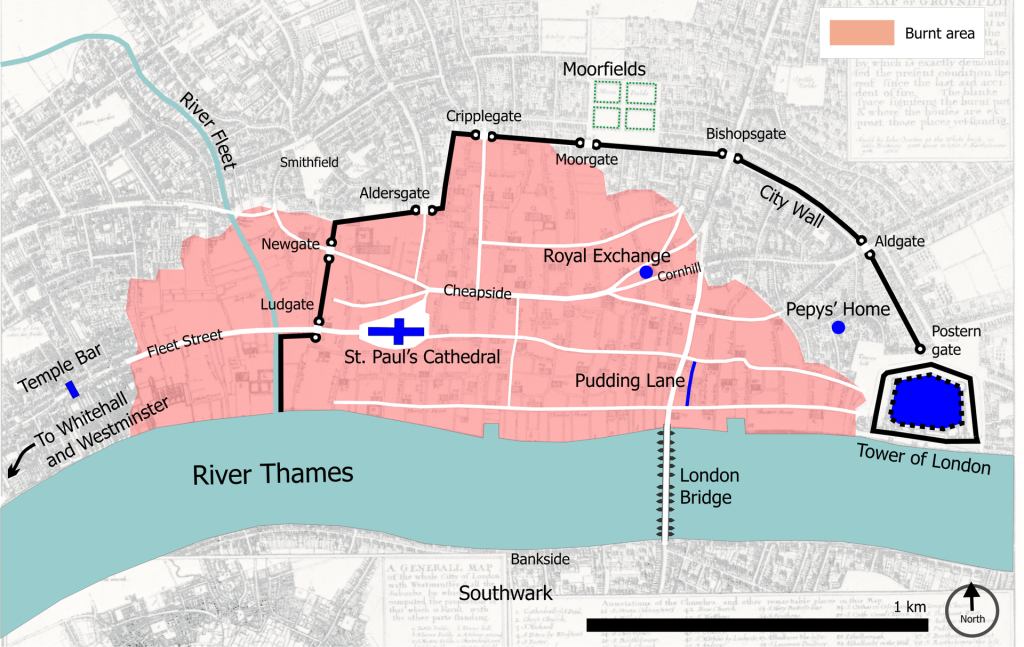
A little after midnight on the morning of Sunday, 2 September 1666, a fire broke out at Thomas Farriner’s bakery in Pudding Lane, in the heart of the city. The occupants, apart from the family’s servant, who was too frightened to try to escape, fled through an upstairs window to the house next door. When the house burned down, the maid became the fire’s first victim.
The family and neighbors tried for an hour to put the fire out, but to no avail. Soon it began to spread, and spread. When the Lord Mayor arrived to survey the spreading conflagration, he went against the advice of more experienced firefighters and told them not to pull down the houses to create a fire-break. Famously he remarked.
A woman might piss it out.
And he returned to bed. His comment didn’t age well, to say the least.
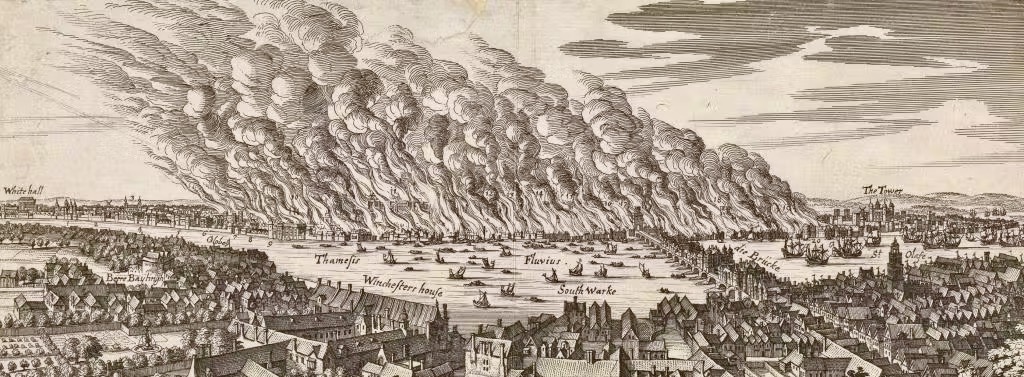
From that point the fire continued to spread, aided by strong easterly winds. Early that morning Pepys went to the Tower of London to view the fire from its battlements. From there he took a boat onto the Thames to better see the conflagration. What he saw obviously concerned him and he continued upstream to Whitehall.
When he disembarked there he quickly informed the Royal household of what was happening (apparently they didn’t already know). His tale –
.. dismayed them all, and the word was carried into the King. So I was called for, and did tell the King and Duke of Yorke what I saw, and that unless His Majesty did command houses to be pulled down nothing could stop the fire.
Pepys was sent to to the mayor to tell him to begin pulling down houses to create firebreaks. When Pepys was eventually able to find him Bloodworth was even less help than before though, and the fire continued to spread. By now it was creating its own weather with a tremendous uprush of hot air above the flames being driven by the chimney effect.
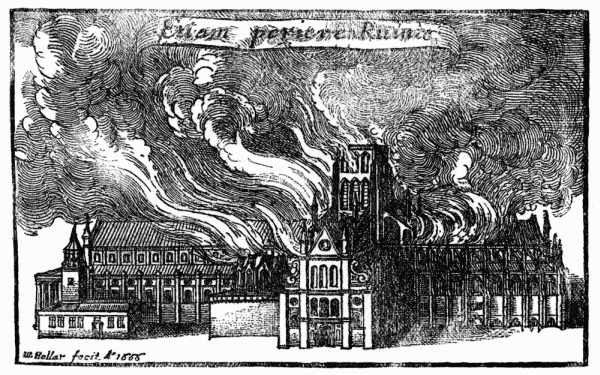
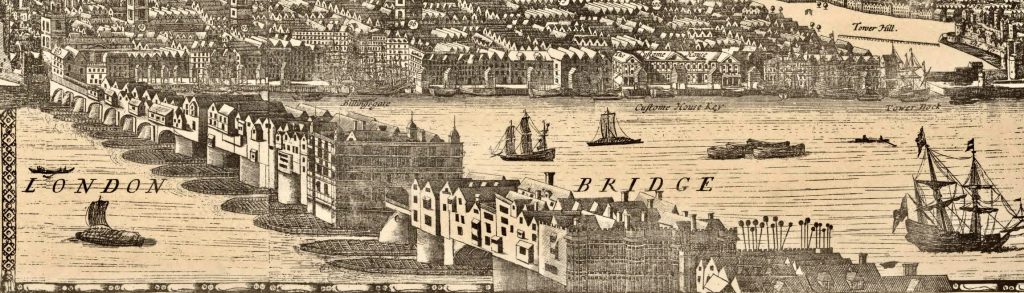
The fire continued into Monday, moving north and west, as well as burning down most of the houses on London Bridge. In the evening it reached the old walls at Baynard’s Castle, turning the royal palace into a towering inferno. That night the conflagration jumped the city walls and the River Fleet, continuing its journey westward.
The streets were packed with people and carts, as Londoners desperately tried to escape with their possessions. Hiring a cart had cost around 20 pence the week before the fire; by 3 September, it had risen to as much as £40 (probably equivalent to $250,000 today). Only the rich could afford one, and many of them watched the carts, piled high with their valuables, disappear, never to be seen again.
Needless to say rumors quickly spread that foreigners were to blame (especially as the British were at war with the Dutch Republic at the time). James and his guards rode up and down the streets throughout Monday, “rescuing foreigners from the mob” and desperately attempting to keep order.
Tuesday was the most destructive day of the Great Fire, although by then efforts to fight it were getting more organized. That was largely because Charles and James, his brother, had taken direct control of fire-fighting efforts, Bloodworth seems to have left the city by then (thank God!).
The Duke of York hath won the hearts of the people with his continual and indefatigable pains day and night in helping to quench the Fire.
Samuel Pepys
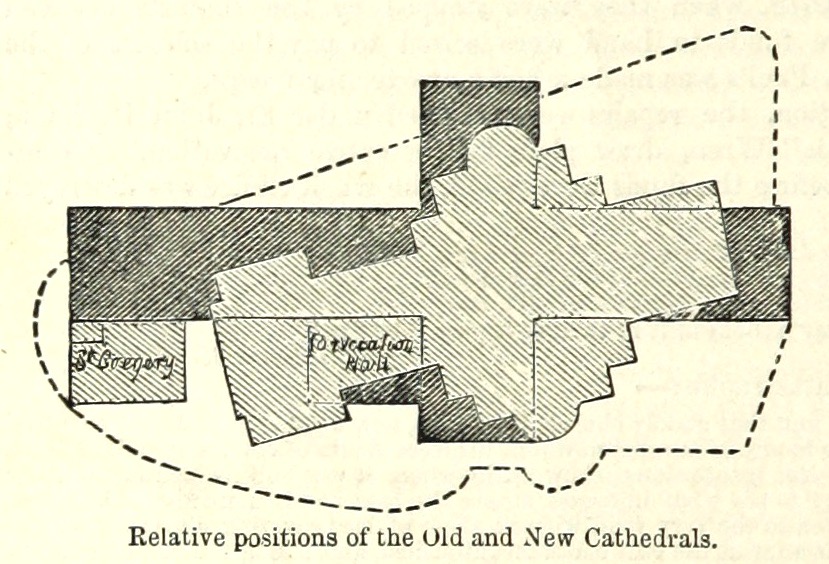
In spite of their best efforts though, the fire jumped Cheapside and reached St Paul’s Cathedral, reducing it to a smoking ruin within hours.
Thankfully though, by Tuesday evening the winds were dropping and firebreaks created by blowing up large numbers of buildings with gunpowder ahead of the advancing inferno were both slowing the progress of the fire.
By Wednesday evening the Great Fire had largely been extinguished, leaving most of London a smoking ruin. Pepys recorded the tragic scene in his diary:
It was the saddest sight of desolation that I ever saw.
Aftermath of the Great Fire of London
Funnily enough the fire did have several positive effects.
Firstly it rescued the reputation of Charles II, after his behavior the year before, during the Great Plague, when he hastily beat a retreat from London, leaving his people to make the best of the situation on their own.
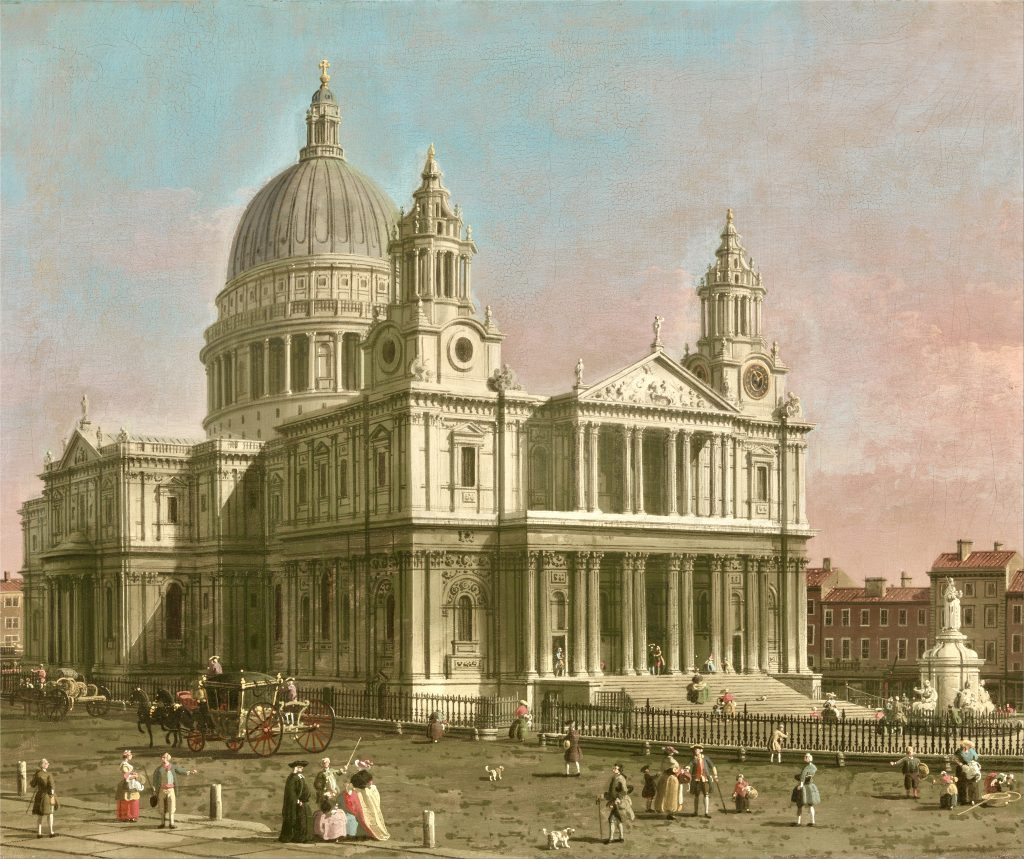
Secondly, it fumigated the city and finally put an end to the Great Plague. And thirdly it led to a rebuilding of London, with much more thought given to making it more clean and fire-proof. The great architect Sir Christopher Wren was given the job of redesigning St Paul’s – and over fifty other churches in the city. London rose from the ashes, a cleaner, nicer and safer city than it had ever been before.
Nobody can be sure about the exact death toll, but it’s commonly accepted to be in the hundreds, and maybe even less than a hundred. Probably that’s because the fire moved so slowly, generally giving Londoners plenty of time to escape. Nevertheless, medieval and Tudor London slipped into the past.
Glorious Revolution
In 1685 Charles II suddenly died, at just 54 years old, to be succeeded by his brother, James II (Charles’ marriage having been childless, in spite of the fact that he had at least twelve illegitimate children). James was a Catholic and had many of the same personality traits as his father, without learning the valuable lessons that his brother had about the fragility of power. Initially though, in spite of being a Catholic, he was quite popular.
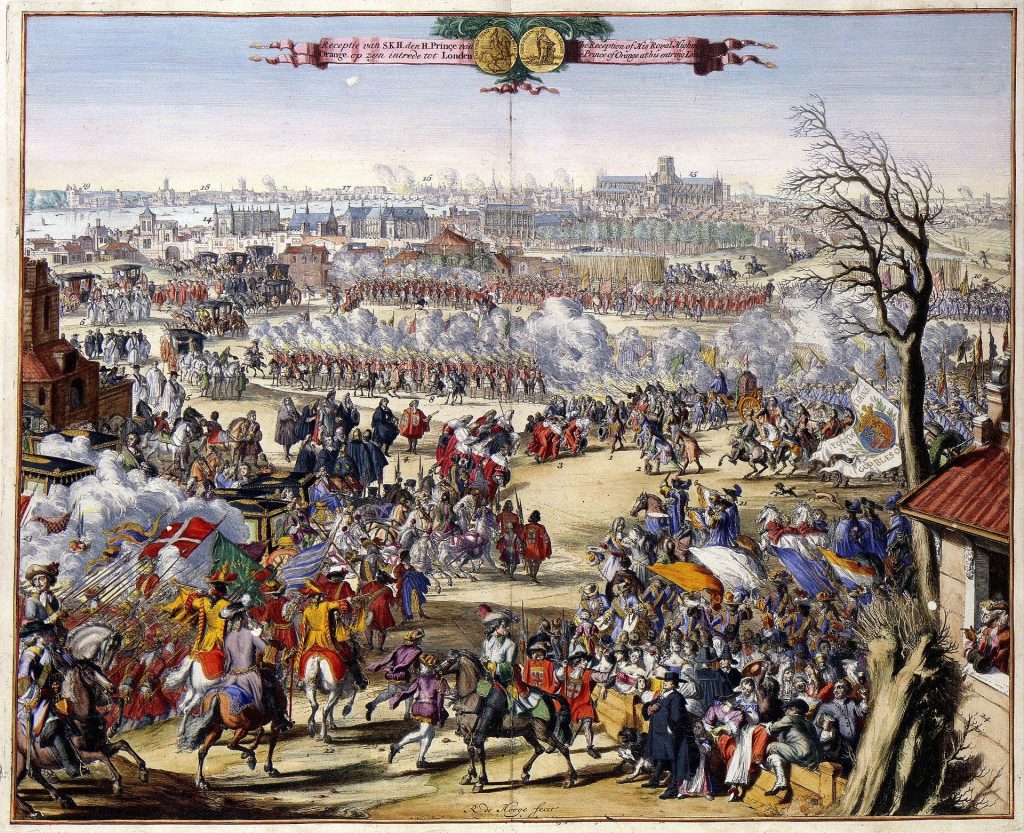
However, within three years James had so alienated the country by attempting religious reforms that his daughter, Mary, was invited by Parliament to become Queen with her husband, the Protestant William of Orange (the Dutch King) as a co-monarch. The offer letter to William and Mary was signed by the Immortal Seven, leading members of Parliament, the army and the Church of England.
When William and Mary landed in England with an army of 40,000 soldiers in November 1688, James’ support melted away and he fled into exile in France the following month. His flight was viewed as cowardice and it was declared that he had abdicated the throne. It was the largest, and last, invasion of Britain, although it was essentially a bloodless coup.
It was also the most decisive moment in the journey of Britain from being ruled by a King with absolute powers, to being a constitutional monarchy. The Bill of Rights 1689 formally established a system of constitutional monarchy, by restricting the powers of the monarch, who could no longer suspend laws, levy taxes, make royal appointments or maintain a standing army during peacetime, without Parliament’s consent. This gave rise to the political theory of the social contract, by John Locke.
The Glorious Revolution cannot be understood in isolation though. It would have been inconceivable without the huge changes resulting from the momentous events of the 1640’s and 50’s.
There were other big developments resulting from the Glorious Revolution. Increasingly the ruling class saw Britain as a commercial rather than an agrarian society. This directly led to the foundation of the Bank of England in London in 1694, the creation of Europe’s first widely circulating credit currency, and the importation of Dutch innovations such as the stock exchange, allowing for the open buying and selling of the stocks of different companies.
Put simply this created modern capitalism as we know it today. The wealth of a country was not limited by its size, population or resources, but was created by human endeavour, and was therefore infinite.
Something else that William did was popularize the drinking of gin (as an alternative to brandy), which was already being imported from Holland. It’s from this period that the term ‘Dutch courage‘ is believed to have originated (Dutch soldiers were known to gulp some down before battle).
Old Palaces and New Palaces of Stuarts
Throughout most of this period the main royal palace was Whitehall, a vast complex of buildings that had developed since Henry VIII seized it from Cardinal Wolsey (having been the London home of the Archbishops of York throughout the Middle Ages), in 1529. At one point it was the largest palace in Europe, until Louis XIV built the Palace of Versailles.
However, a massive fire in 1698, brought its use as a palace to an abrupt end. By then William and Mary had relocated west to Kensington Palace, which the asthmatic William found more to his liking than the drafty and damp Whitehall Palace. Previously an aristocratic residence just outside Kensington Village, it was expanded significantly by Sir Christopher Wren, and contributed to the further development of the West End. For the next 70-odd years Kensington Palace remained one of two main royal residences in London.
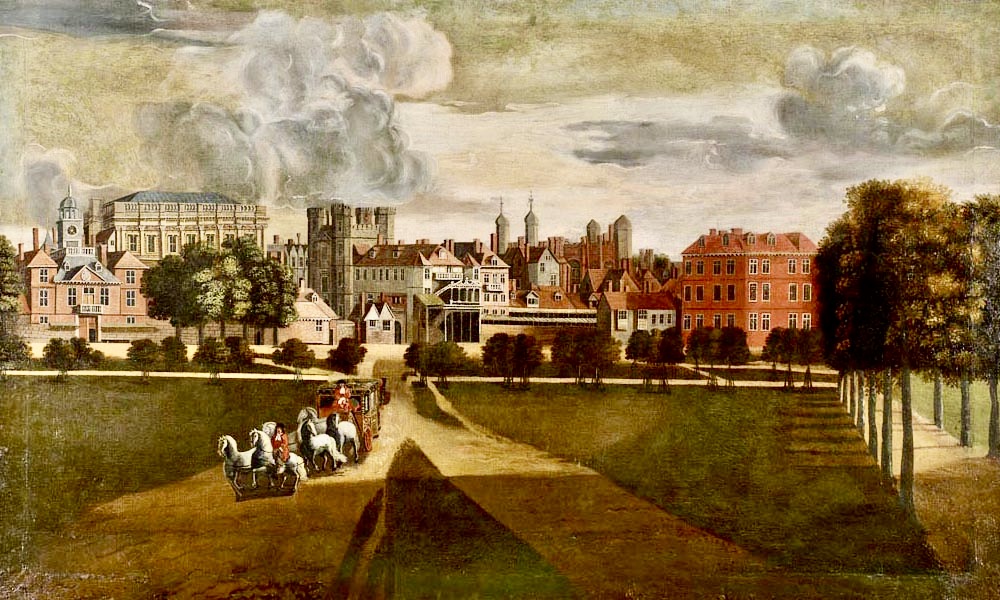
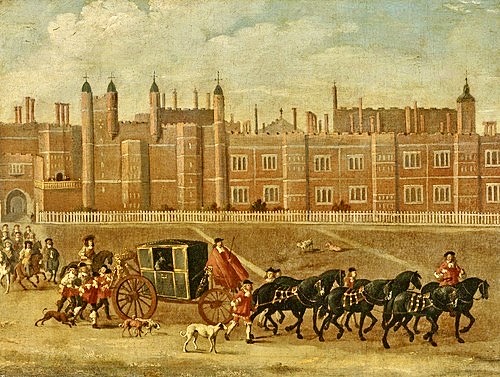
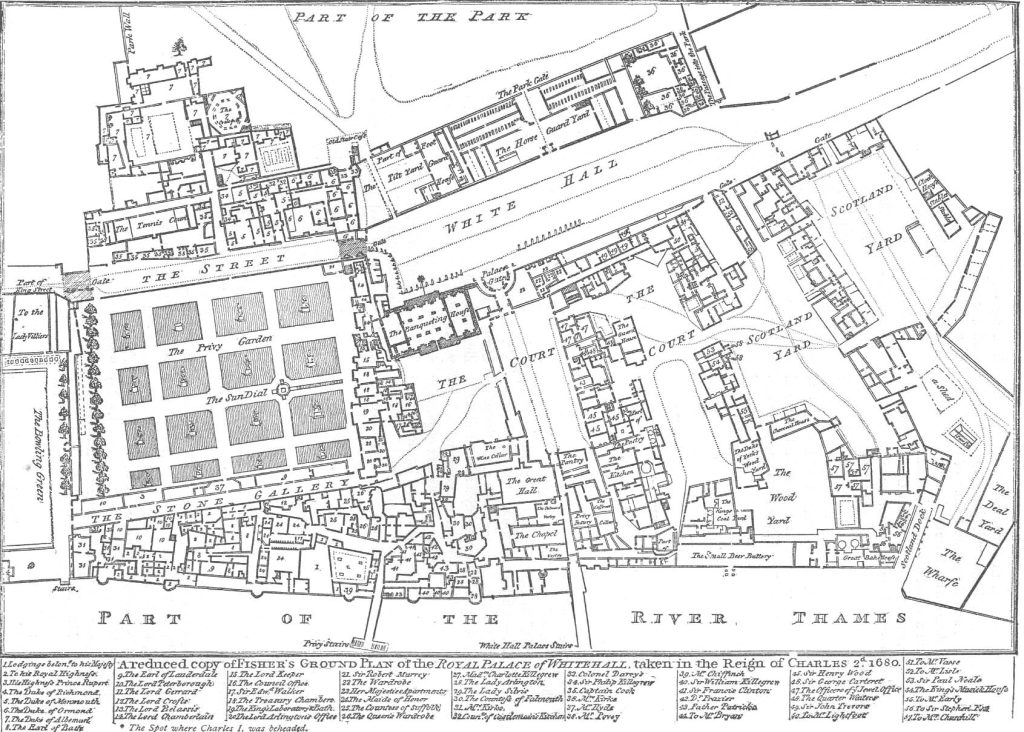
The other was St James’s Palace. First developed by Henry VIII the palace was used significantly during the Stuart period. Charles I spent the last night before his execution there and his granddaughter, Mary II was both born and married there (the curtains on the marital bed were closed by her uncle Charles II after the wedding, in anticipation of the bedding ceremony). St James’s Palace became, and remains to this day, the administrative centre for the monarchy.
James I kept a zoo in the enclosed deer park, St James’s Park, importing animals such as camels, crocodiles, elephants and tropical birds, which were kept in aviaries (and gave the name Birdcage Walk to the street running on that side of the park).
Hampton Court Palace also remained popular with monarchs throughout the period, although Greenwich Palace was rebuilt as a naval hospital, to complement Chelsea Hospital, which had been created for wounded soldiers.
Crime and Punishment in Stuart London
Capital punishment was a popular way of dealing with crime throughout this era, both in terms of dealing with criminals and as a spectator “sport”. Beheading was used as punishment for many convicted of treason, such as the explorer Sir Walter Raleigh, who was beheaded in the Old Palace Yard at Westminster, in 1618.
By that time an elderly man of around 65 years old, Raleigh showed admirable composure as he went to his death, remarking to his executioner as he walked to the block:
Let us dispatch. At this hour my ague comes upon me. I would not have my enemies think I quaked from fear.
Glancing at the axe that was about to be used to behead him, he mused philosophically:
This is a sharp medicine, but it is a physician for all diseases and miseries.
However the executioner still hesitated, leaving the exasperated Raleigh to implore him:
What dost thou fear? Strike, man, strike!
Bear in mind that Raleigh had been imprisoned at the Tower of London (in the Bloody Tower) for thirteen years prior to being released in 1616, for his last voyage to the Americas. After his execution Raleigh’s head was embalmed and presented to his wife. Apparently she kept it in a velvet bag beneath her bed.
Beheading was a nasty business, and that was even before the condemned were decapitated. Often-times the executioner missed, leading to the necessity of several more blows before the awful deed was done. It was even worse if the blade hadn’t been sufficiently sharpened. Usually those about to be executed gave the axeman a sizable gratuity to ensure a swift end.
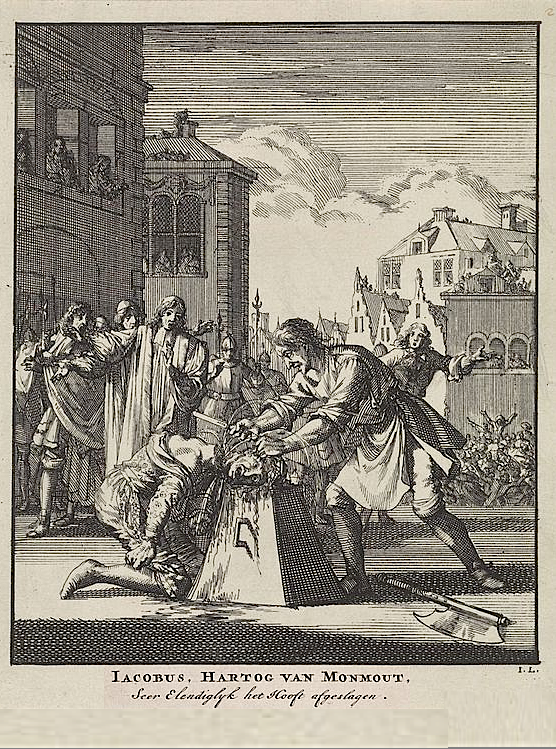
An infamous executioner of the period was Jack Ketch, whose botched execution of Charles II’s illegitimate son, James Scott, the Duke of Monmouth, in 1685, was particularly brutal and showed the horrors of this method of execution.
Due to be beheaded on Tower Hill, Scott specifically told Ketch to finish him with one blow, pointing out that Ketch was well-known for botching executions. Unfortunately this had the effect of disconcerting Ketch, who did indeed inflict multiple blows with his axe (somewhere between five and eight!). At one point Scott got up from the block to remonstrate with Ketch, a truly ghastly sight as you can imagine, that shocked even the ghoulish audience of gathered Londoners, provoking shouts and groans from the crowd. In the end a knife had to be used to sever James’ head from his still twitching body.
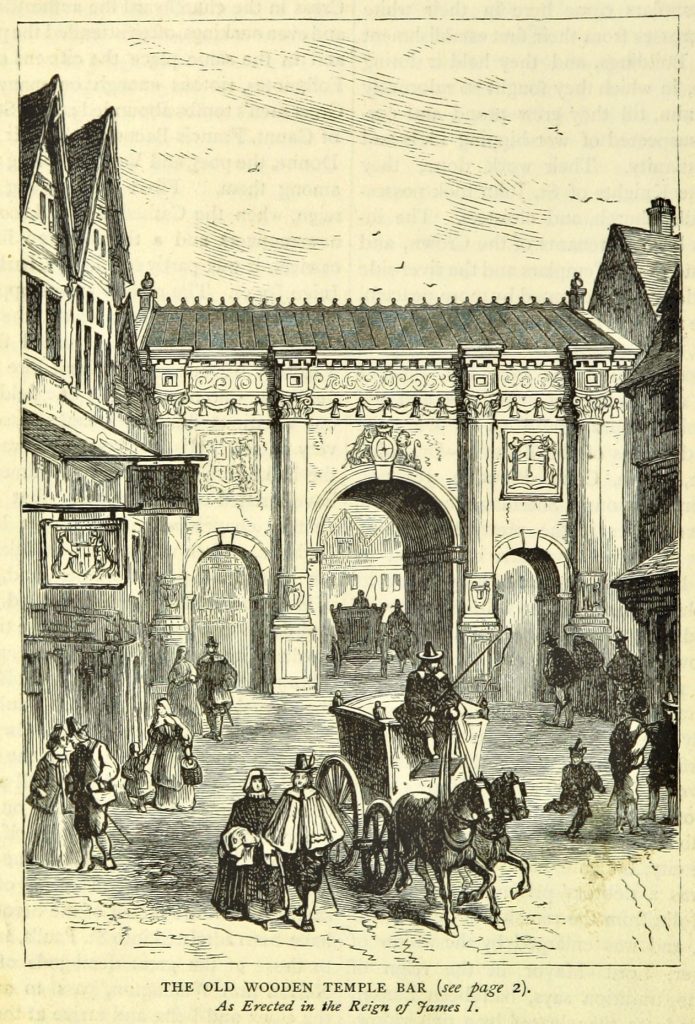
Hanging, drawing and quartering was also used, especially in cases of treason (as with the condemned of the Gunpowder Plot) and the heads of people so sentenced were usually displayed on spikes over London Bridge or Temple Bar. Burning at the stake was another punishment, normally reserved for women who committed treason or witchcraft.
The main execution ground in London after 1660 was Tyburn (modern-day Marble Arch), which had a unique three-sided gallows to allow twenty-four people to be hung simultaneously. A very handy innovation.
Coffee Houses, Commerce and Colonialism
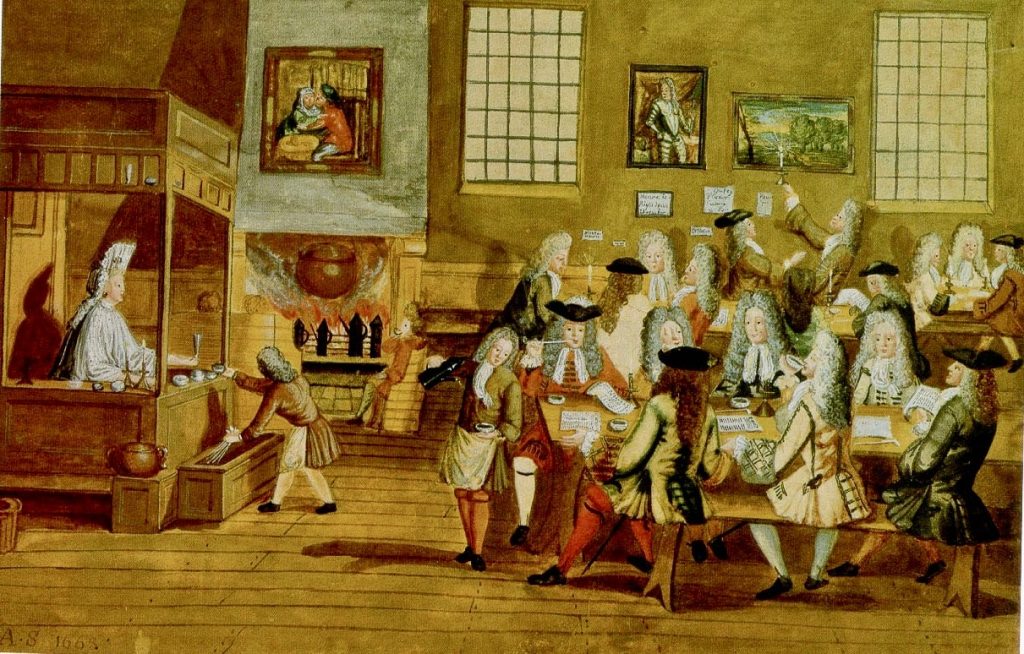
London’s first coffeehouse opened in 1652, and by 1663, there were 82 in London. Edward Lloyd’s Coffee House opened in 1688, and was particularly popular with ships’ captains and insurance underwriters. Within a few years Lloyd was printing a newsletter which went on to become Lloyd’s List, and his coffee house gave its name to Lloyd’s of London, still the largest maritime insurance market in the world.
In 1691 Lloyd moved his coffee house to Lombard Street (from nearby Tower Street), which got its name from the so-called Lombard bankers, who were licensed to operate there by Edward I. The street had already been associated with the shipping industry since 1540, when parliament passed the Navigation Act of 1540, which required ship owners to post notice of their sailings there.
Jonathan’s Coffee-House opened in 1698, and listed stock and commodity prices. That same year, dealers expelled from the Royal Exchange for rowdiness began going to Jonathan’s, and Garraway’s Coffee-House next door, on Exchange Alley. Soon these establishments evolved into the London Stock Exchange.
Some coffee houses became consulting rooms for doctors, surgeons and apothecaries, while others were known as being places to meet lawyers. Several historians have posited that the British Empire was fueled by coffee and gin, more than any other factor (although nowadays most foreigners think of tea as being more important to the British).
Both Barclays Bank and Coutts Bank were established in the 1690’s in the city.
London became a major hub at the centre of the burgeoning British Empire too. Spearheaded by men like Raleigh (who popularized the use of tobacco and the potato, both imports from the Americas) and companies like the East India Company (founded in London in 1600) the city began to look to far-off regions of the world for trade and conquest.
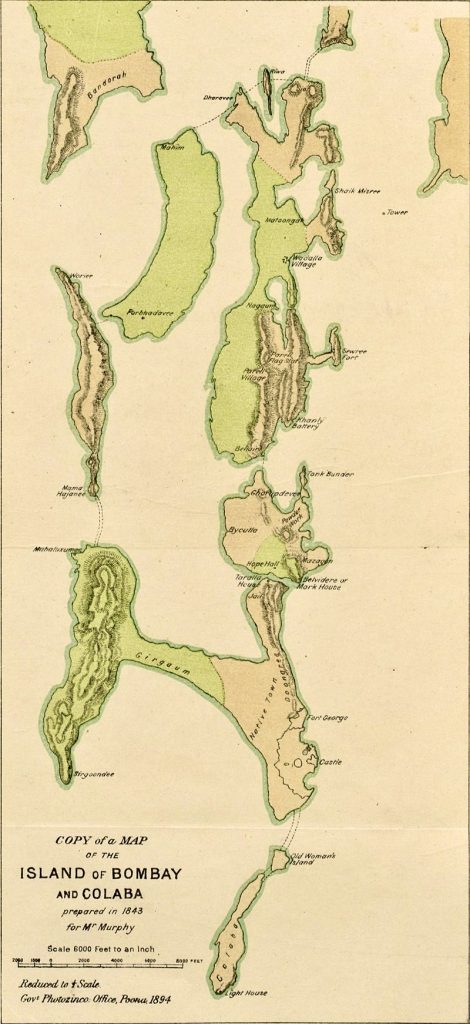
When Charles II married Catherine of Braganza in 1662 he was given the Seven Islands of Bombay (from the Portuguese bom baia, meaning good bay) as a wedding gift from his father-in-law. He sold them to the East India Company and they formed the heart of the modern city of Mumbai, as well as being a vital port in the hugely lucrative spice trade.
From this foothold the East India Company began to control more and more territory on the subcontinent, although during this era it was very much subservient to the Mughal Empire.
Immigrant Influx to Stuart London
In the mid to late 1680’s thousands of Huguenots (French Protestants) fled to London to escape persecution, many settling in, Spitalfields. By 1697, there were no less than twenty-two French Protestant churches in London. Dutch, Italian and Danish communities were also permitted to establish their own churches for their communities.
A Greek Orthodox community of refugees from the Ottoman Empire was also established, with its own church. Not to be outdone there was considerable immigration from Turkey, bringing new businesses’ such as London’s very first coffee shop, and its first Turkish bath.
In 1656 Oliver Cromwell had publicly made it known that he would no longer enforce the ban on Judaism, technically in place since 1290, and Jews were invited to return. The first synagogue in London since the early Middle Ages was built in 1657, on Creechurch Lane, This was followed by the Bevis Marks synagogue, which opened in 1701.
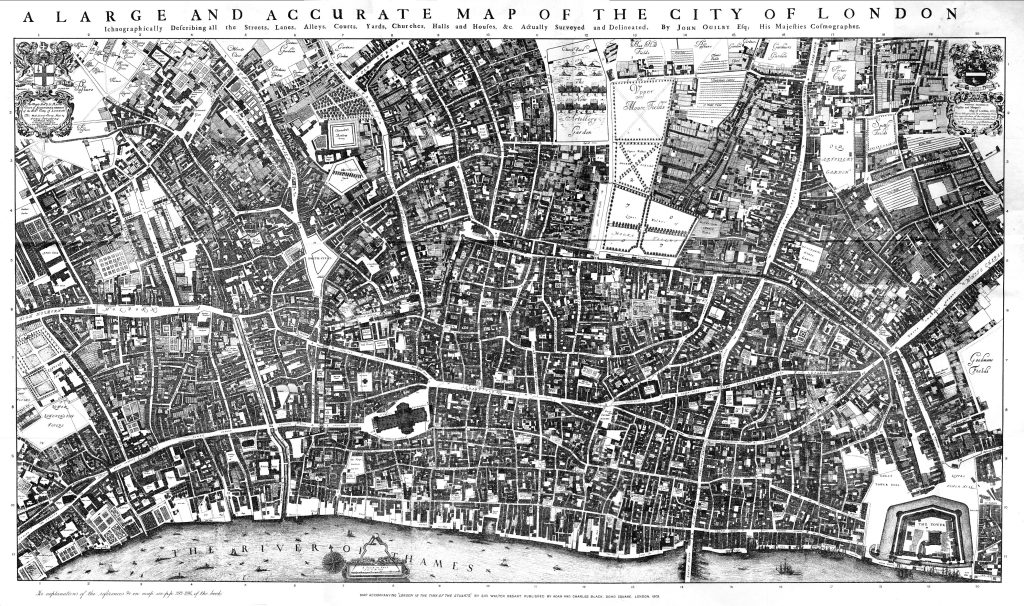
London Expands Further
The Mall, Pall Mall (the name for a game that was similar to croquet) and Bloomsbury were all developed during the Stuart period. Mayfair took shape on a site which had held an annual May Fair, One Thomas Grosvenor became the owner of 500 acres there in 1677, and through his wife’s inheritance he became hugely wealthy (founding the modern-day family of the Dukes of Westminster). Leicester Square was laid out in 1670, in front of Leicester House, which was built for Robert Sidney, 2nd Earl of Leicester, in 1635.
In the early 1680’s Downing Street began to take shape as a cul-de-sac of townhouses for aristocrats, between St James’s Park and the Palace of Whitehall. Although partly designed by Sir Christopher Wren, the houses were, believe it or not, quite cheaply built and no less a figure than Winston Churchill described them as “shaky”. Originally Number 10 was Number 5 of the development of 15-20 houses (most since demolished), and the street took its name from its developer, Sir George Downing..
The East End also grew, with Hoxton Square and the nearby Charles Square being built in the 1680’s. Meanwhile London’s docks were spreading further to the east, and increasingly taking over Poplar.
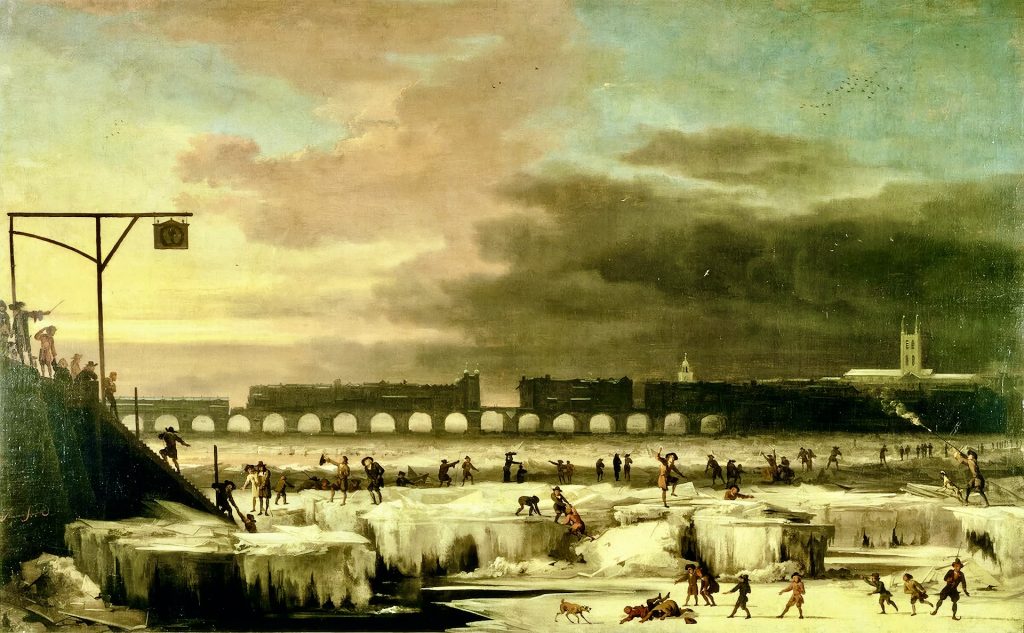
In January 1684, a famous frost fair was held on the Thames, which would generally freeze over about once a decade throughout the Middle Ages. That year Londoners were not only able to walk on the river, but even to drive a coach and horses over the ice without it breaking (roasting an entire ox was also possible apparently). The first recorded frost fair was in 695, and the last was in 1814.
Act of Union
In 1707 the Parliaments of Scotland and England passed the Acts of Union, creating a new single political state of the Kingdom of Great Britain, with its parliament based at the the Palace of Westminster, in London. This completed the work of uniting the three kingdoms, since the personal union of the monarch in 1603. The Stuart’s had, at last, united their fractious, and often warring, kingdoms into one.
By the death of Queen Anne (sister of Mary II) in 1714, the last Stuart monarch, London had once again overcome its many challenges to become one of the largest, richest and most important cities in the world.
Learn More About London in the Stuart Age
Our London in a Day Tour and Introduction to London Pt 1 Tour both start at Westminster, the perfect place to begin an exploration of the city, and we cover all of the history related here on those tours, giving guests a proper understanding of London’ origins and a timeline of its development. The Introduction to London Pt 2 Tour also visits the City of London, St Paul’s Cathedral and the Tower of London.
If you have any feedback on Stuart London: Death, Destruction & Disease please email us or reach out on social media, we’d love to hear from you.
– By Damien Blackshaw (Instagram)
You must be logged in to post a comment.